
On a film set, capturing the shot is only the beginning. The footage still needs to be offloaded, verified, backed up, and delivered to the teams who turn it into a finished production. When the location is far from reliable power or connectivity, moving that data becomes a challenge of its own.
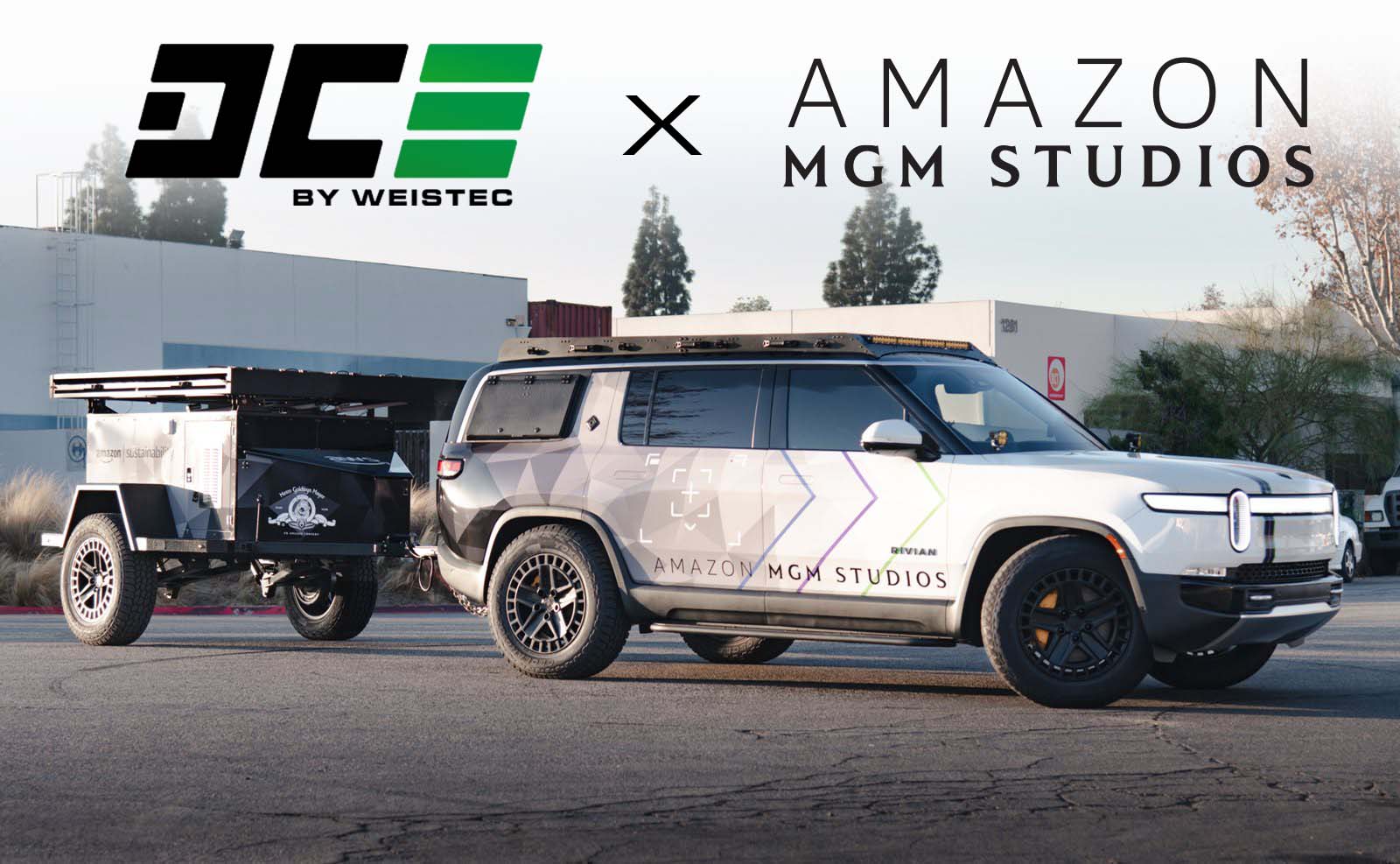
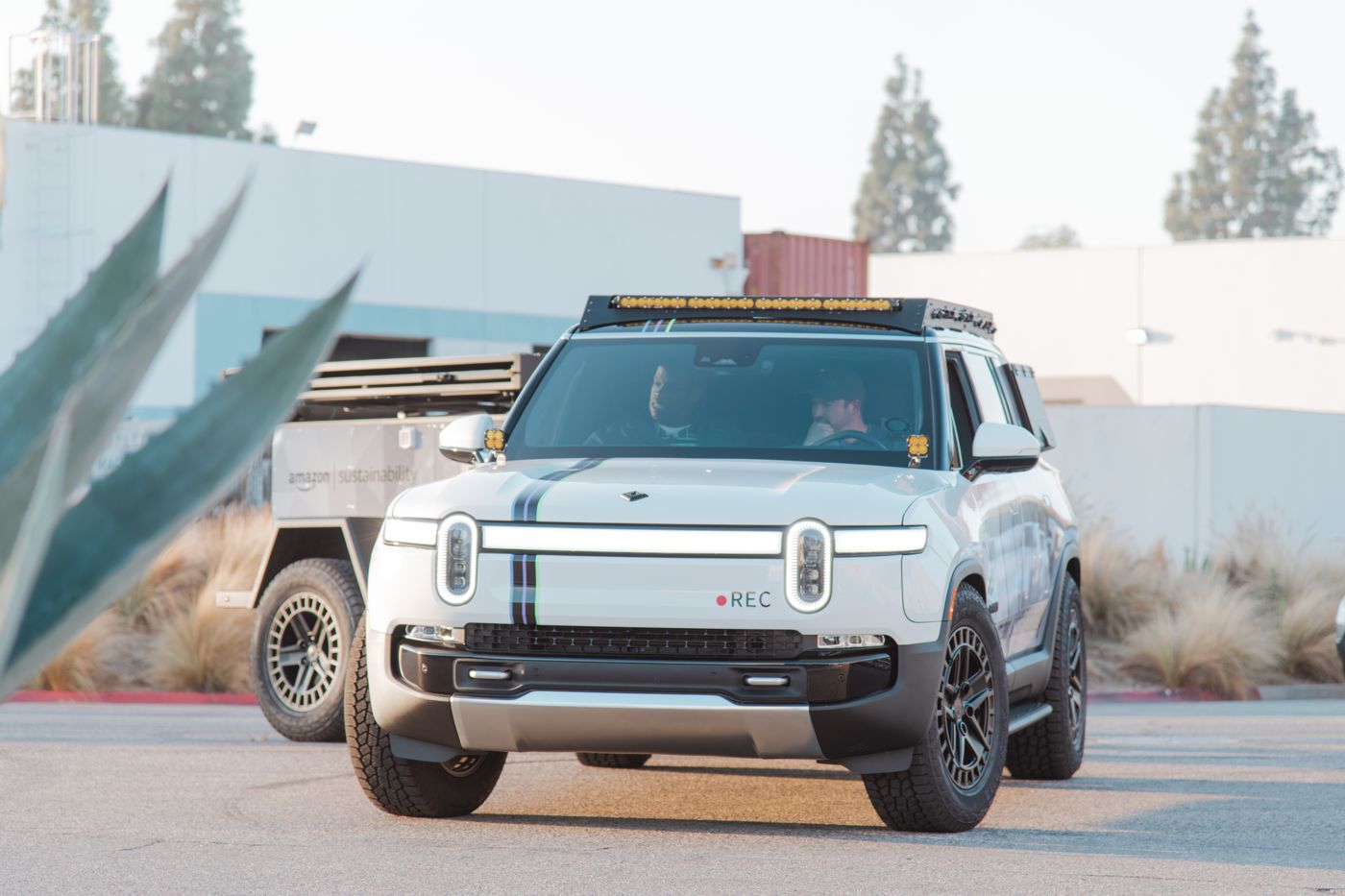
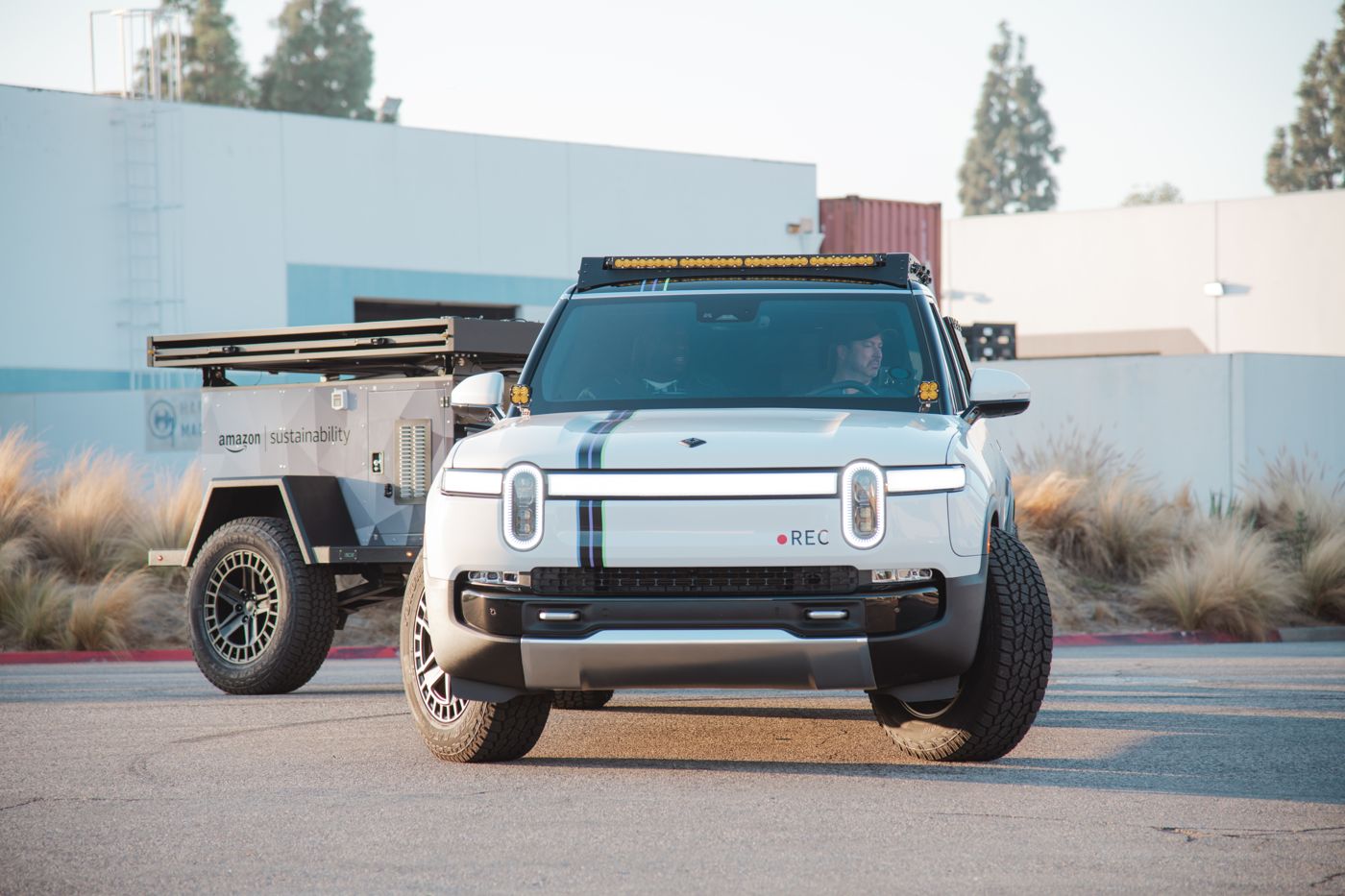
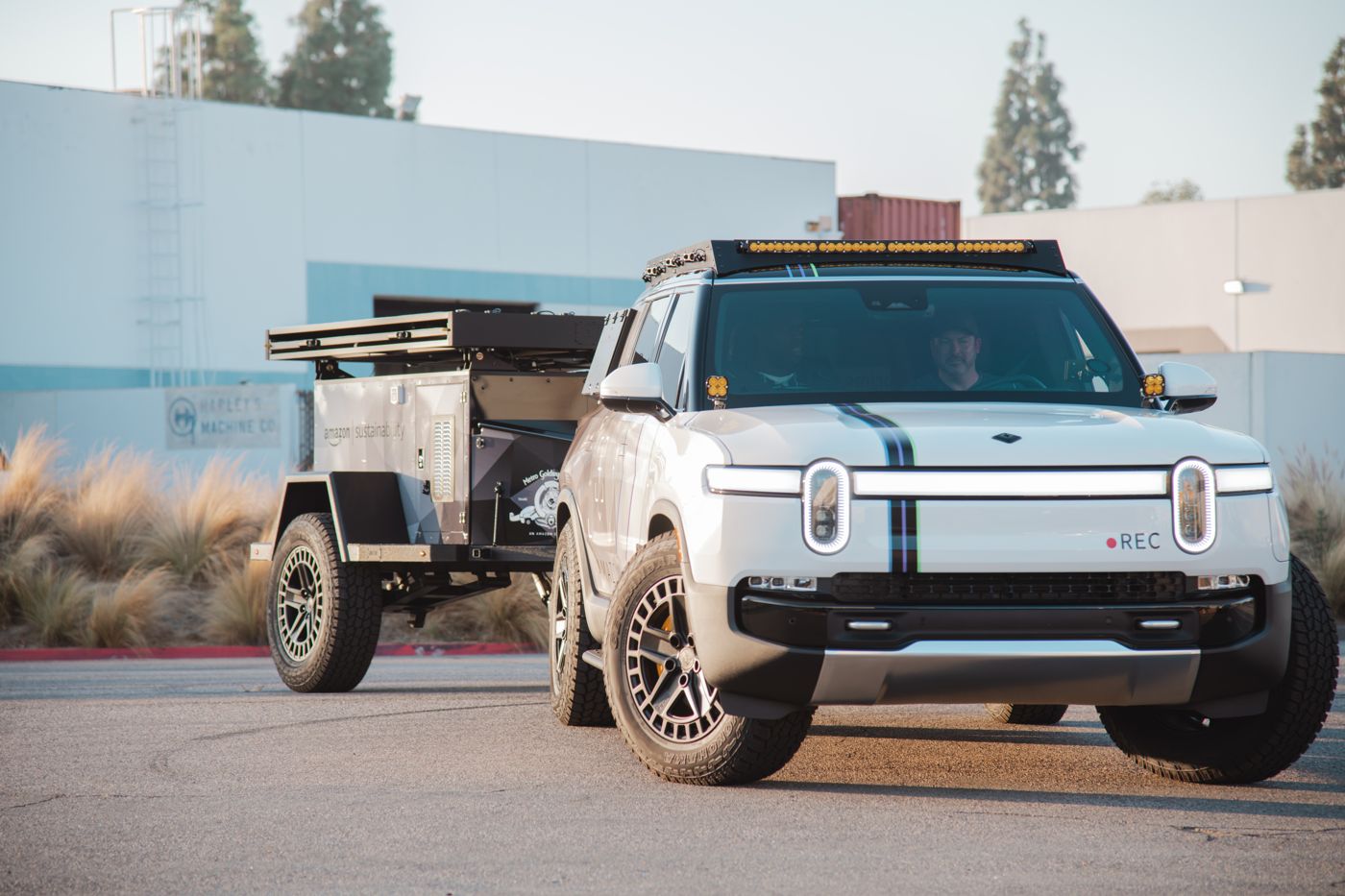
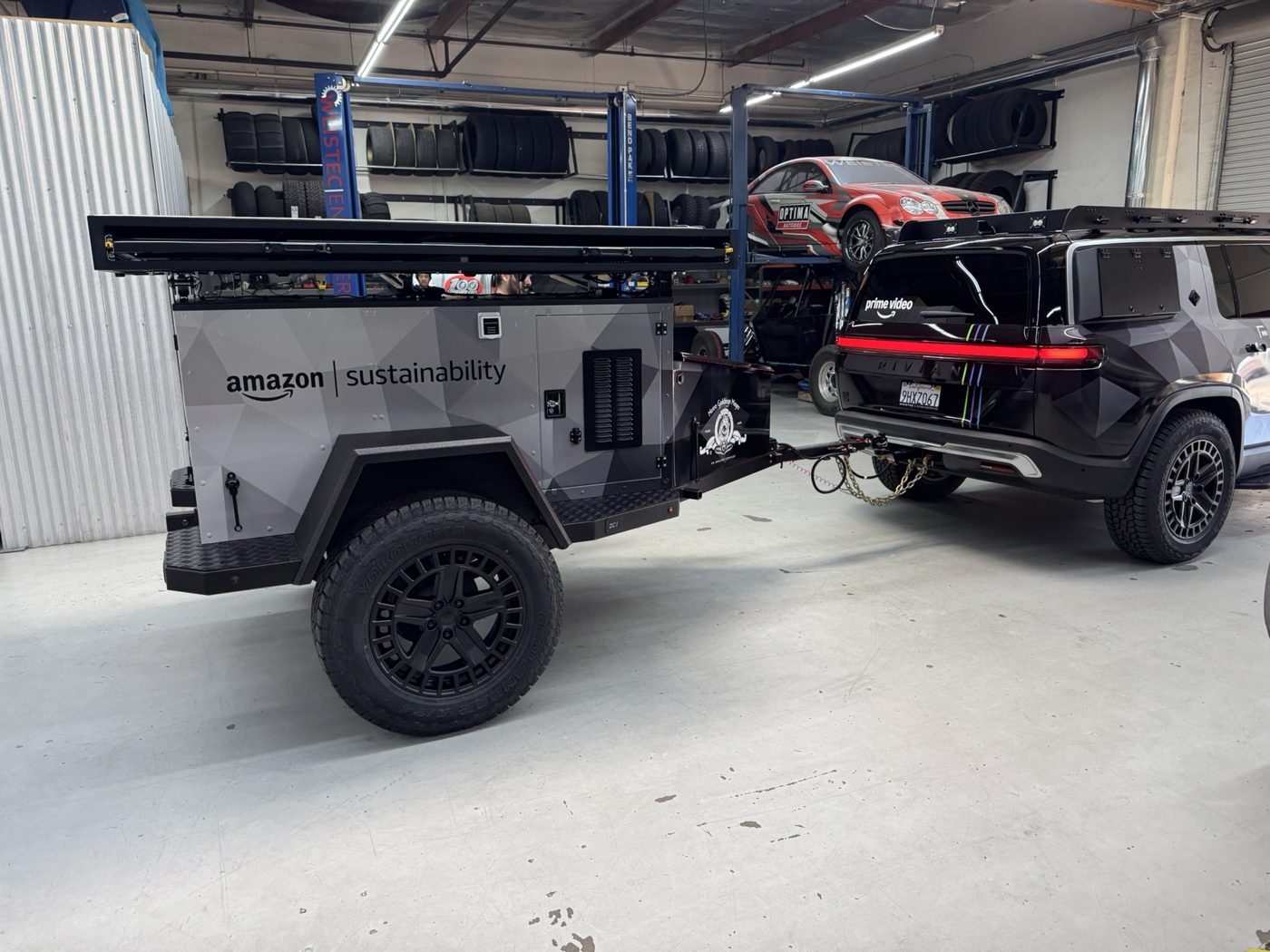
For Amazon MGM Studios, Direct Current Engineering (DCE), Weistec Engineering’s EV and new-energy division, built a system designed around that challenge: a Rivian R1S equipped as a mobile digital imaging workstation, paired with a purpose-built Towable Auxiliary Power (TAP) trailer.
Engineered and built at our Anaheim, California facility, the two work together to bring computing, connectivity, and stored energy to the production.
Bringing the Workstation to the Footage
A digital imaging technician, or DIT, works with the images coming off the cameras. Their workstation combines computers, displays, media readers, and storage to support footage checks and data handling on set.
Our task was to integrate that workspace into an electric SUV while making it practical for daily production use.
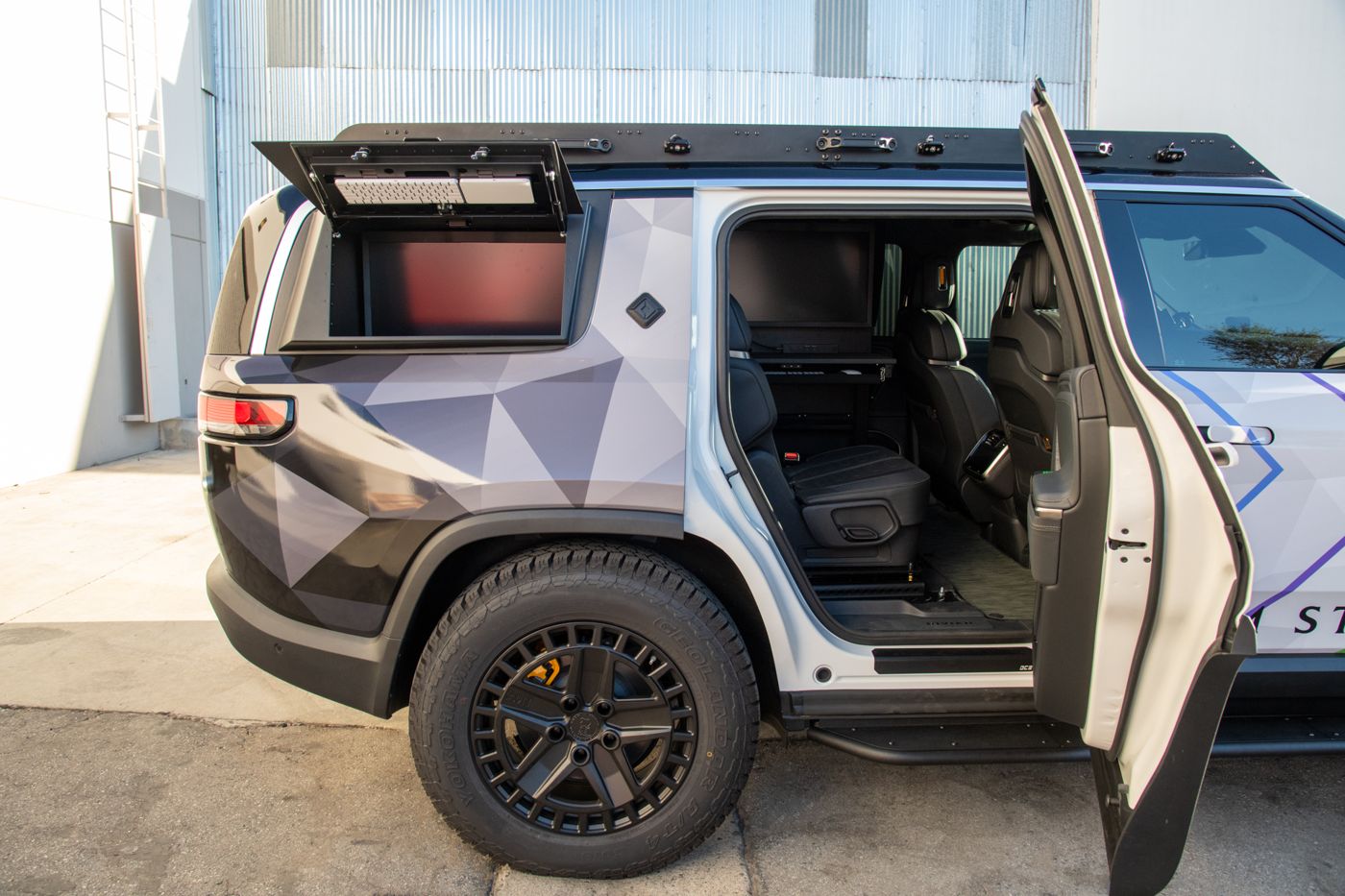
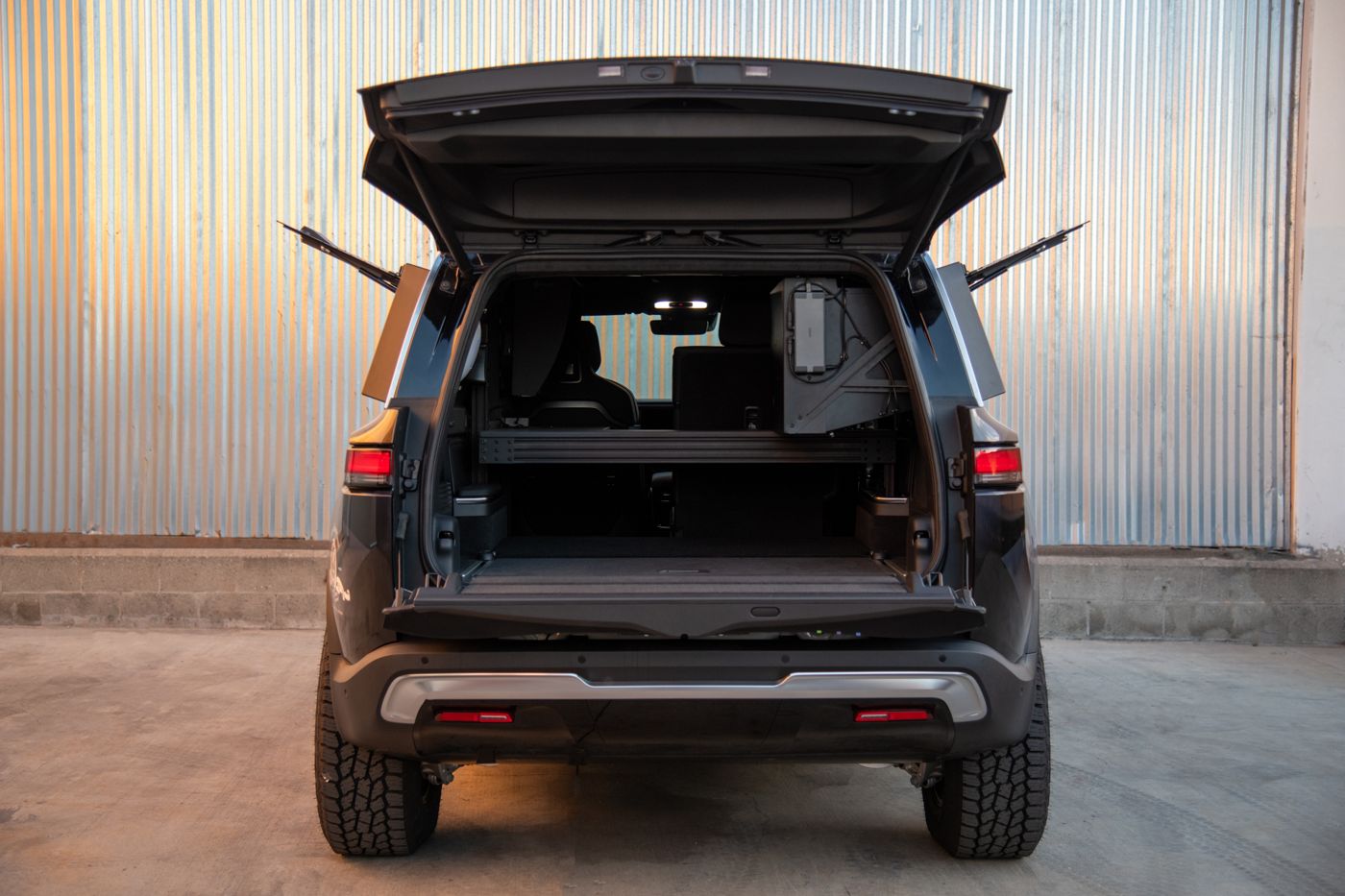
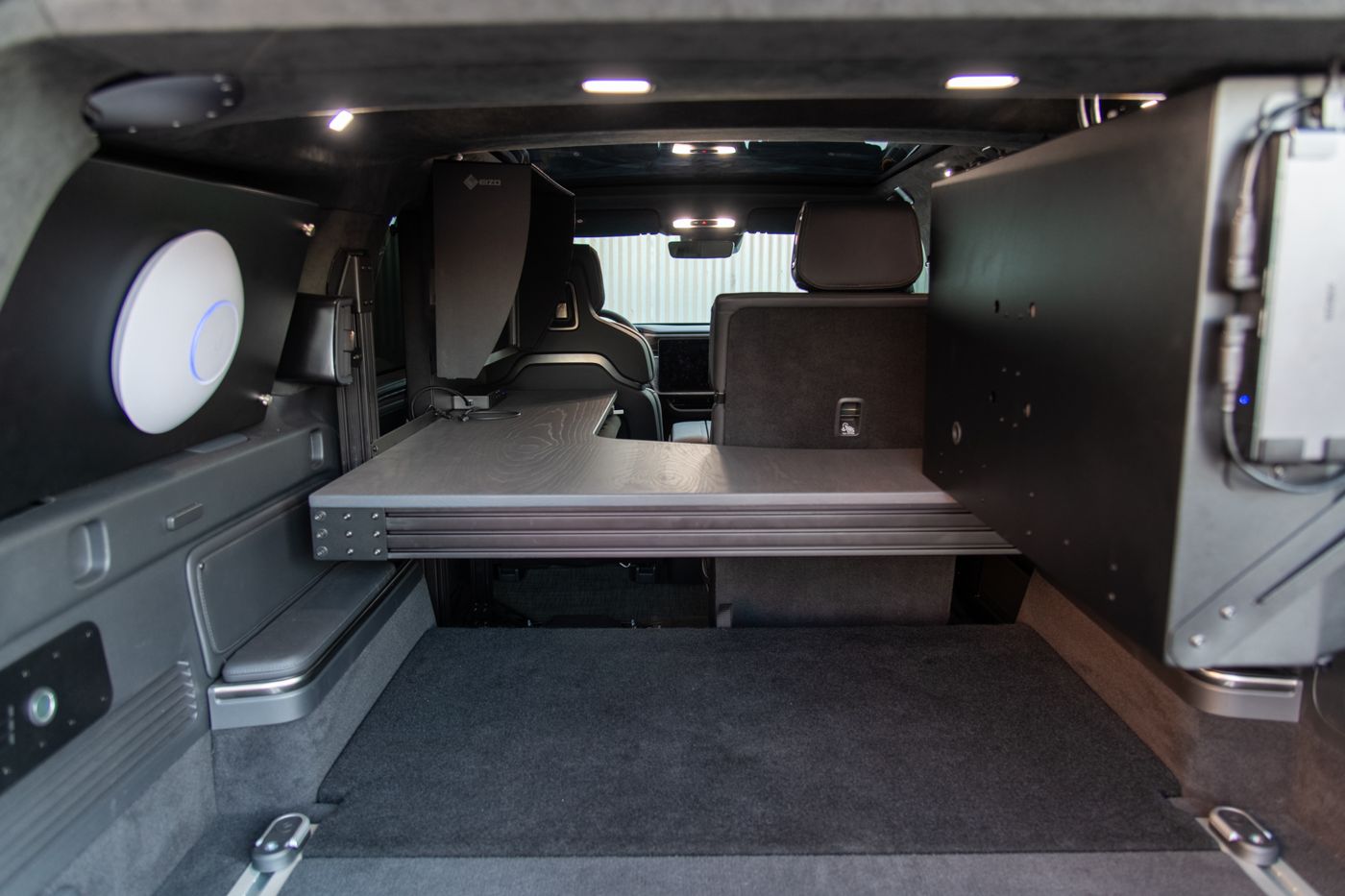
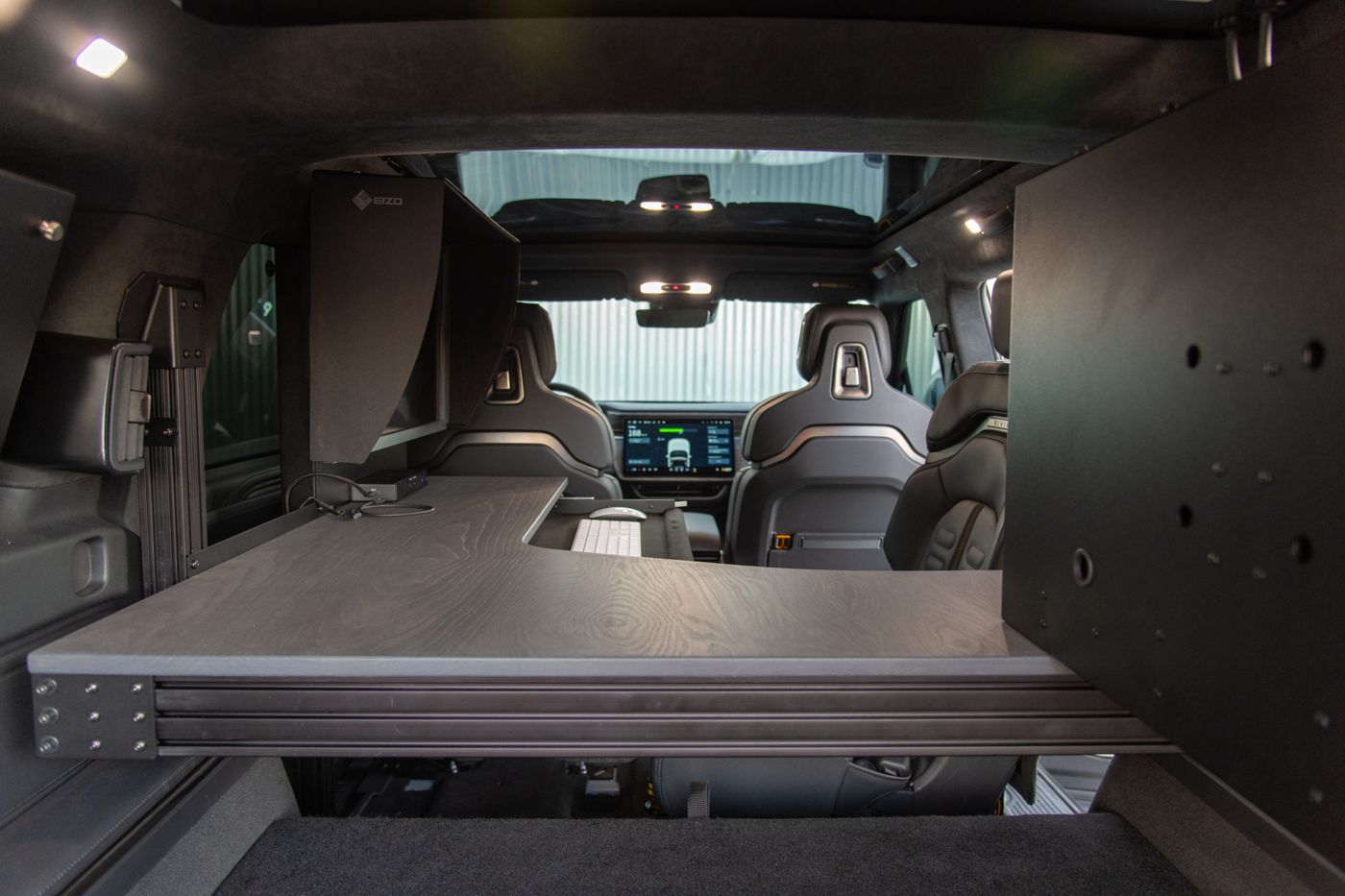
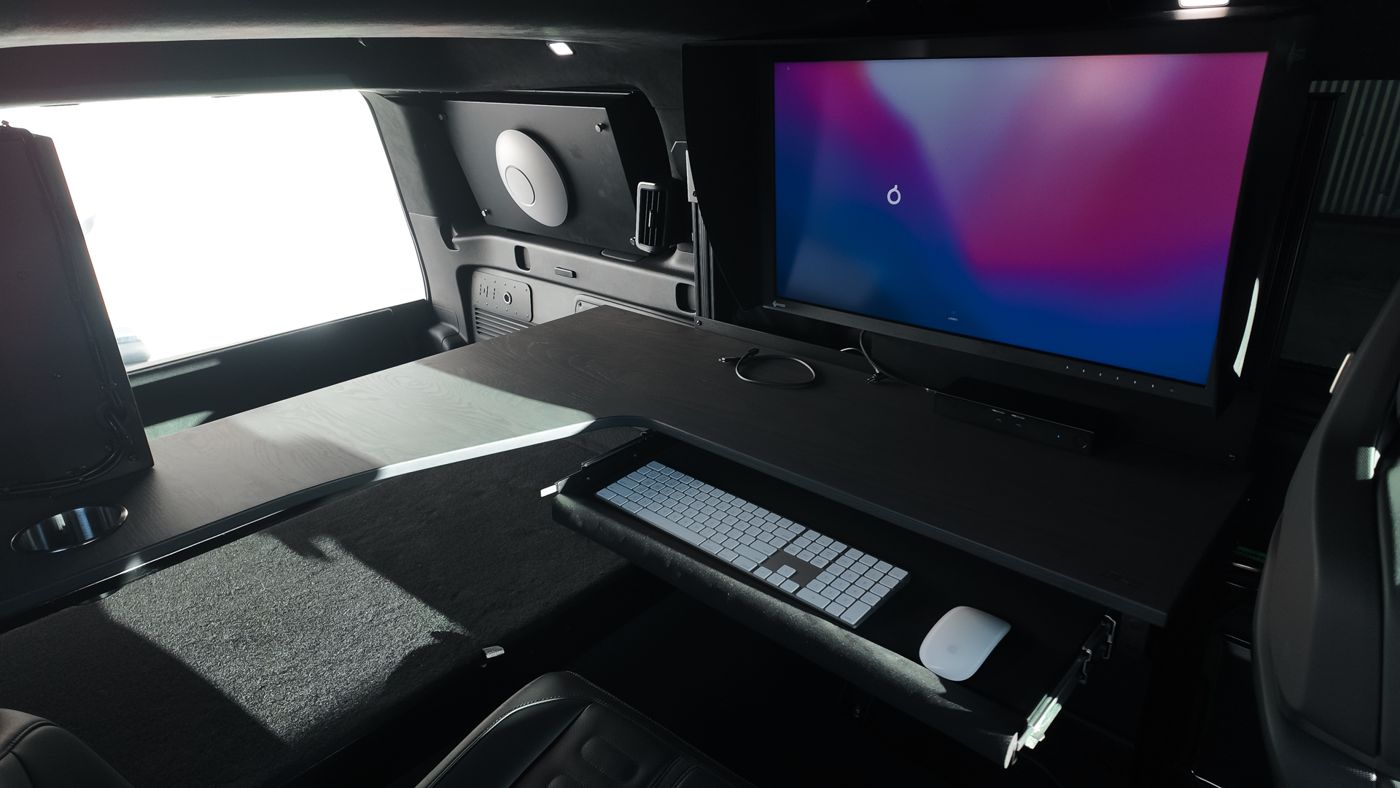
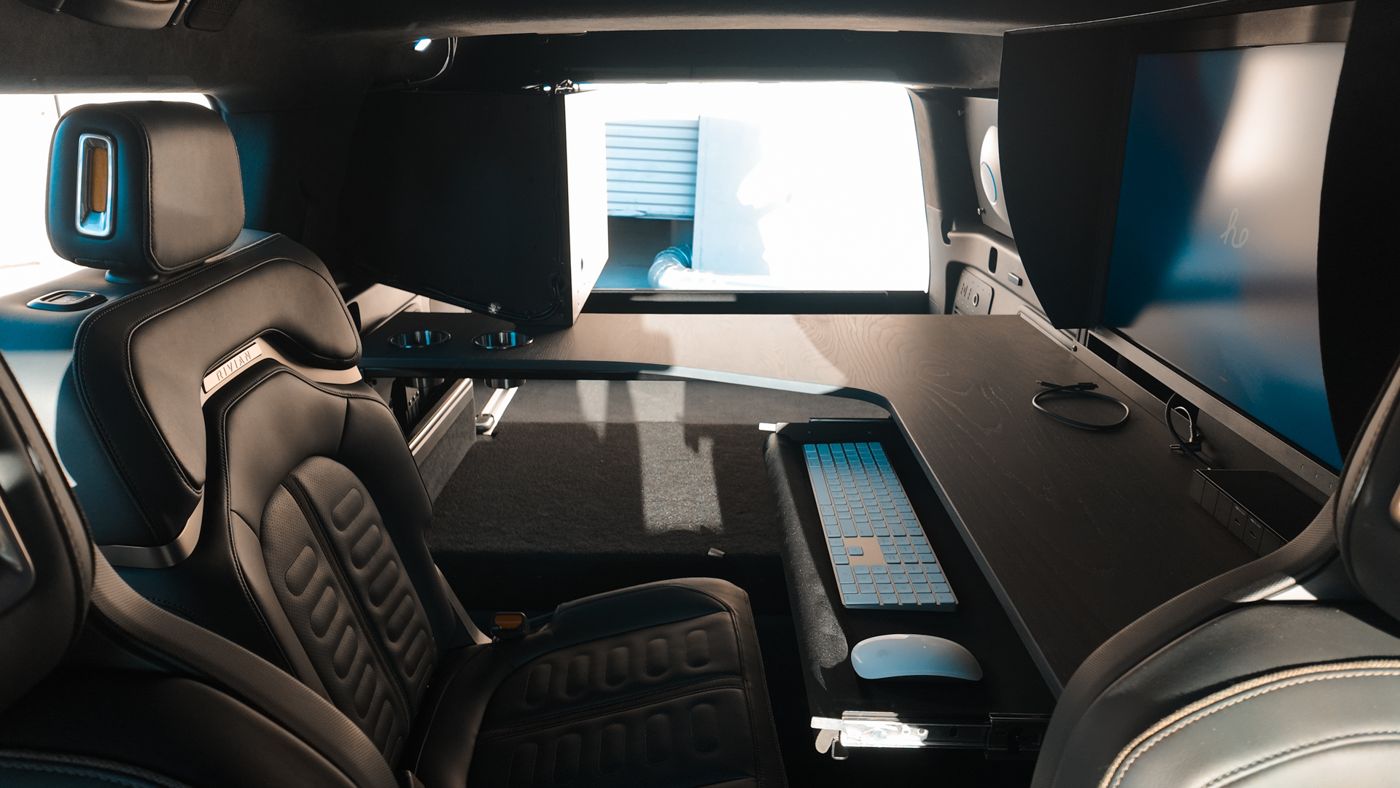
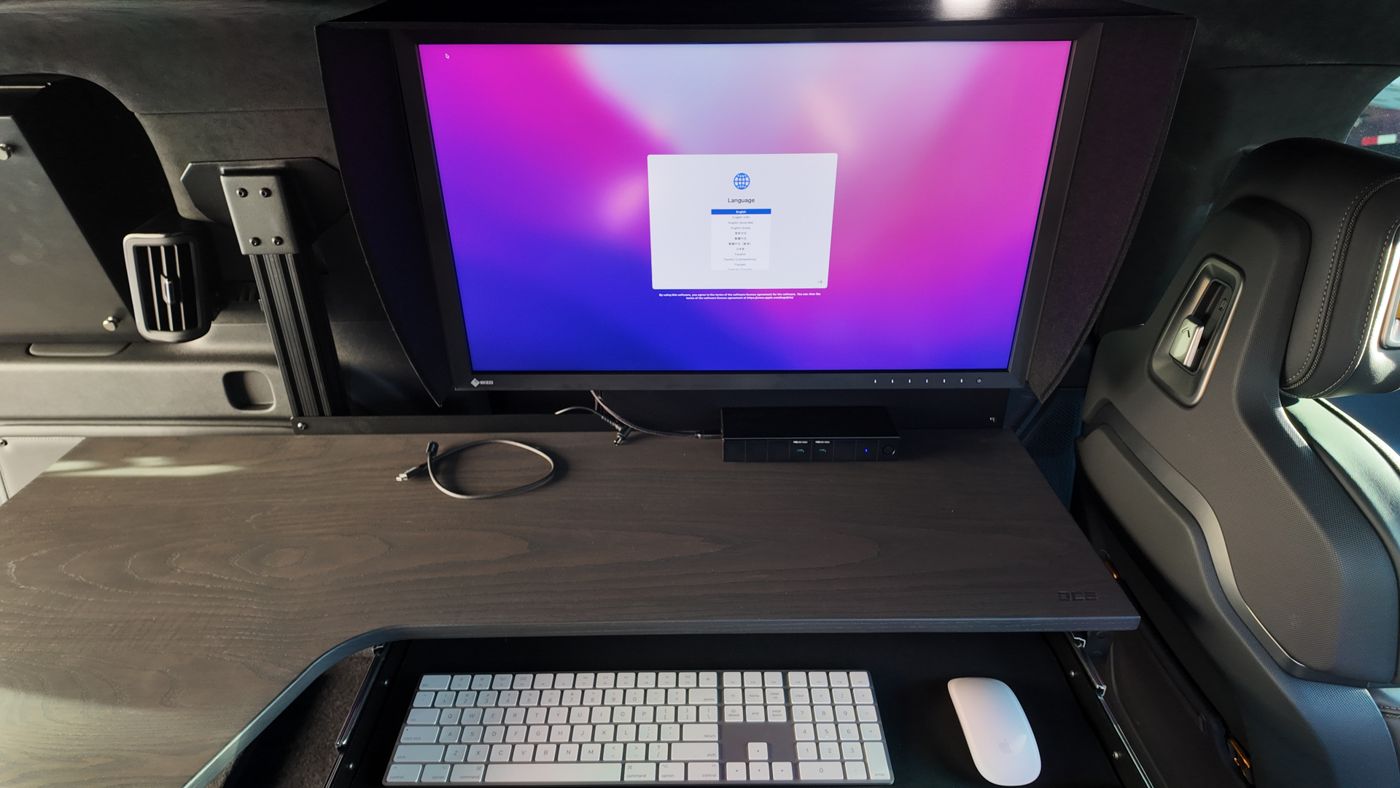
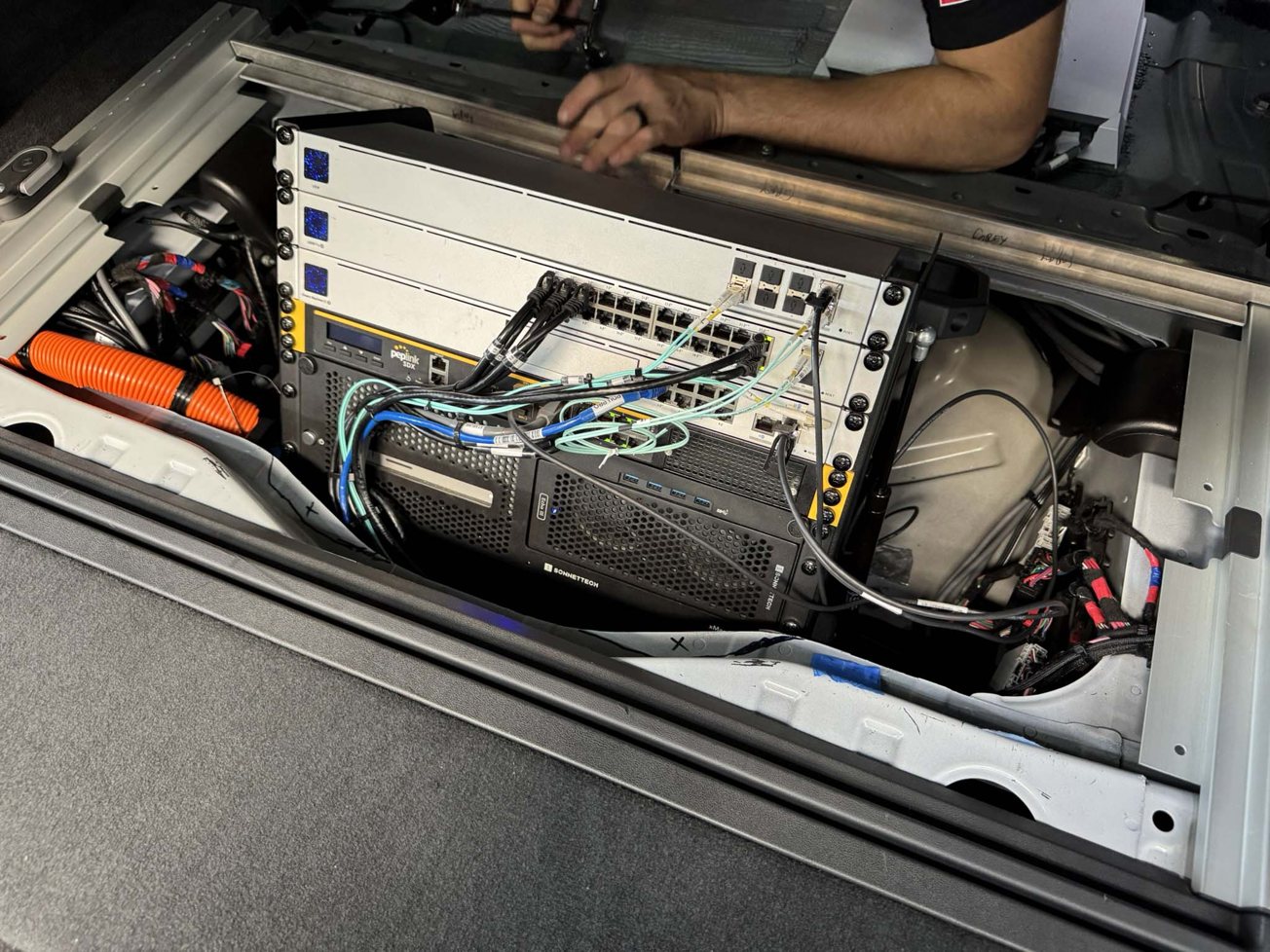
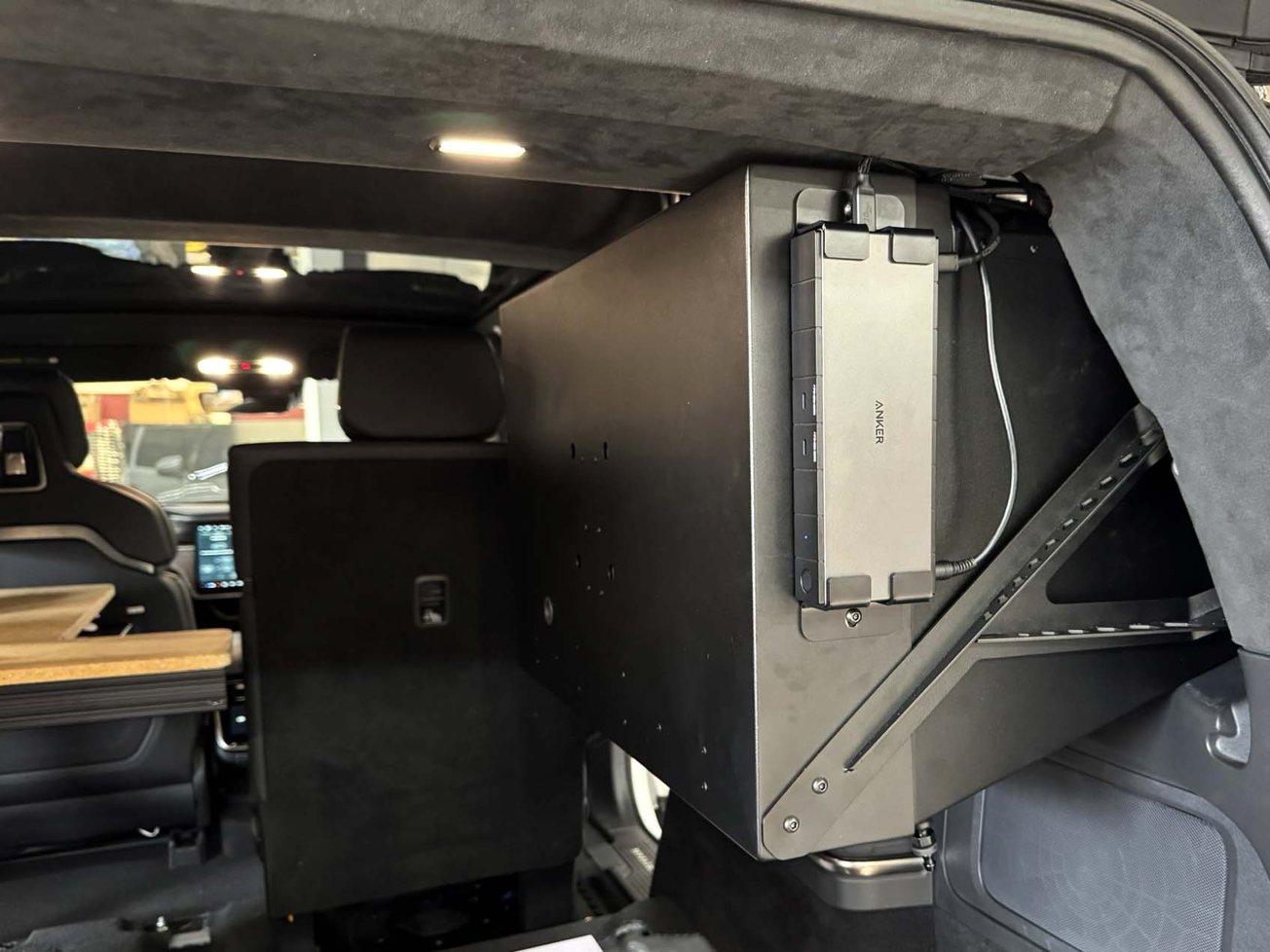
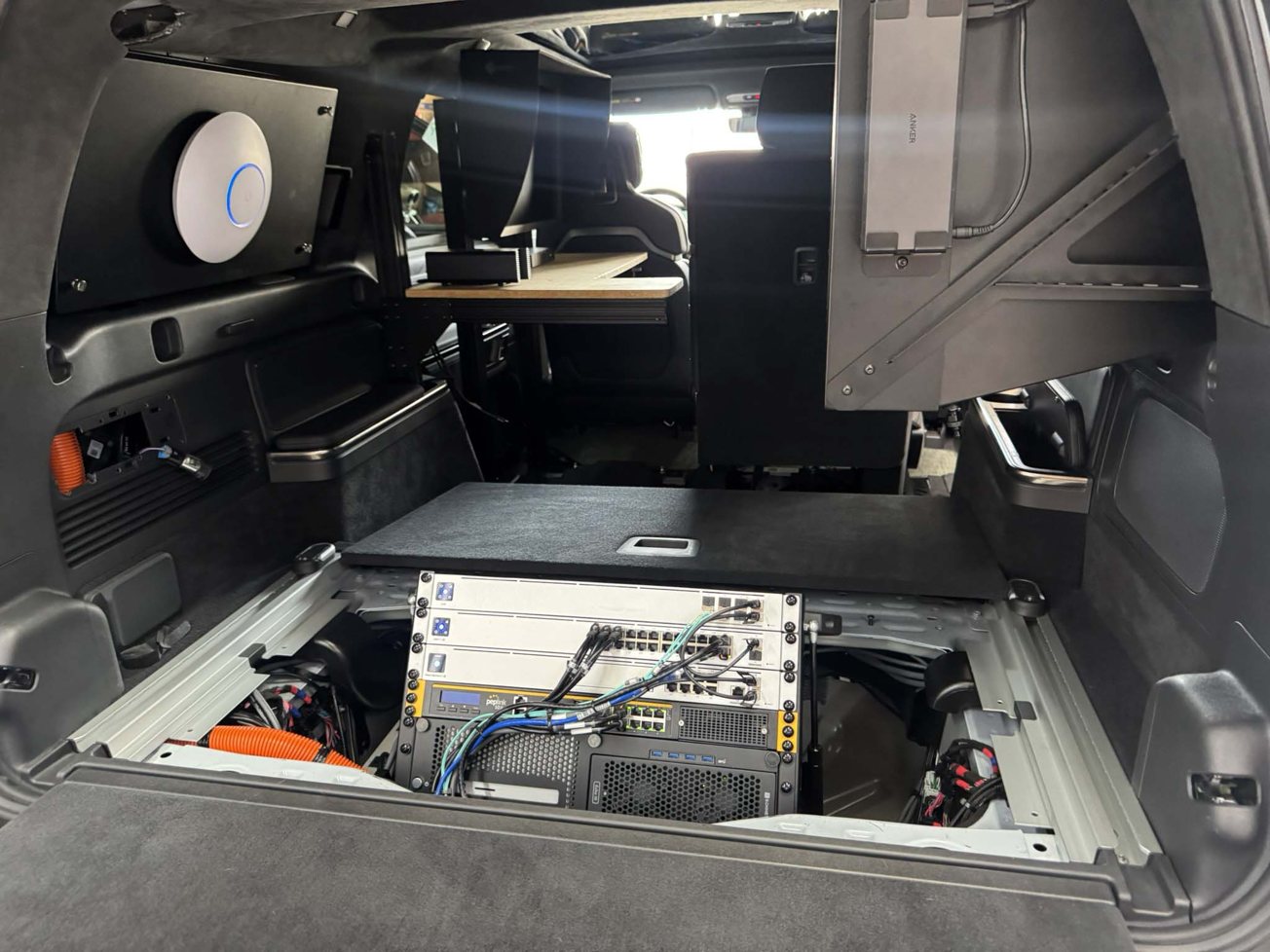
We removed the R1S’s third row and reconfigured the rear cabin around a dedicated workstation with a large display, full-size keyboard, and trackpad. Apple Mac Studio computers, storage, and networking equipment sit in shock-isolated racking, with rerouted rear air conditioning delivering conditioned air directly to the hardware.
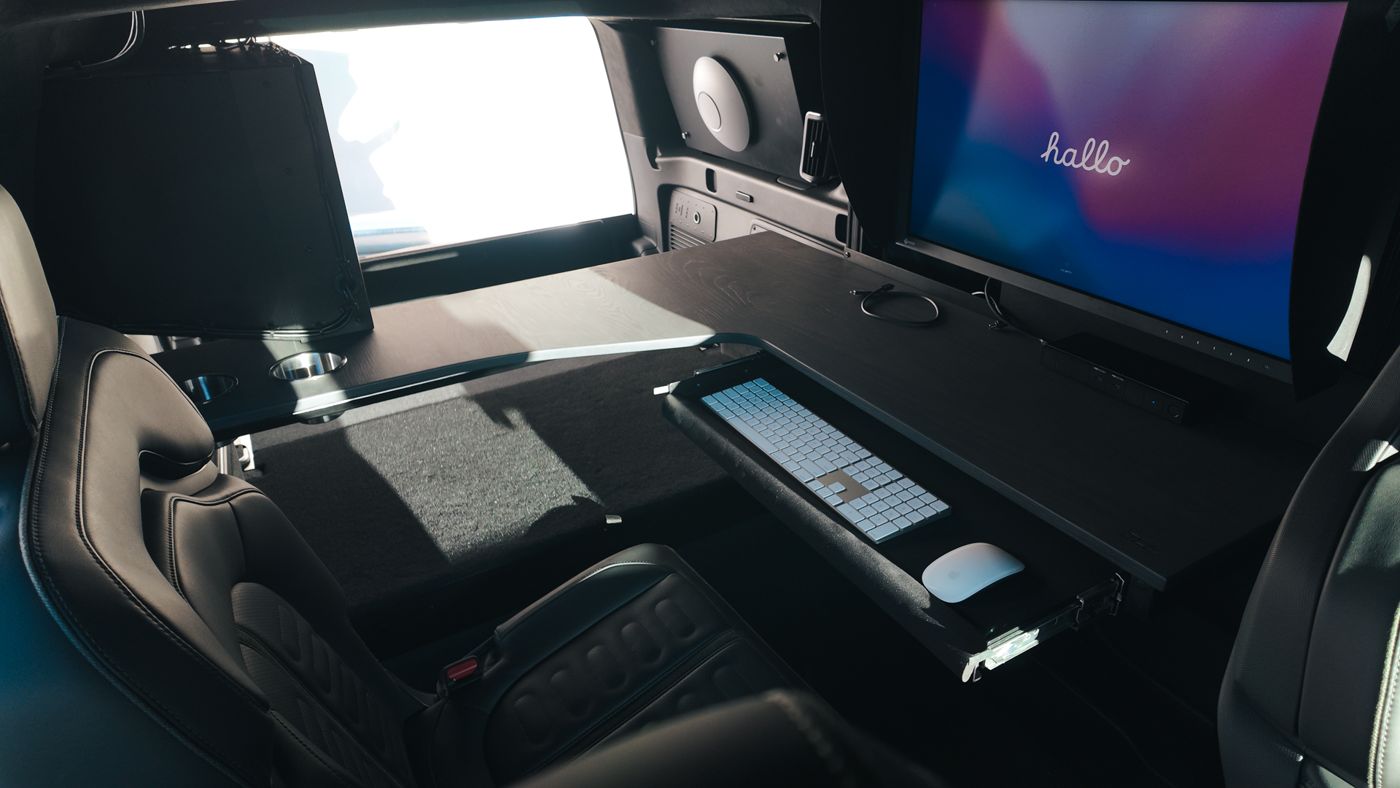
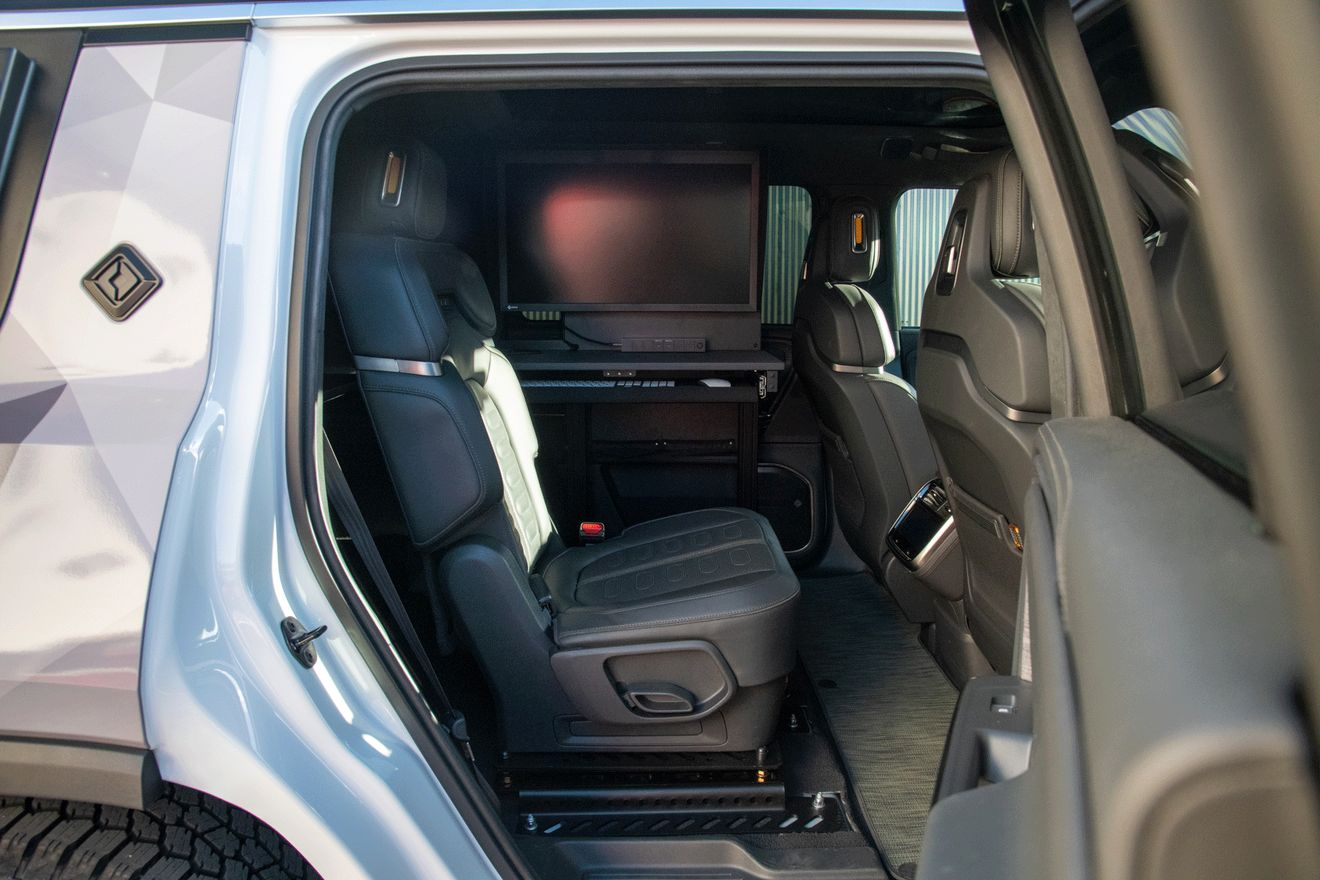
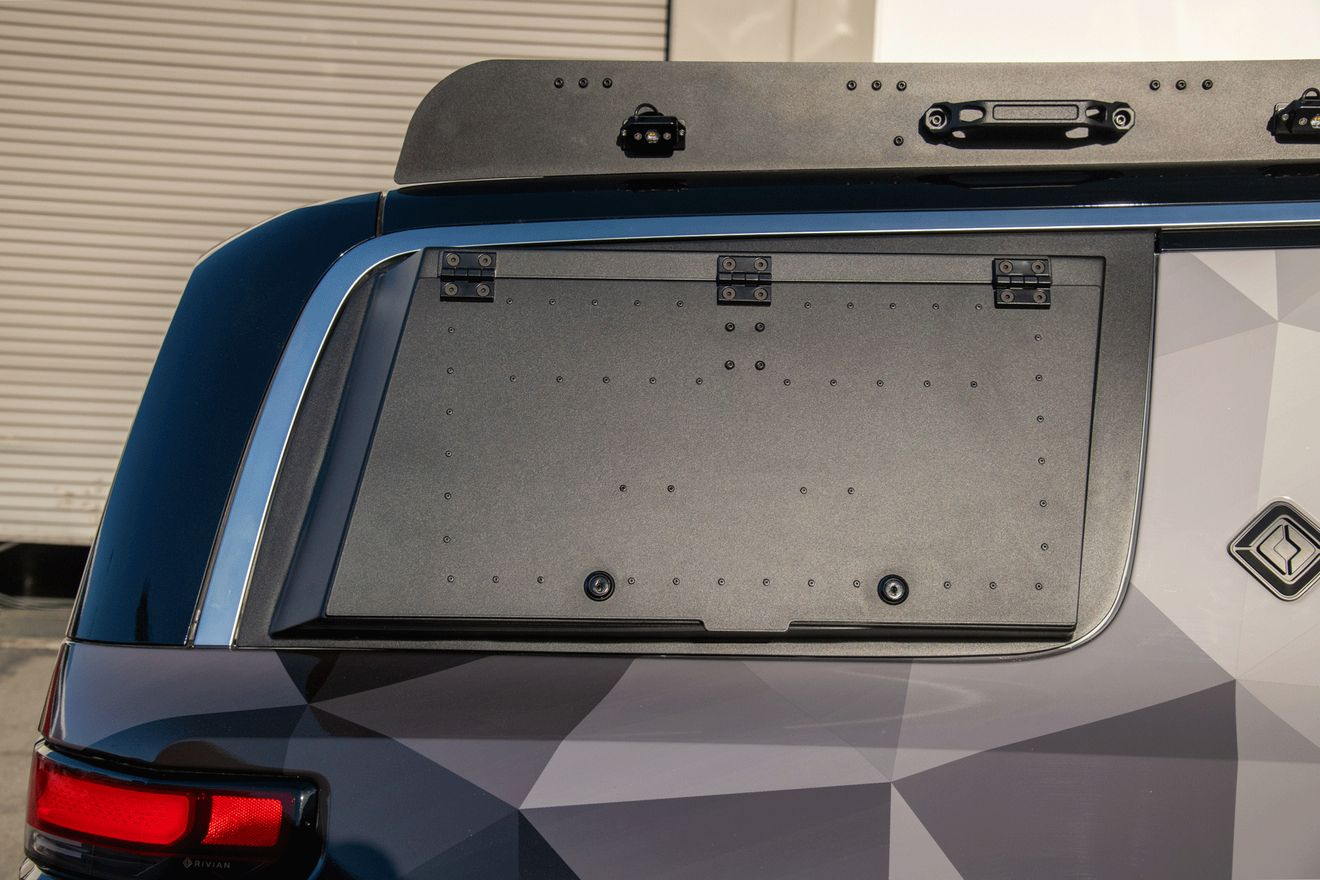
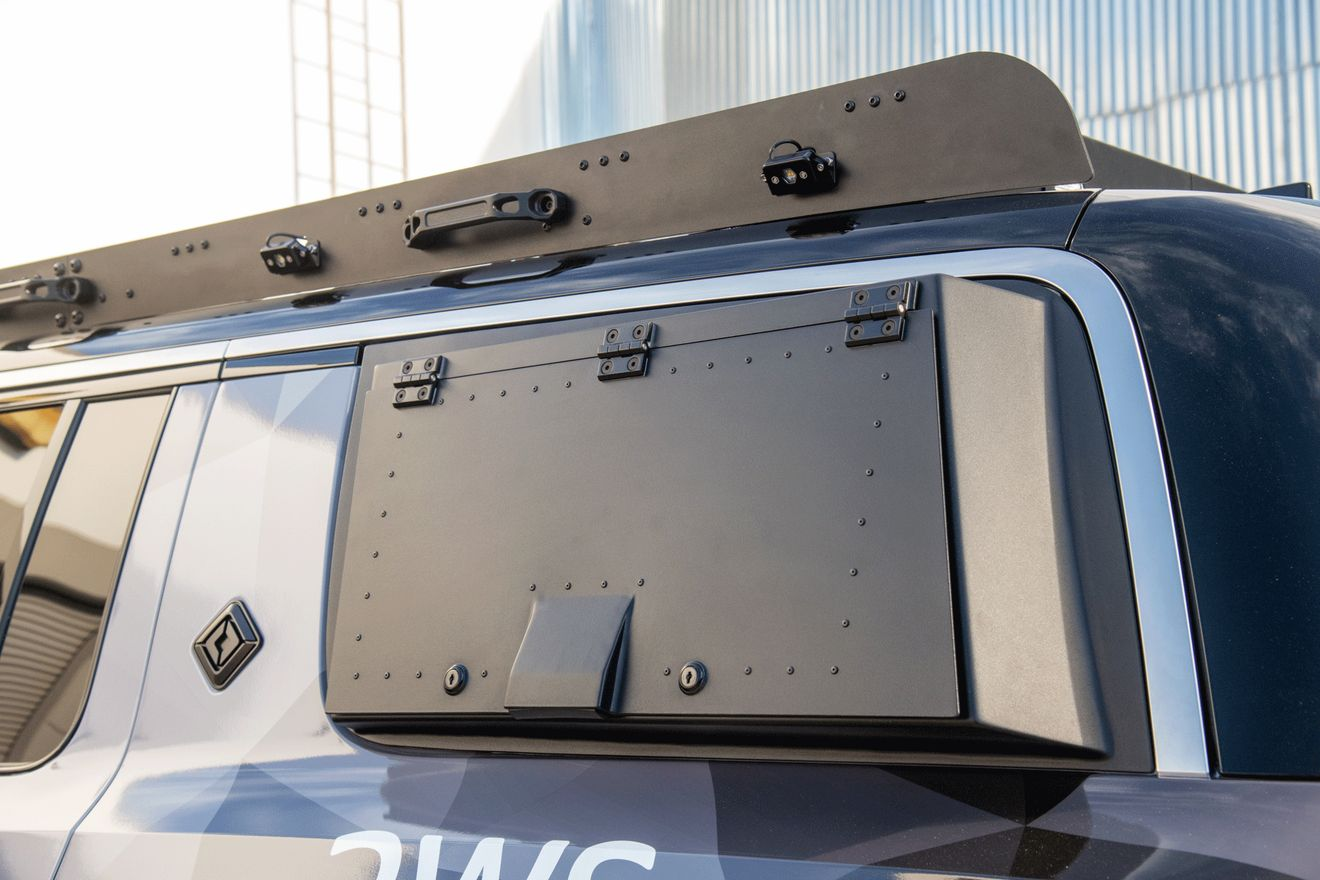
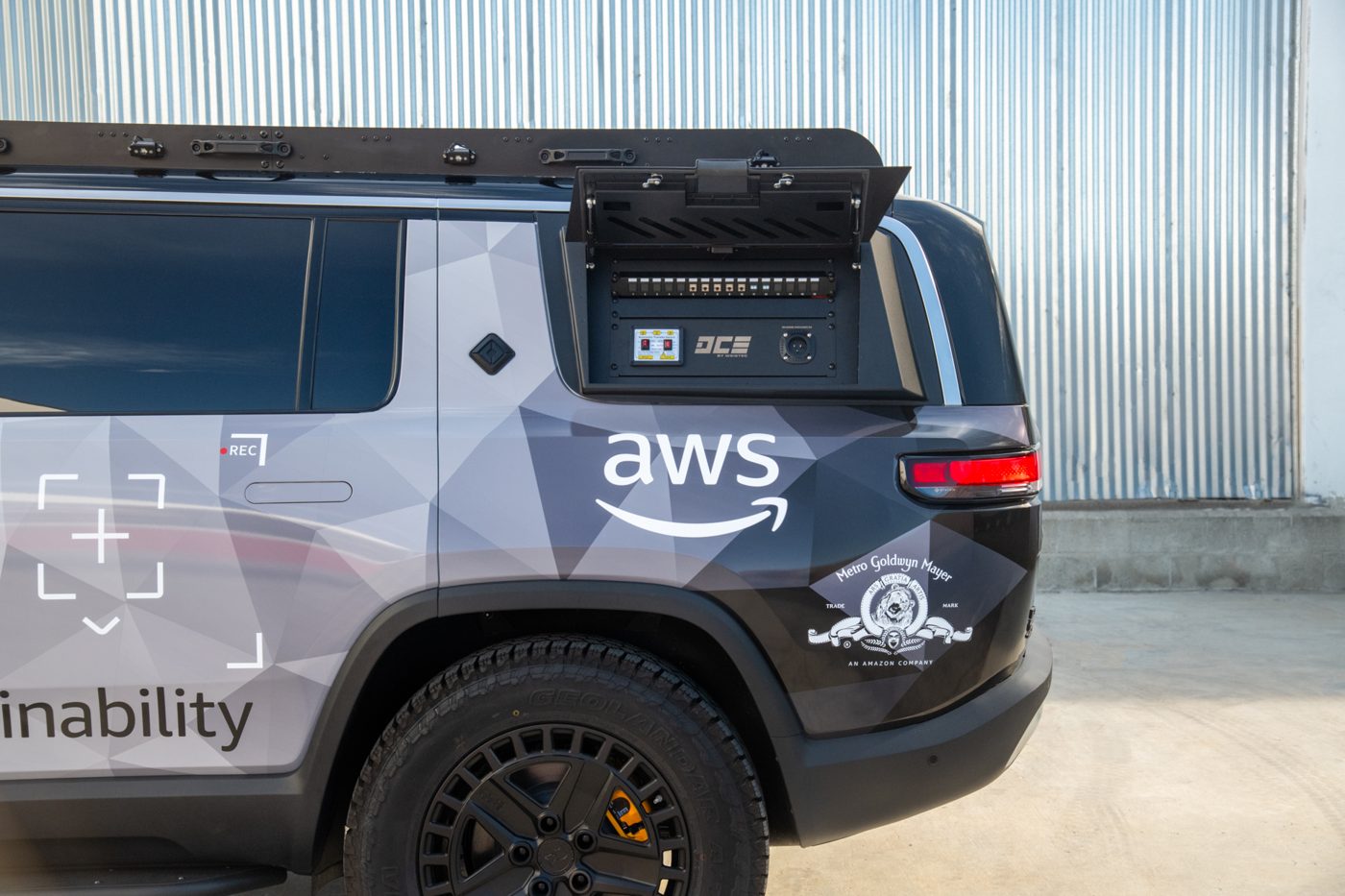
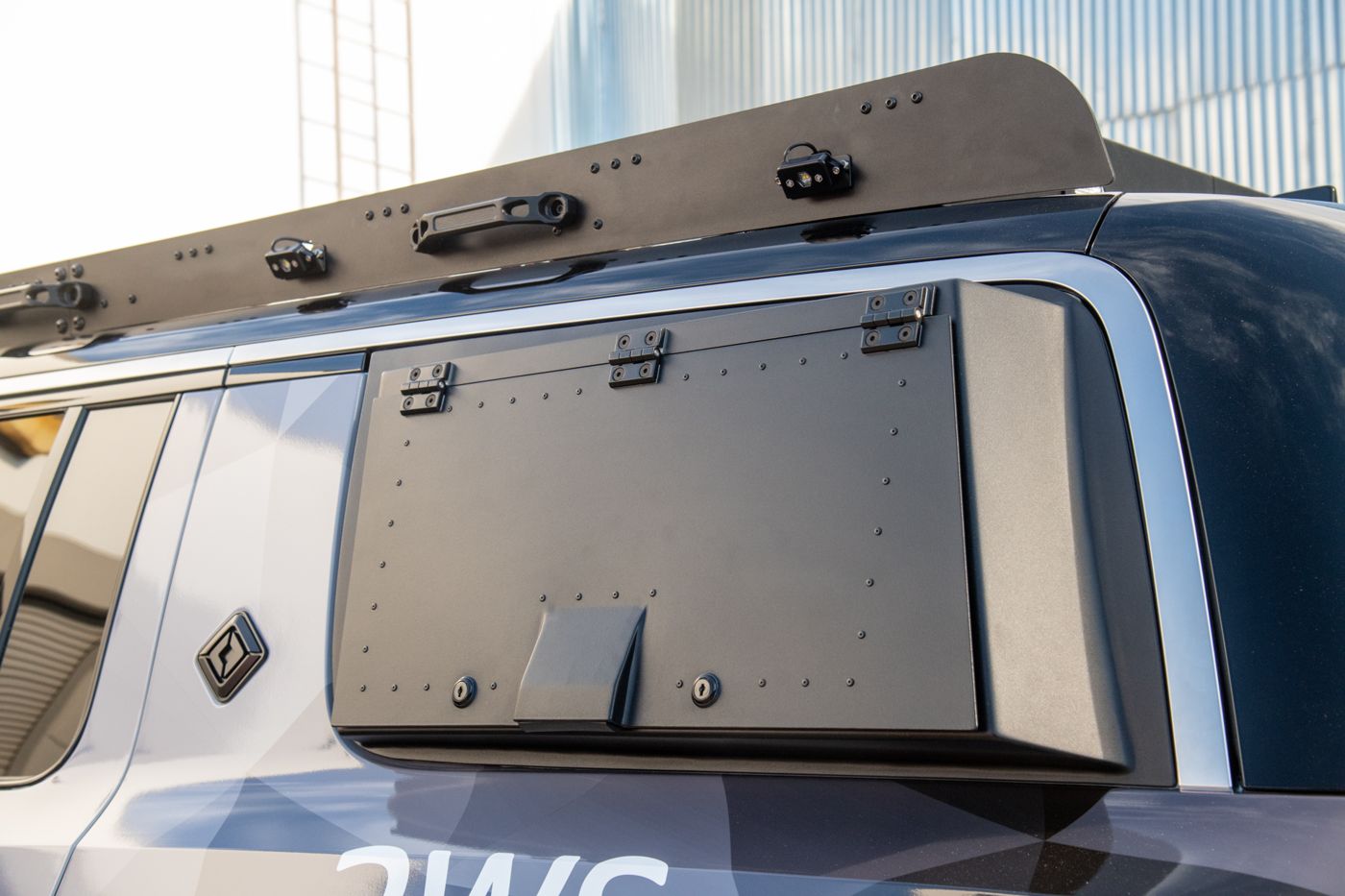
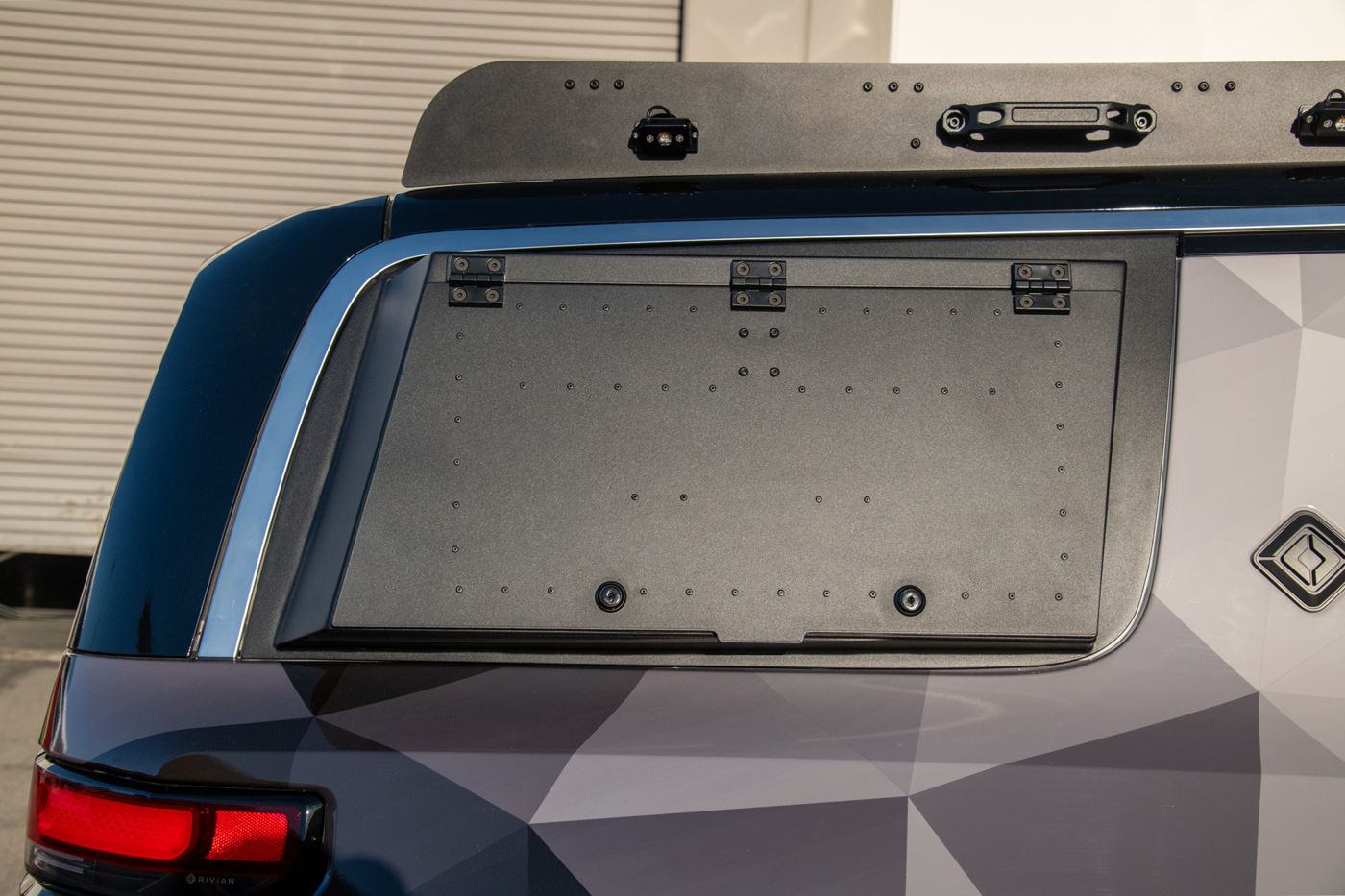
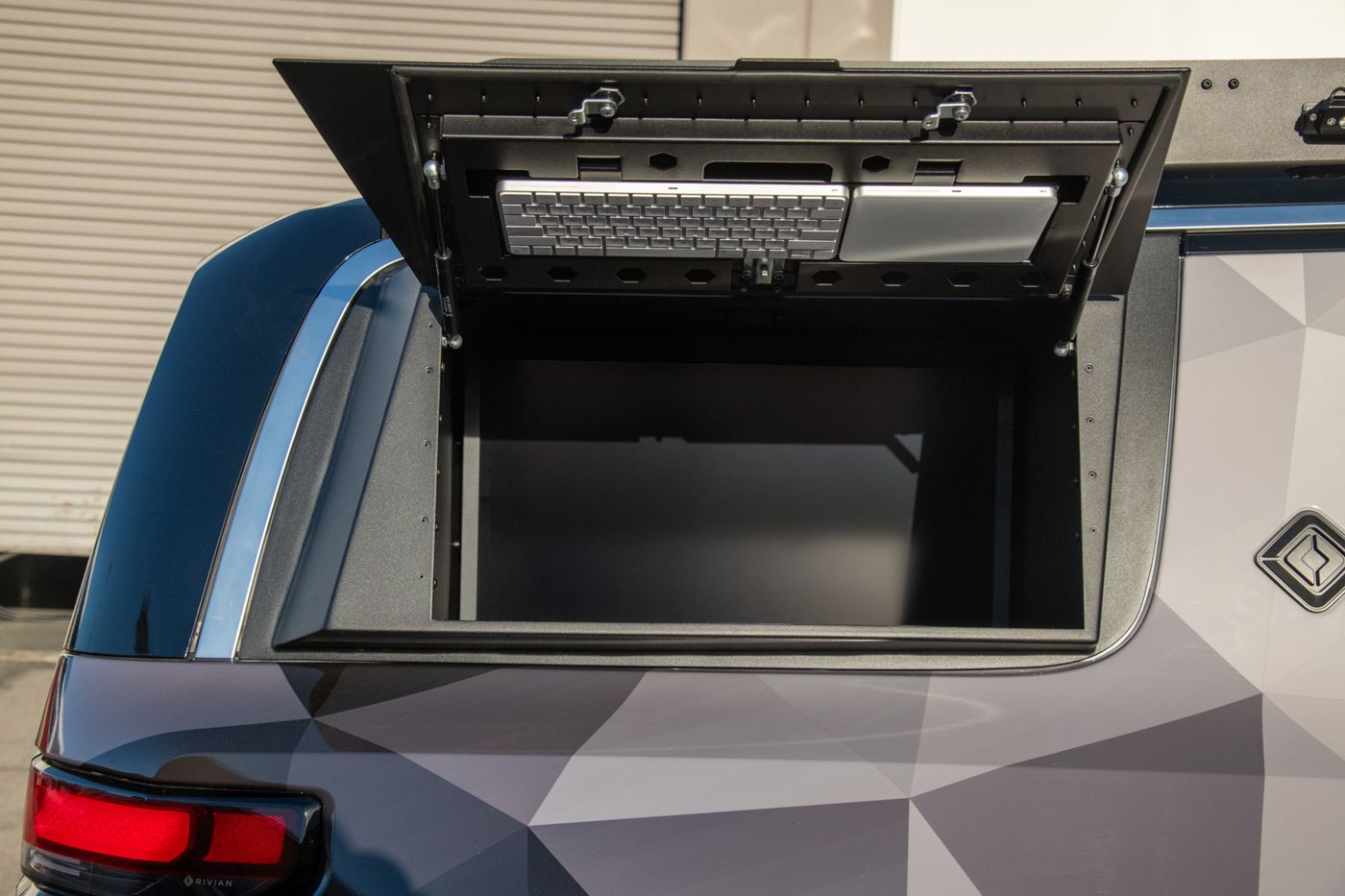
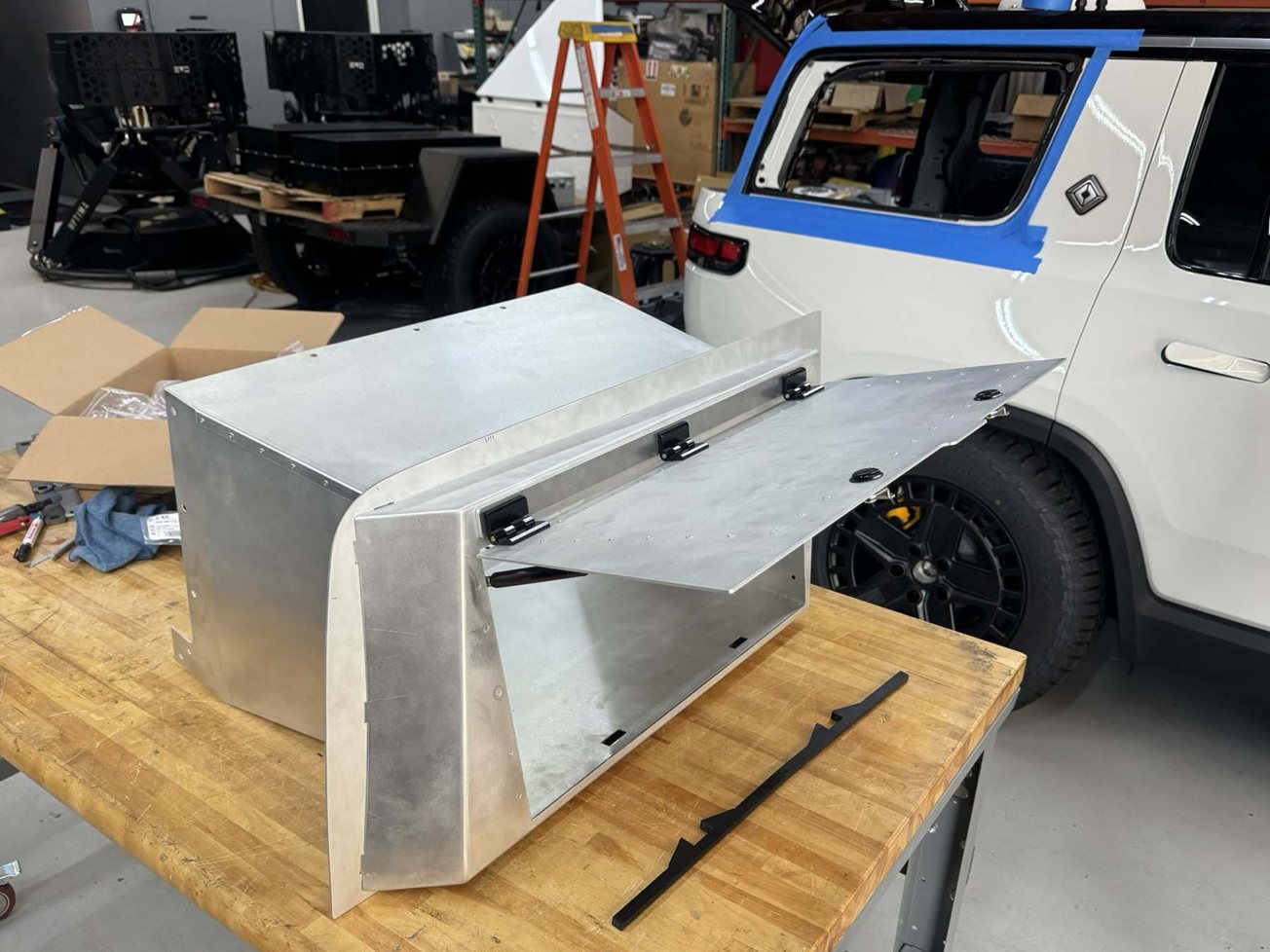
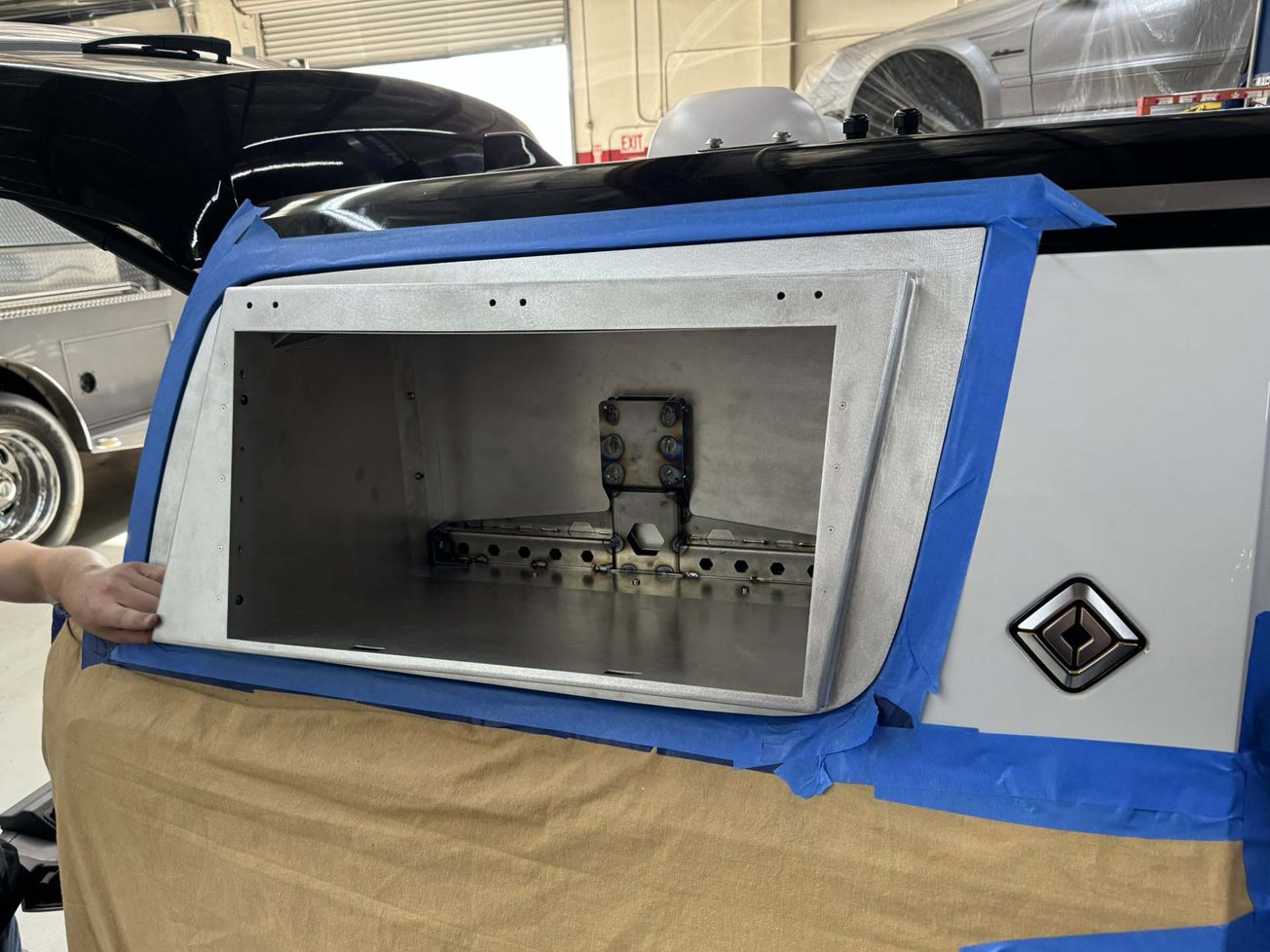
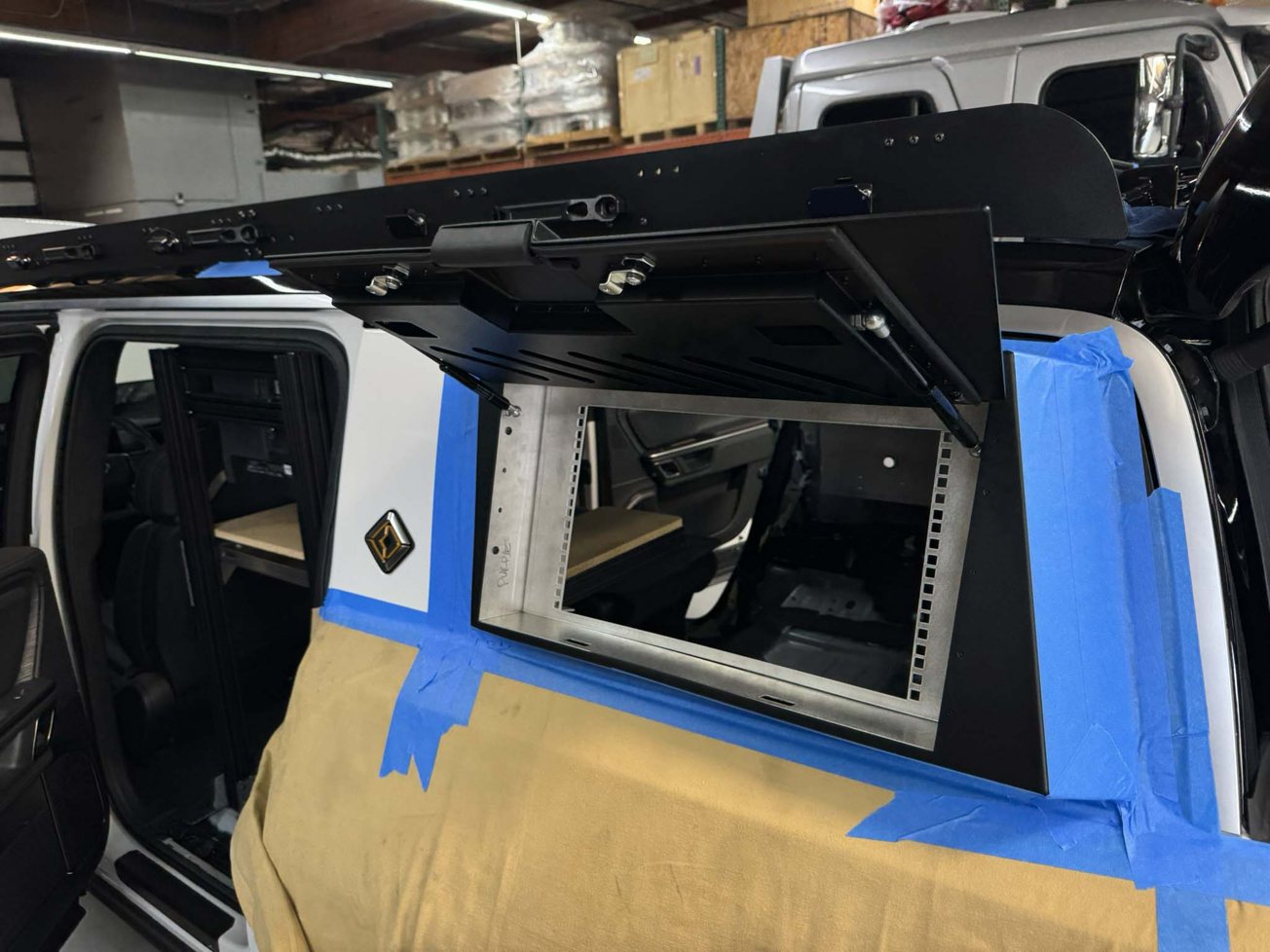
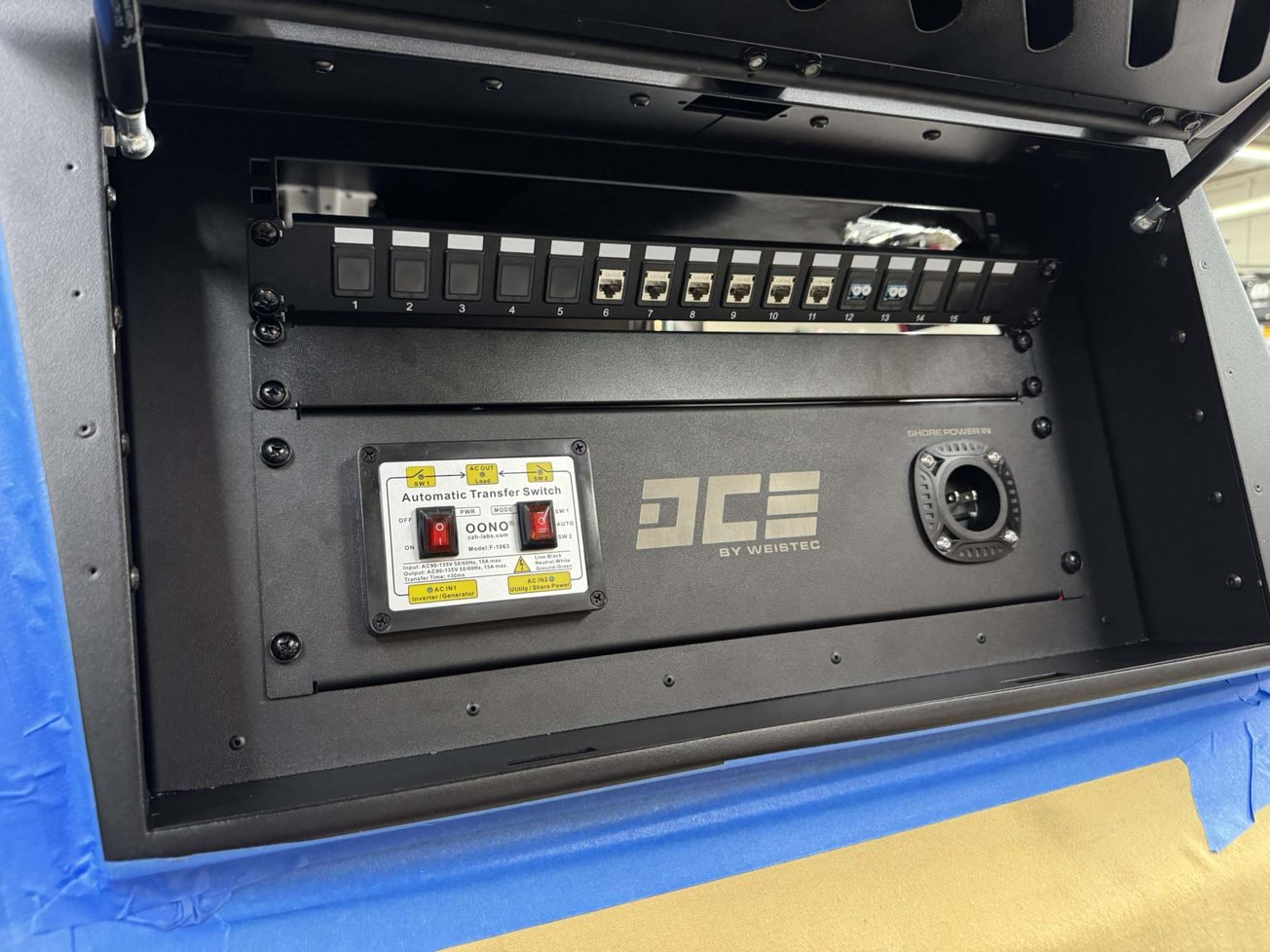
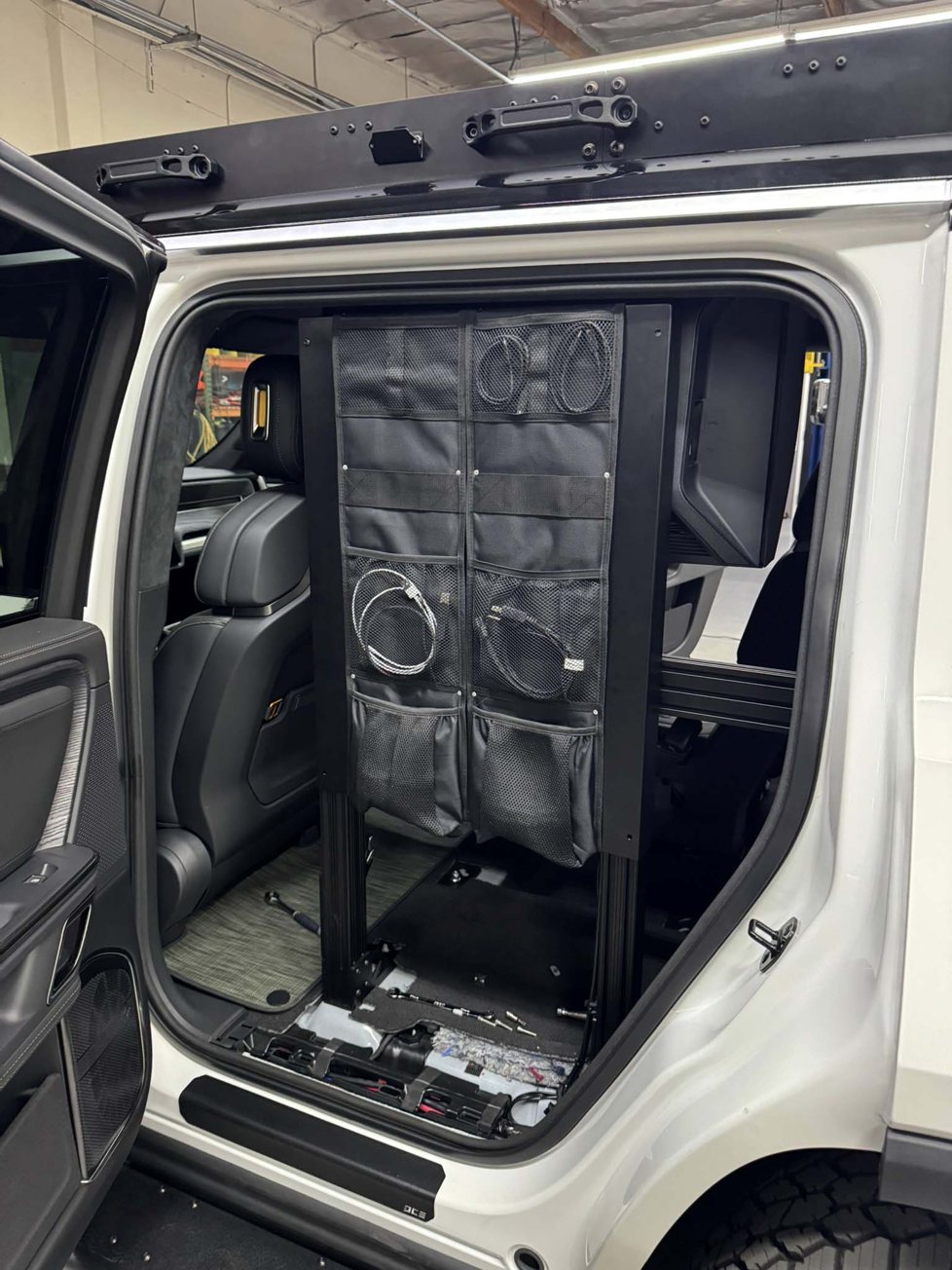
Access mattered as much as packaging. An exterior workstation at the passenger-side rear lets a crew member check upload status while the interior station remains in use. Slide-out cargo storage organizes cases and cabling, and a custom rear quarter-window bulkhead provides a dedicated entry point for power and data connections.
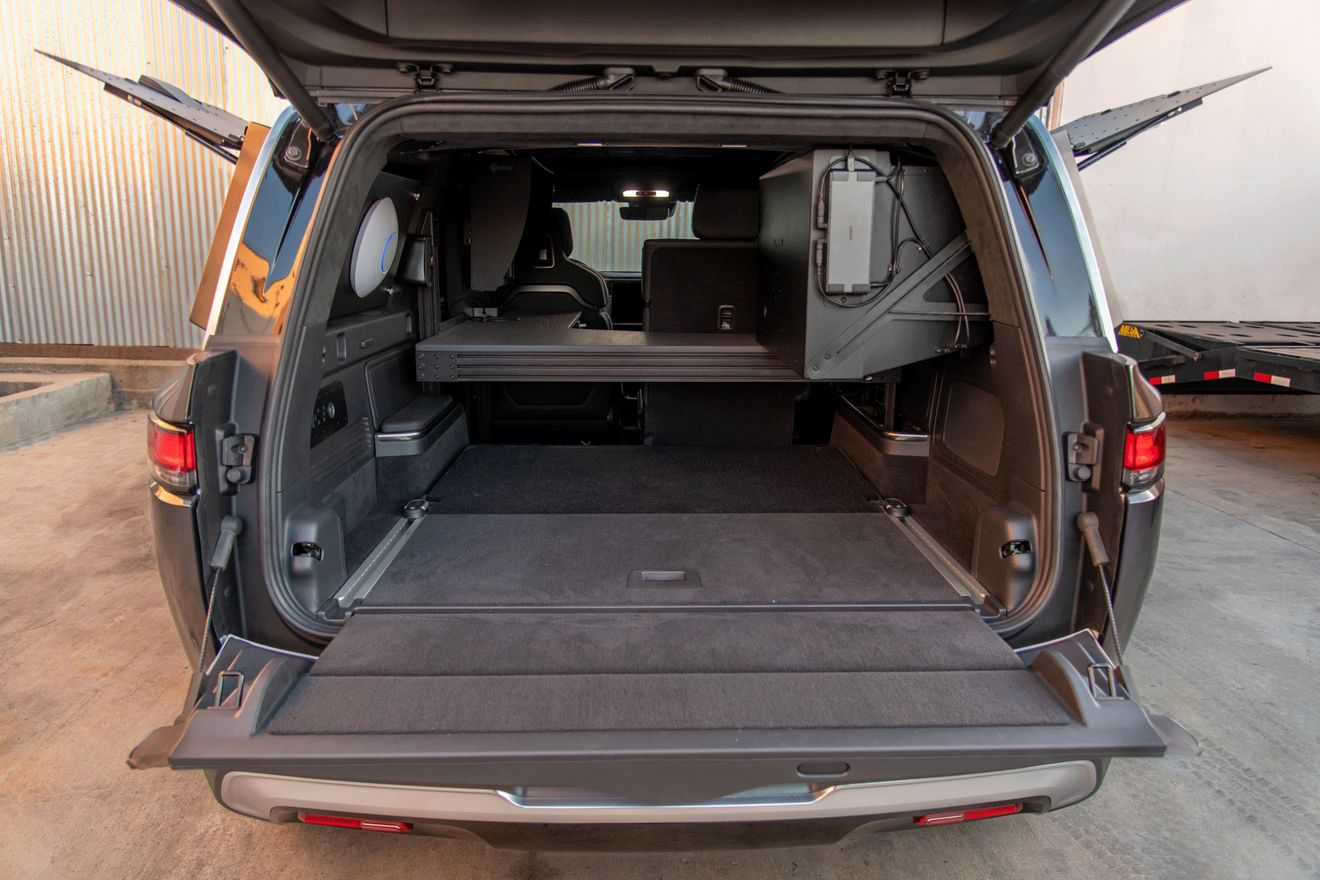
The result gives the crew a place to manage footage wherever the vehicle can be deployed.
Connectivity Built Into the Vehicle
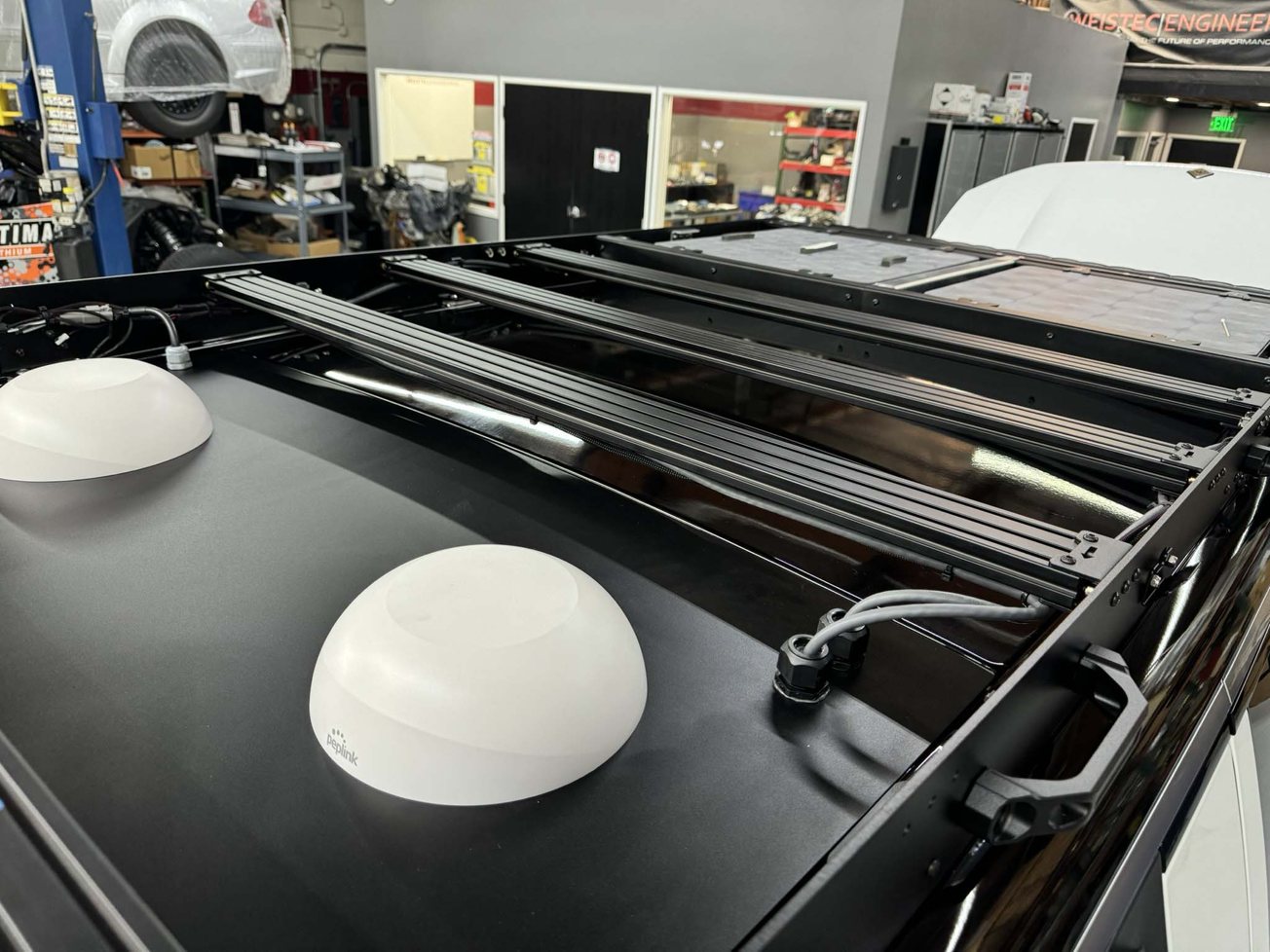
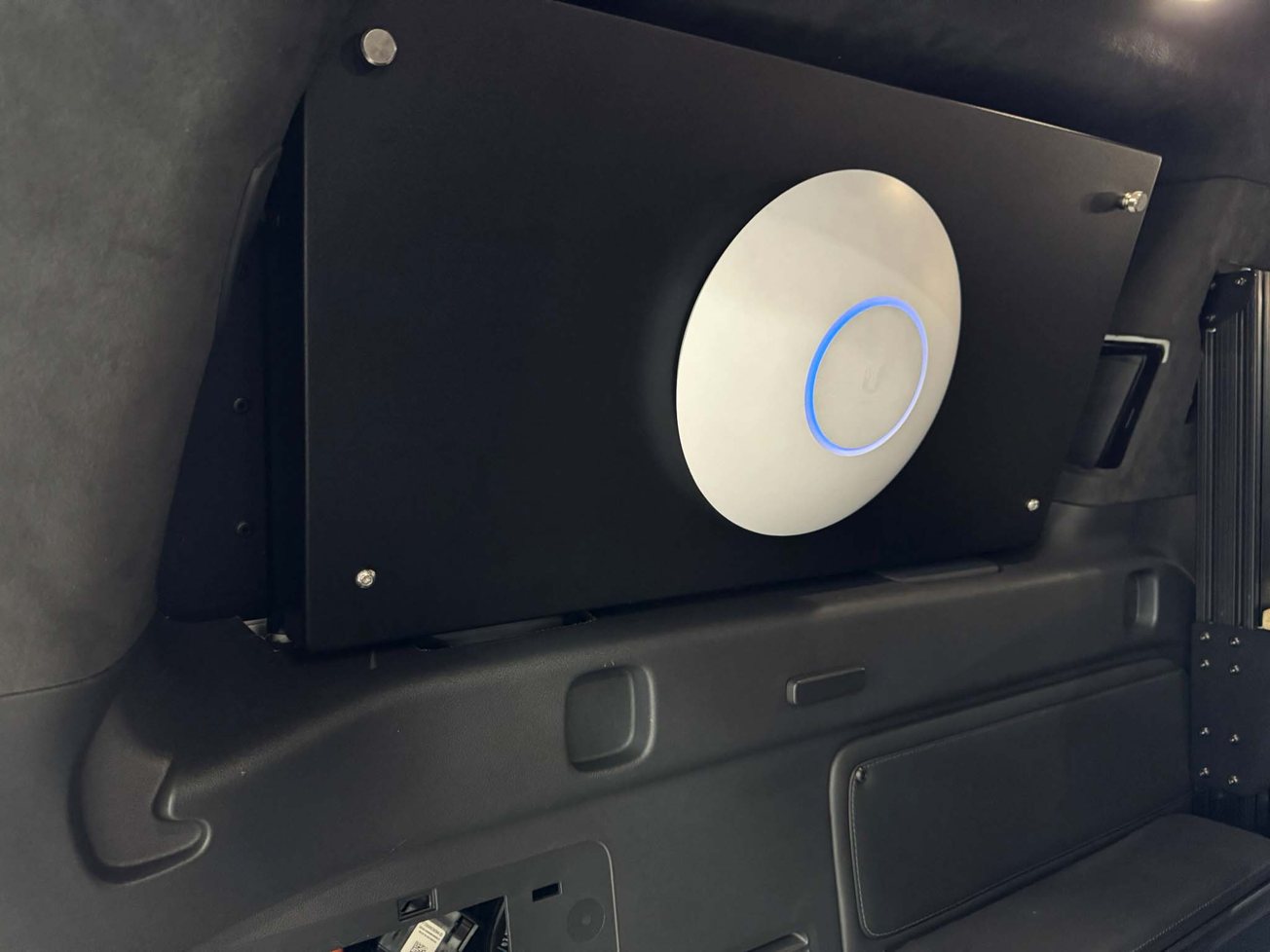
Moving footage to the cloud requires a connection that suits the location. The R1S combines an Amazon Leo satellite terminal with Peplink 5G equipment, providing satellite and cellular connectivity options. Ubiquiti equipment handles routing and wireless access around the vehicle.
Integrating the satellite terminal presented a specific packaging challenge: the completed R1S still needed to fit inside the studio’s parking structure.
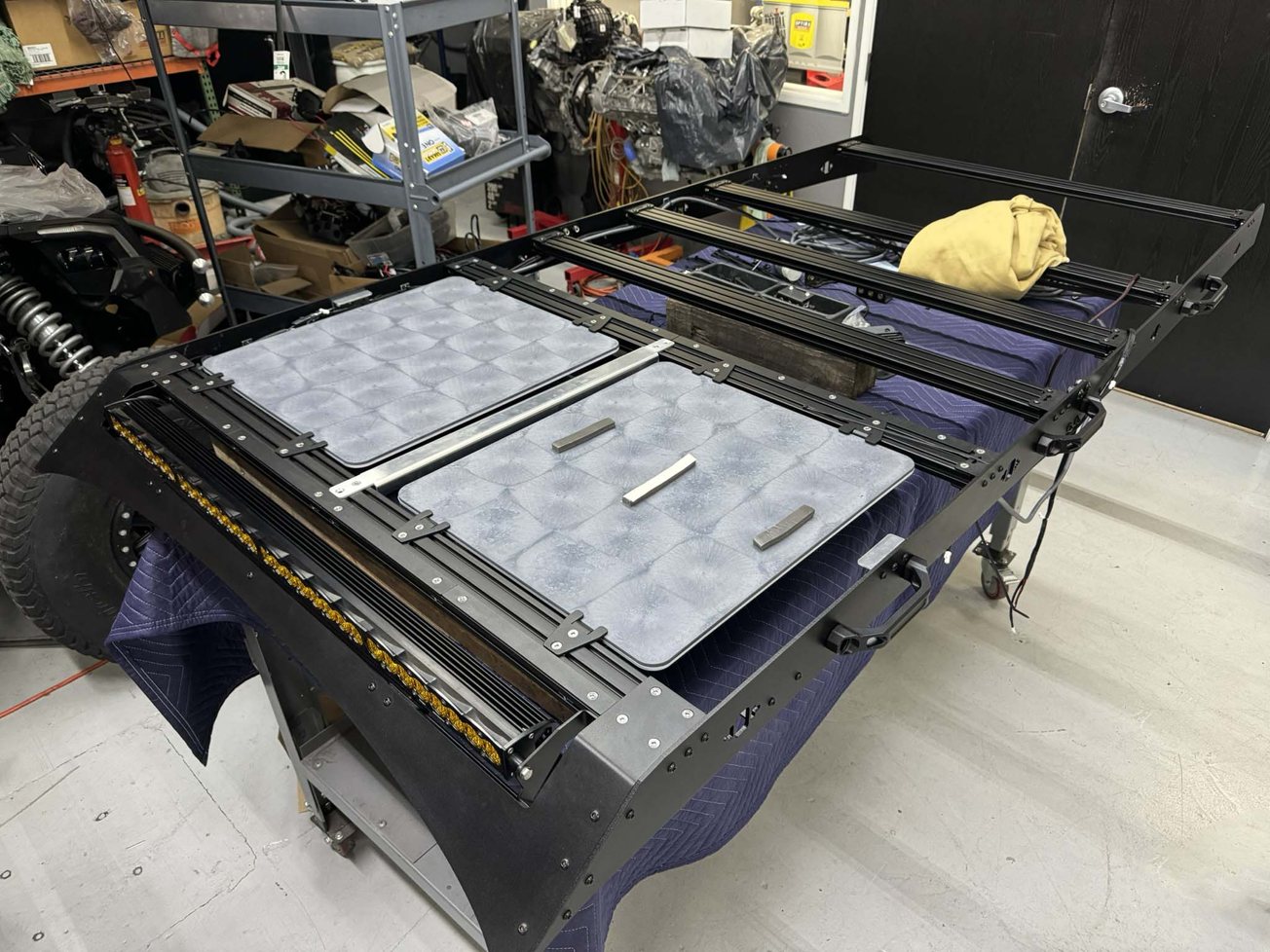
We recessed the terminal into the roof system to maintain a low profile, routing its power and data connections internally to the equipment rack. That approach also eliminates a separate dish for the crew to unpack and position.
With connectivity available, the workstation can upload footage from location into AWS-based production workflows, helping connect the set with teams working elsewhere.
Power Beyond the Grid
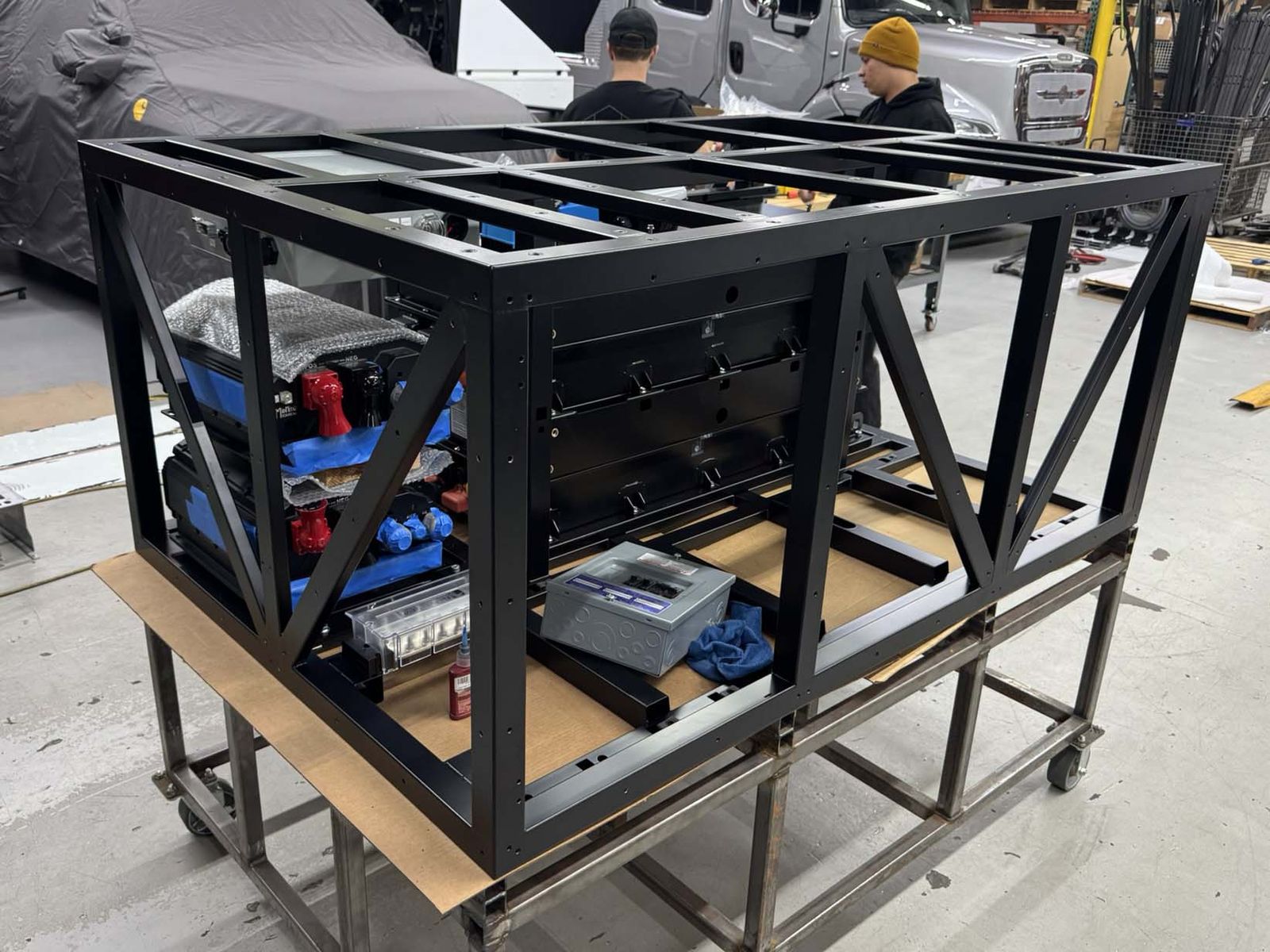
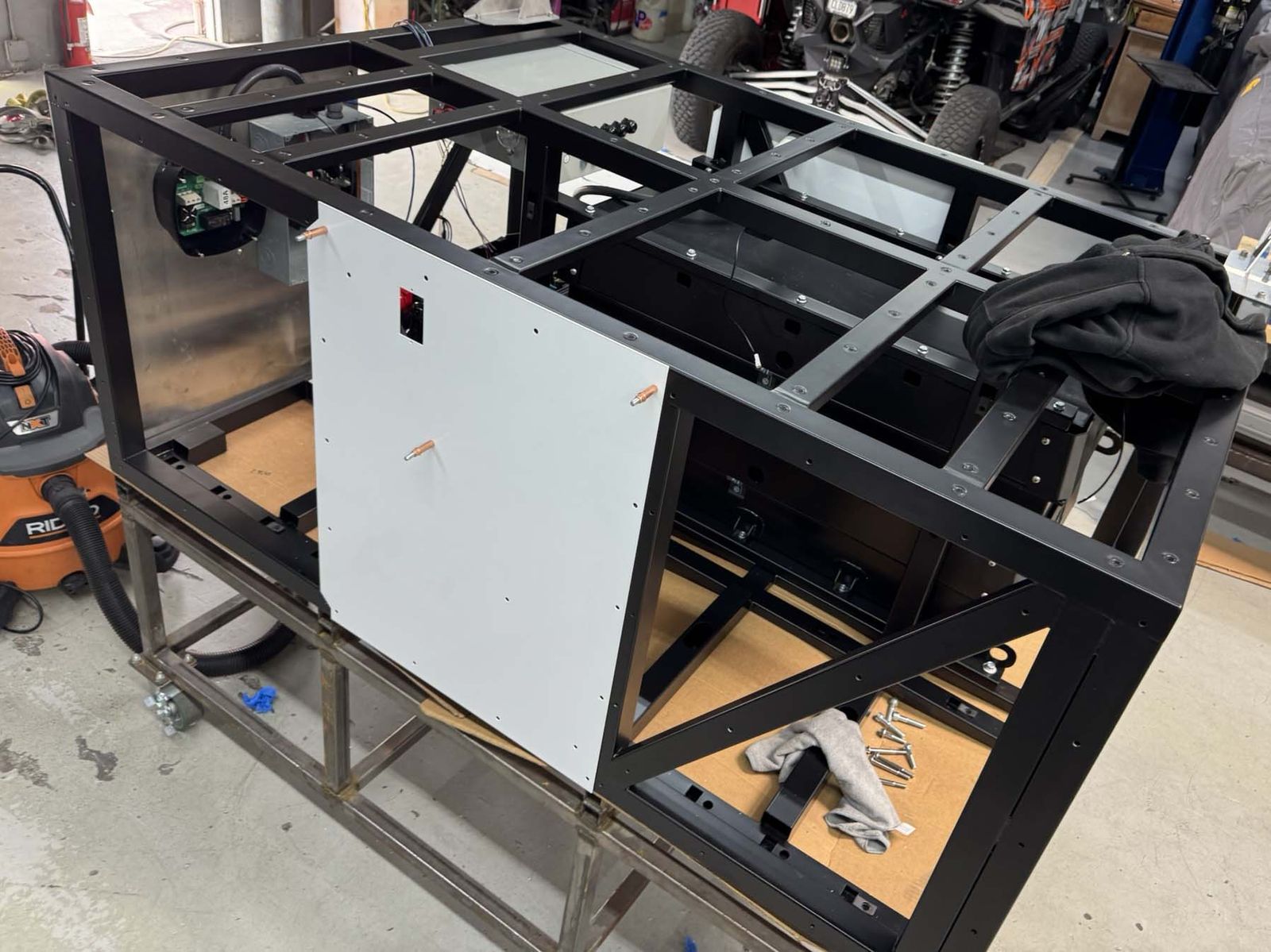
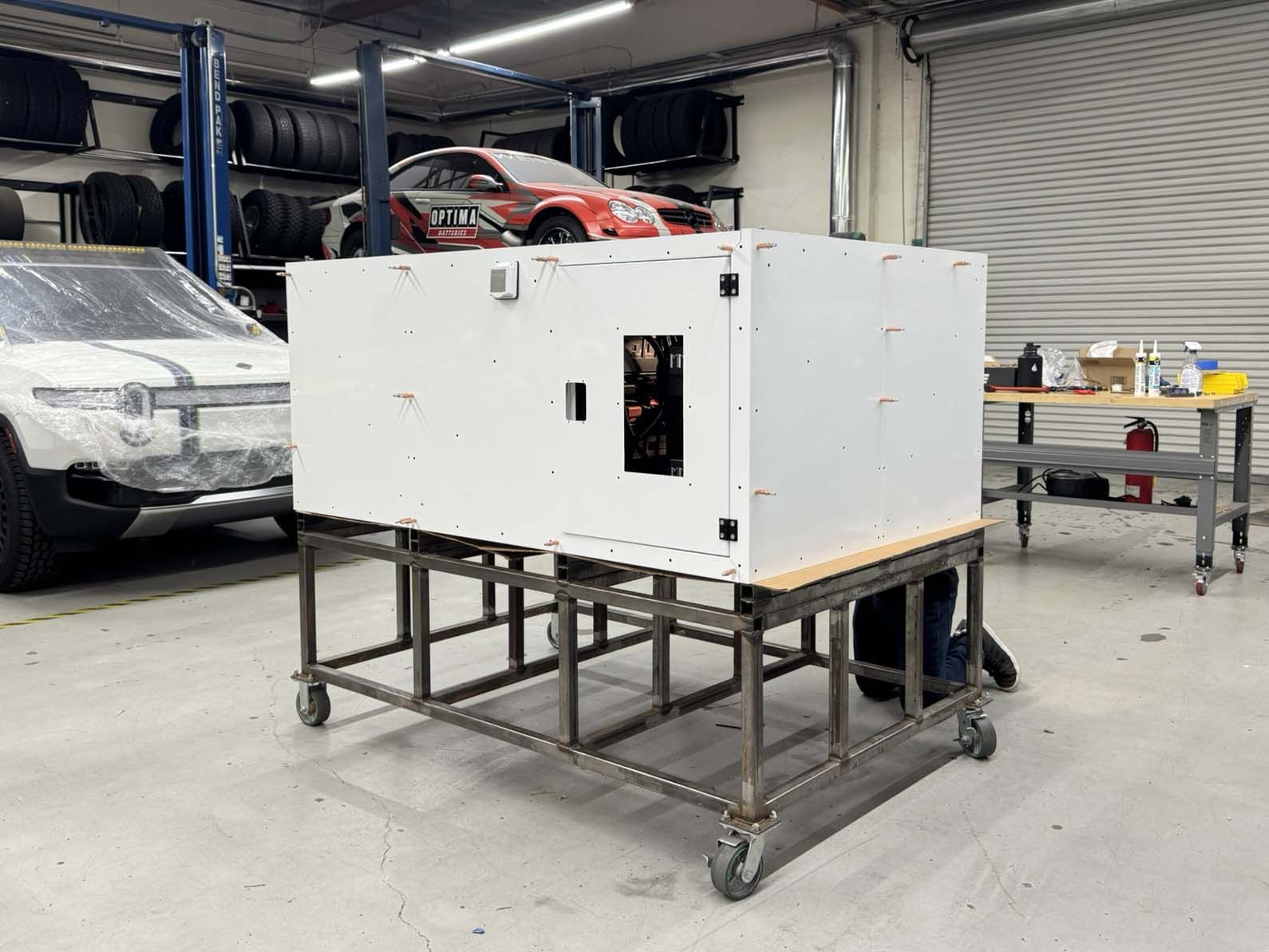
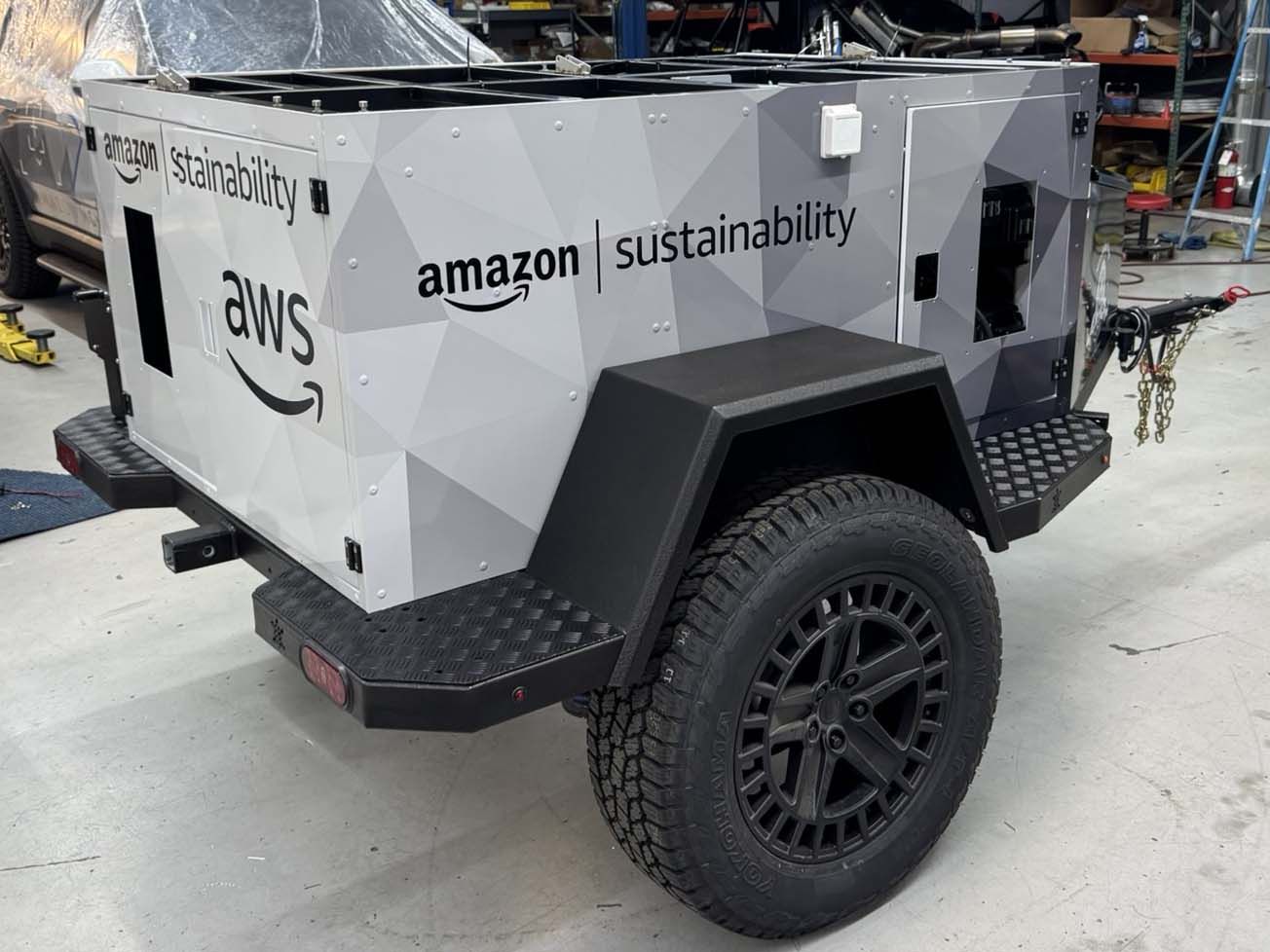
Field charging was the other half of the project. To support the R1S away from fixed charging infrastructure, we designed and fabricated the TAP trailer.
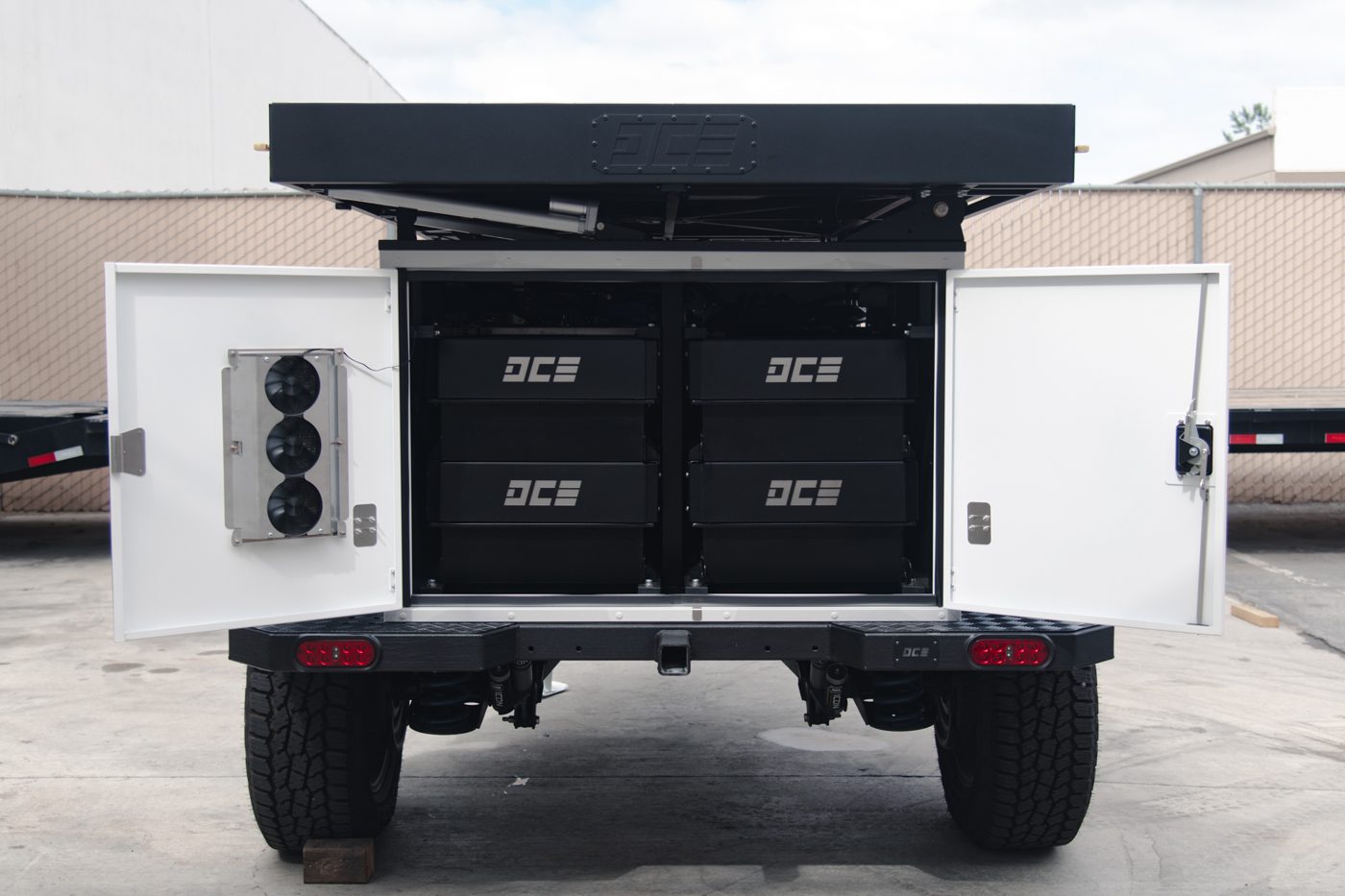
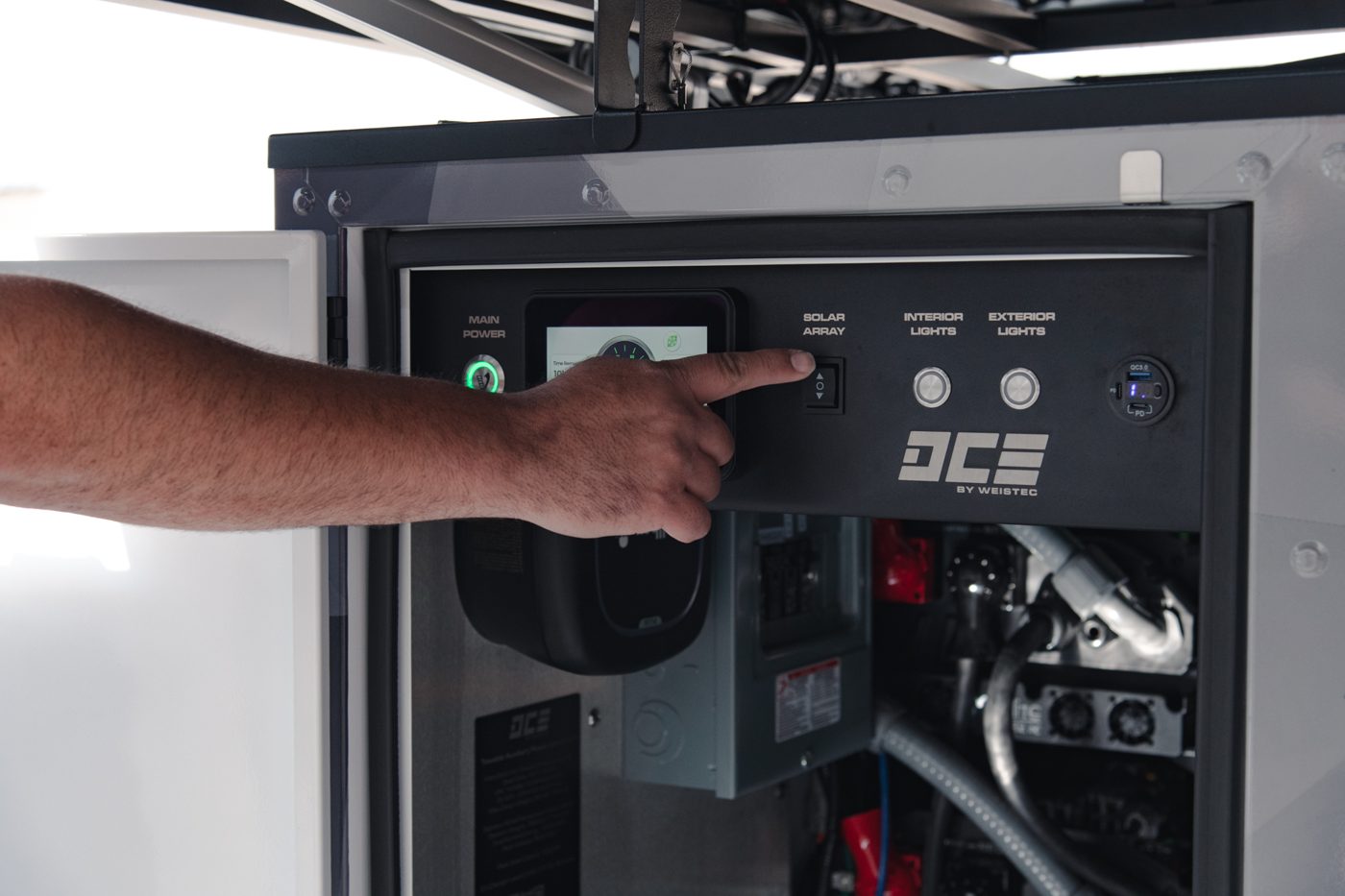
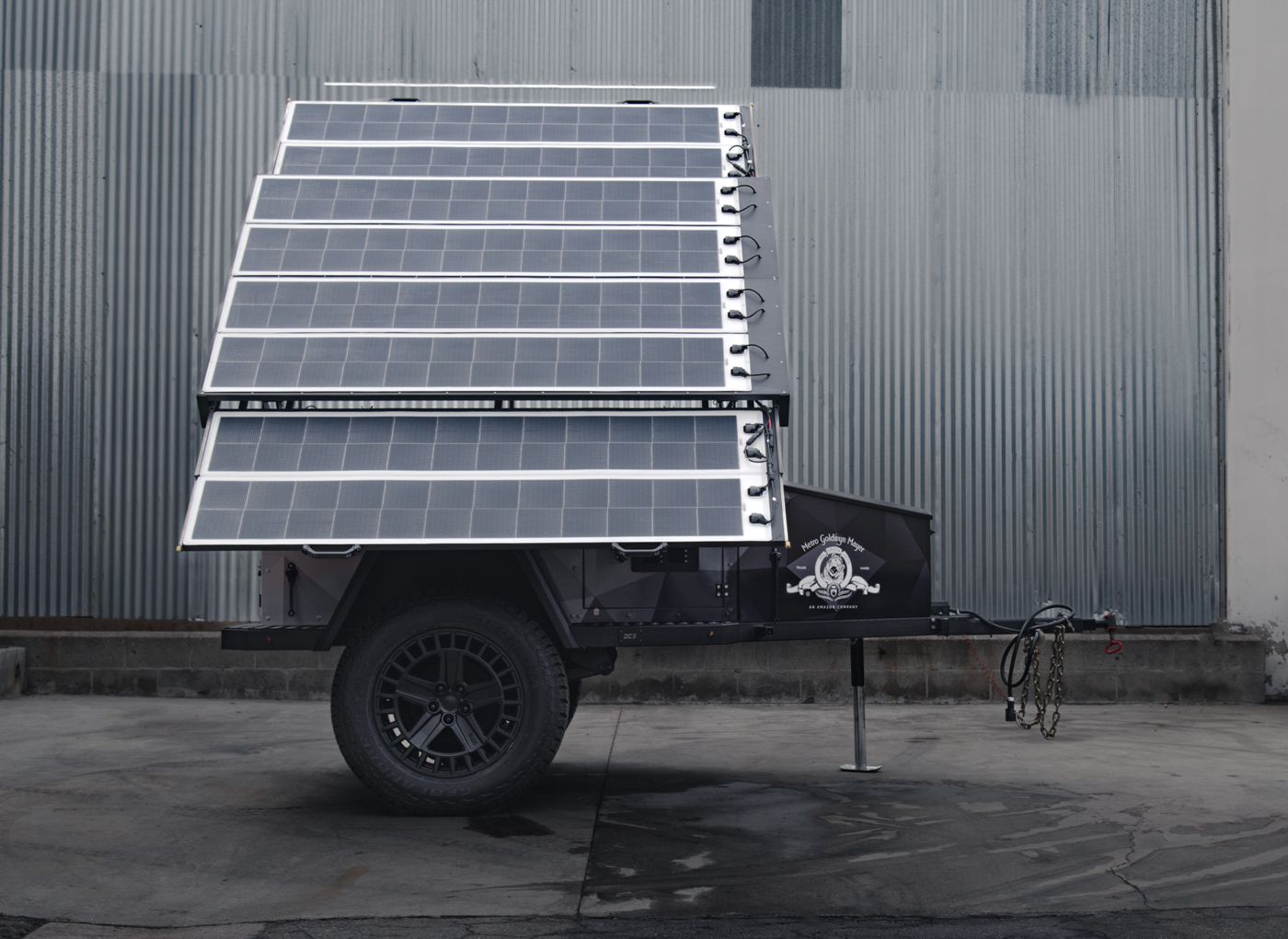
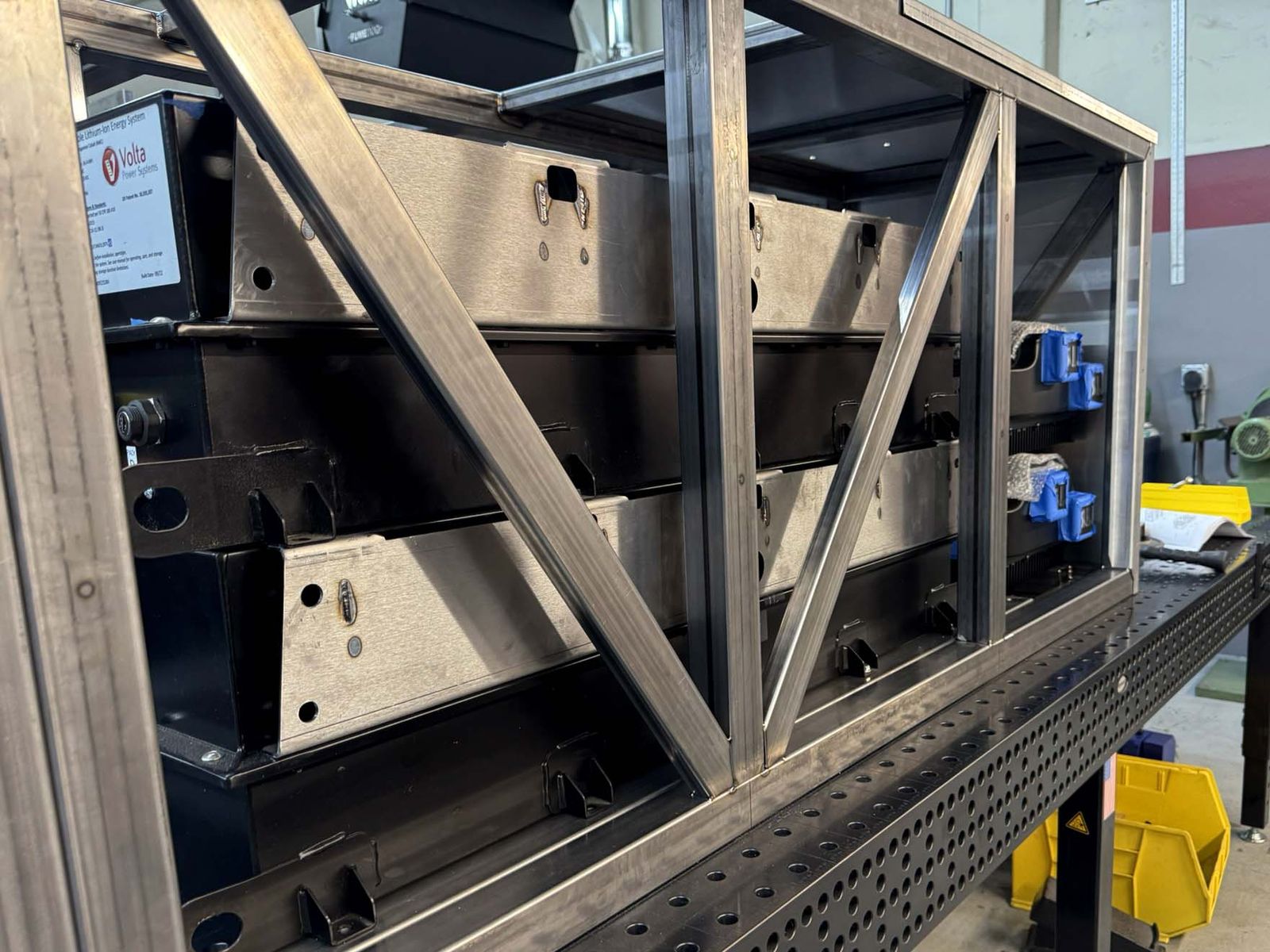
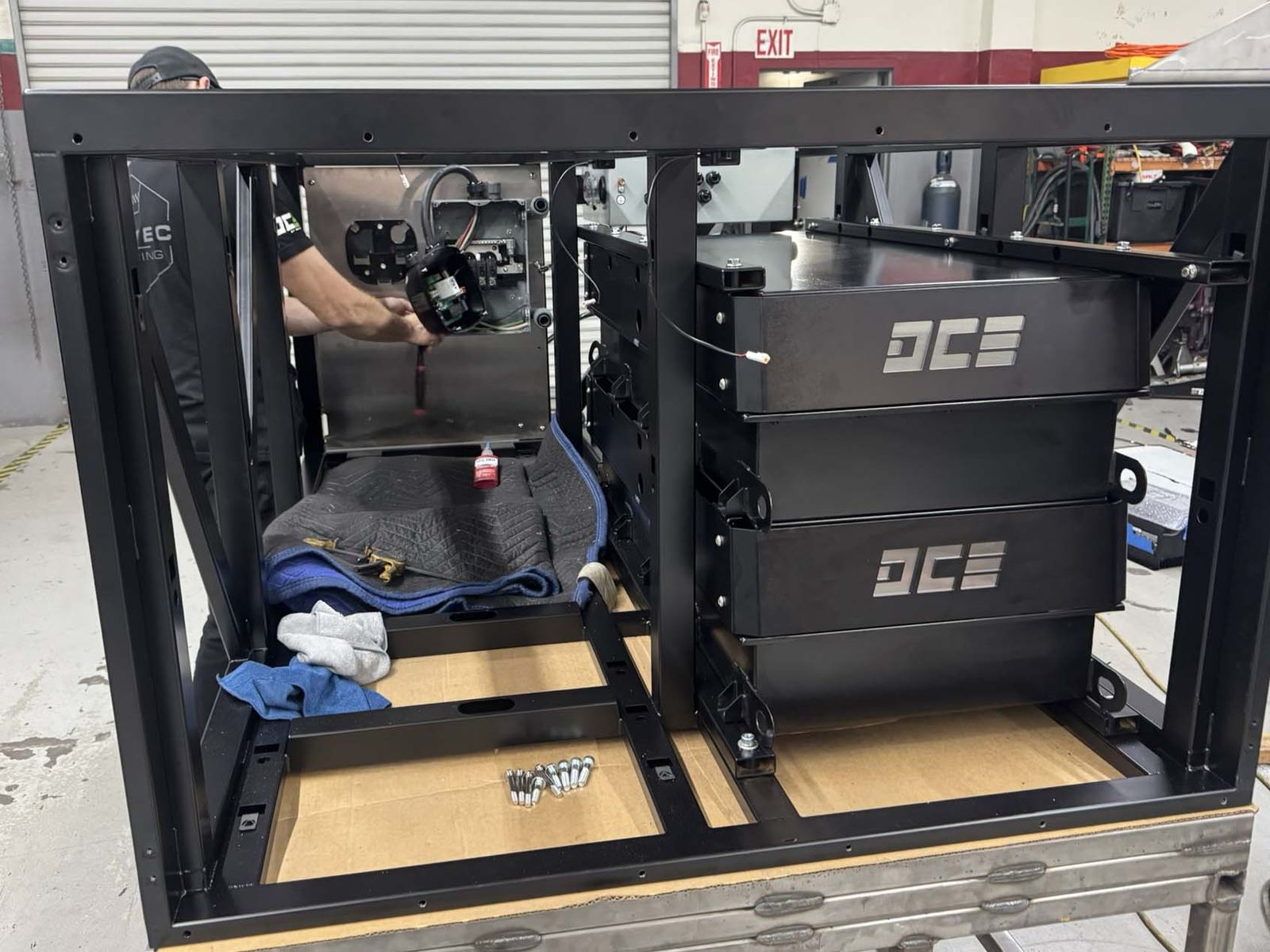
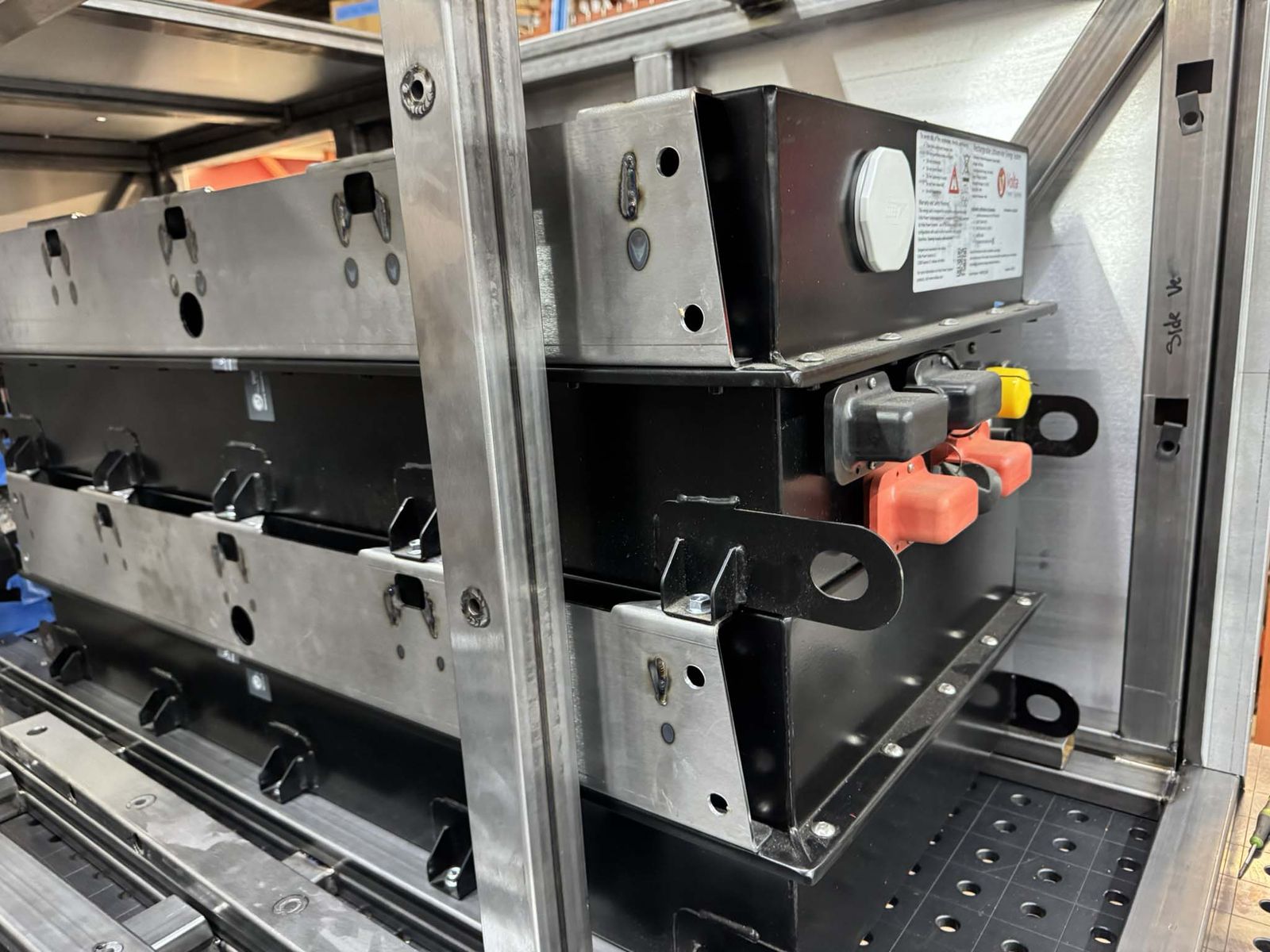
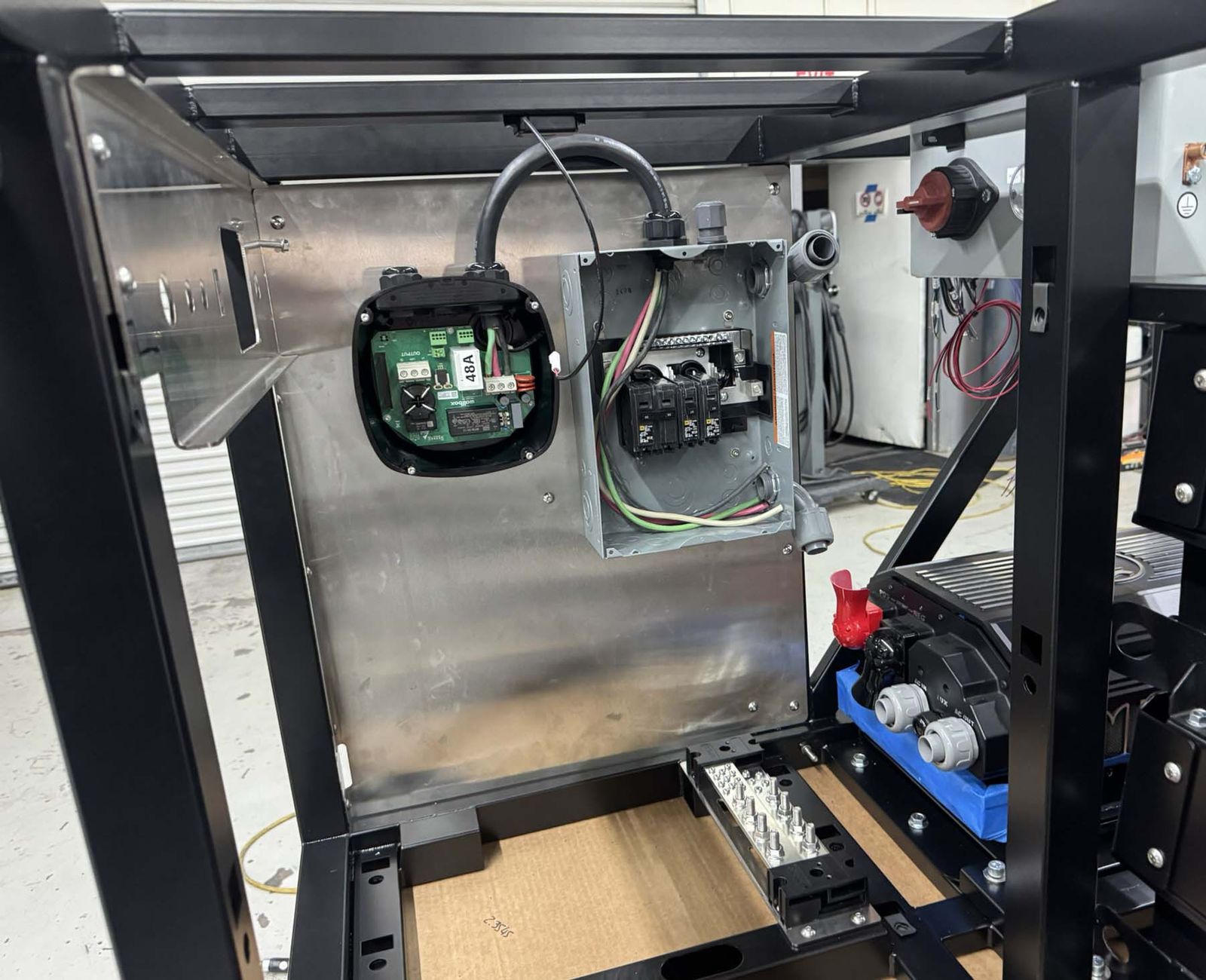
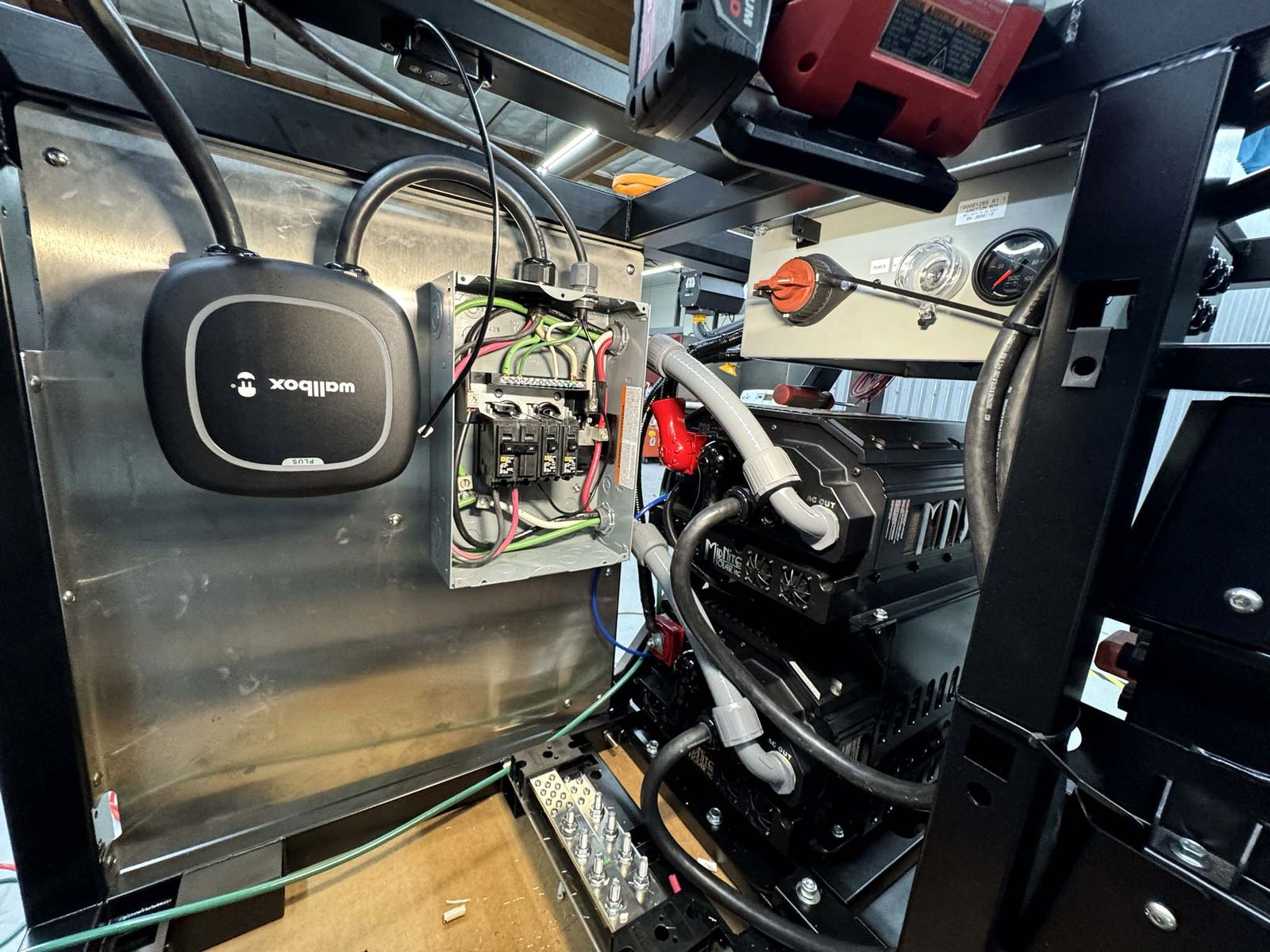
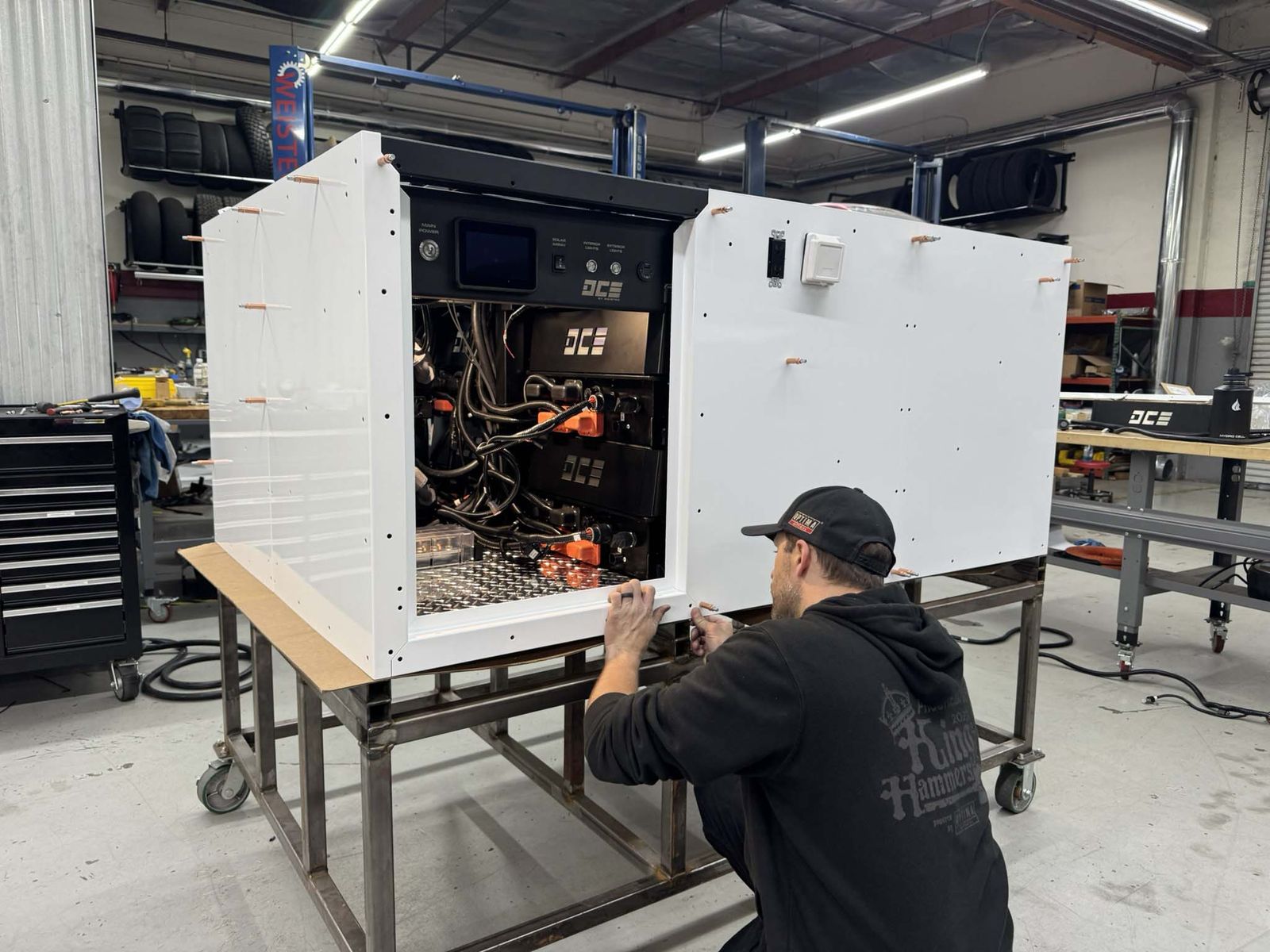
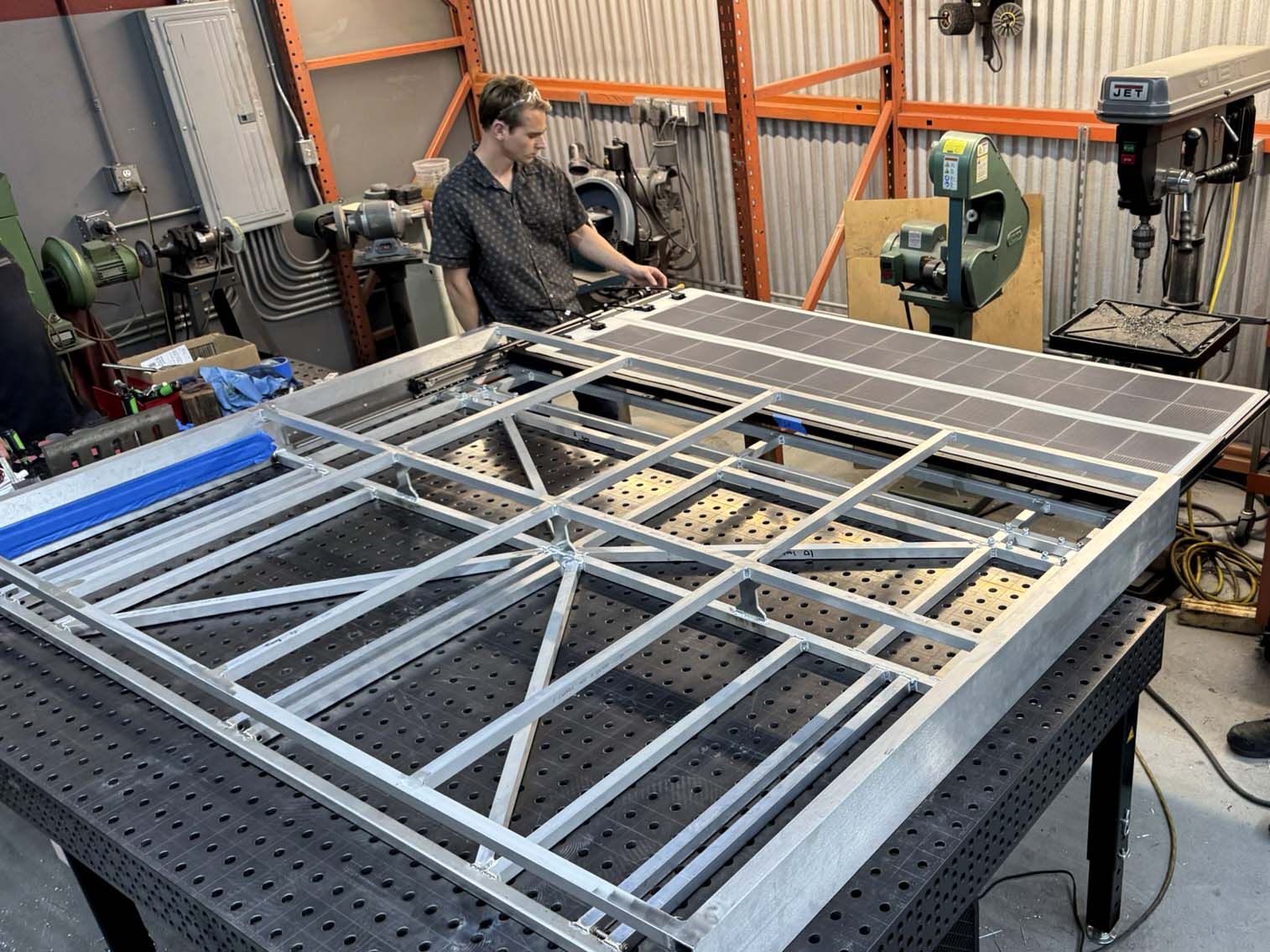
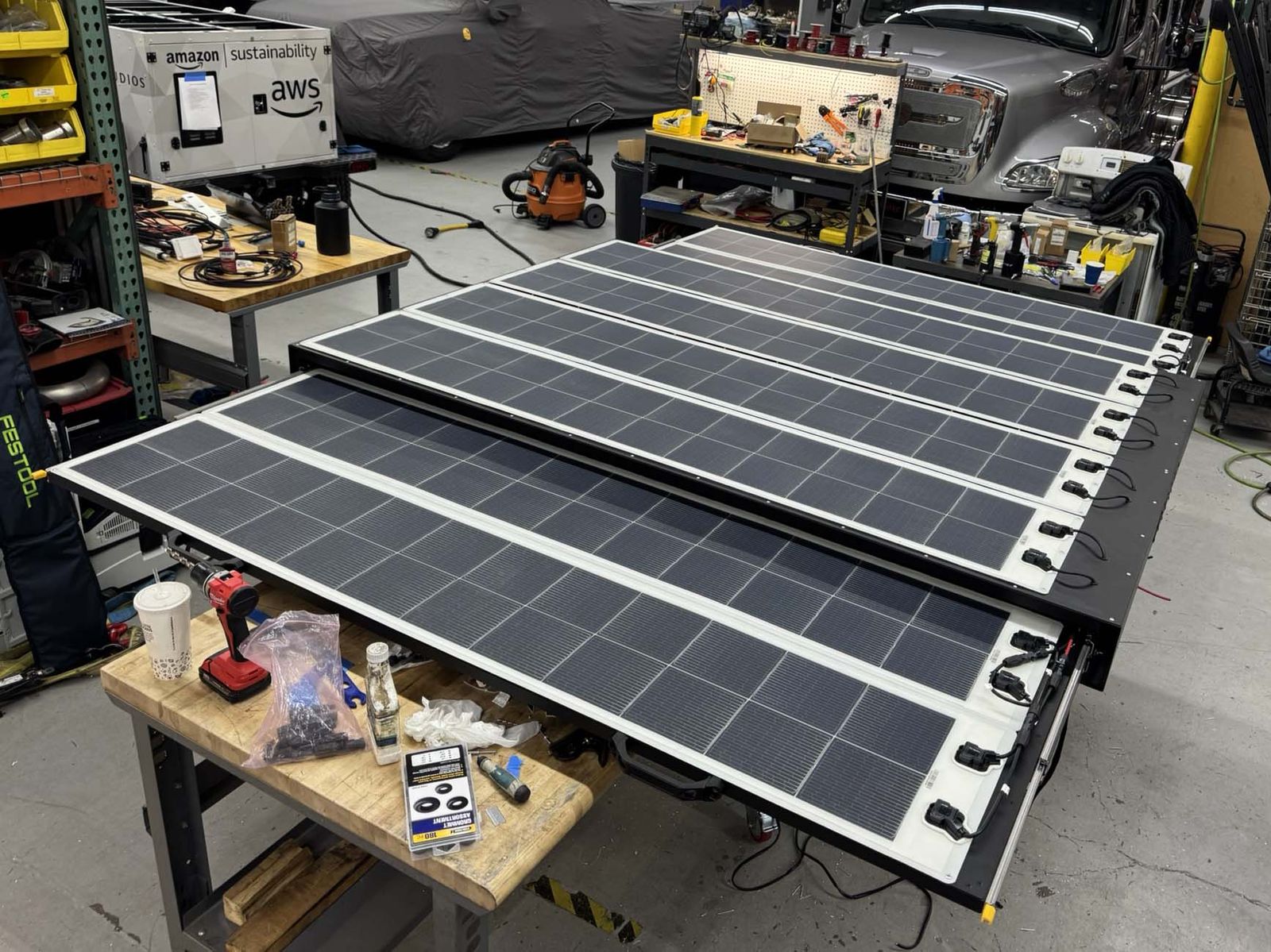
Built around 105.6 kWh of NMC lithium battery storage, the trailer supplies a Wallbox Level 2 EV charger to recharge the Rivian. A 1,000-watt fold-out solar array provides solar input, with connections for optional ground-deployed panels. Shore power allows the system to recharge when grid power is available.
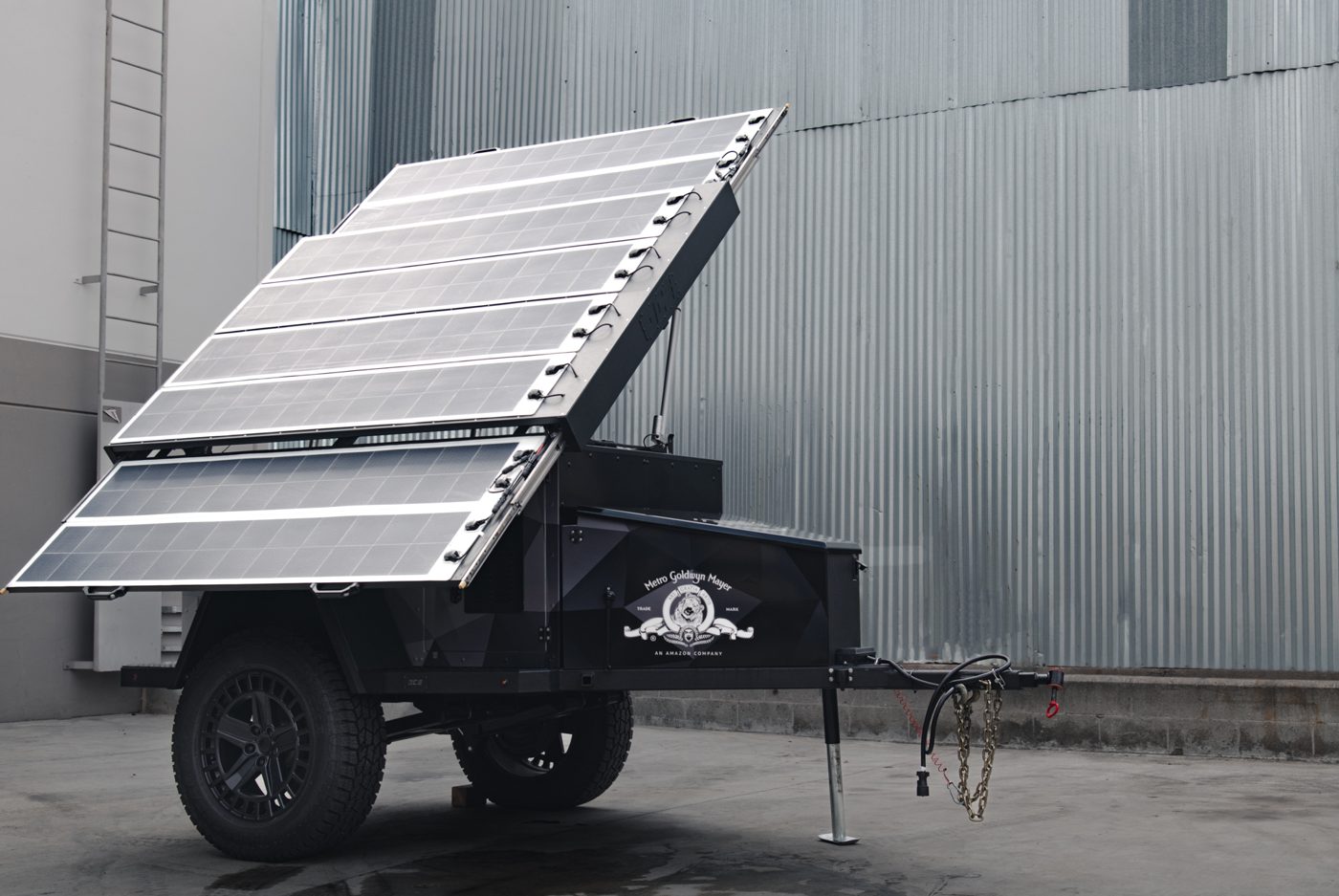
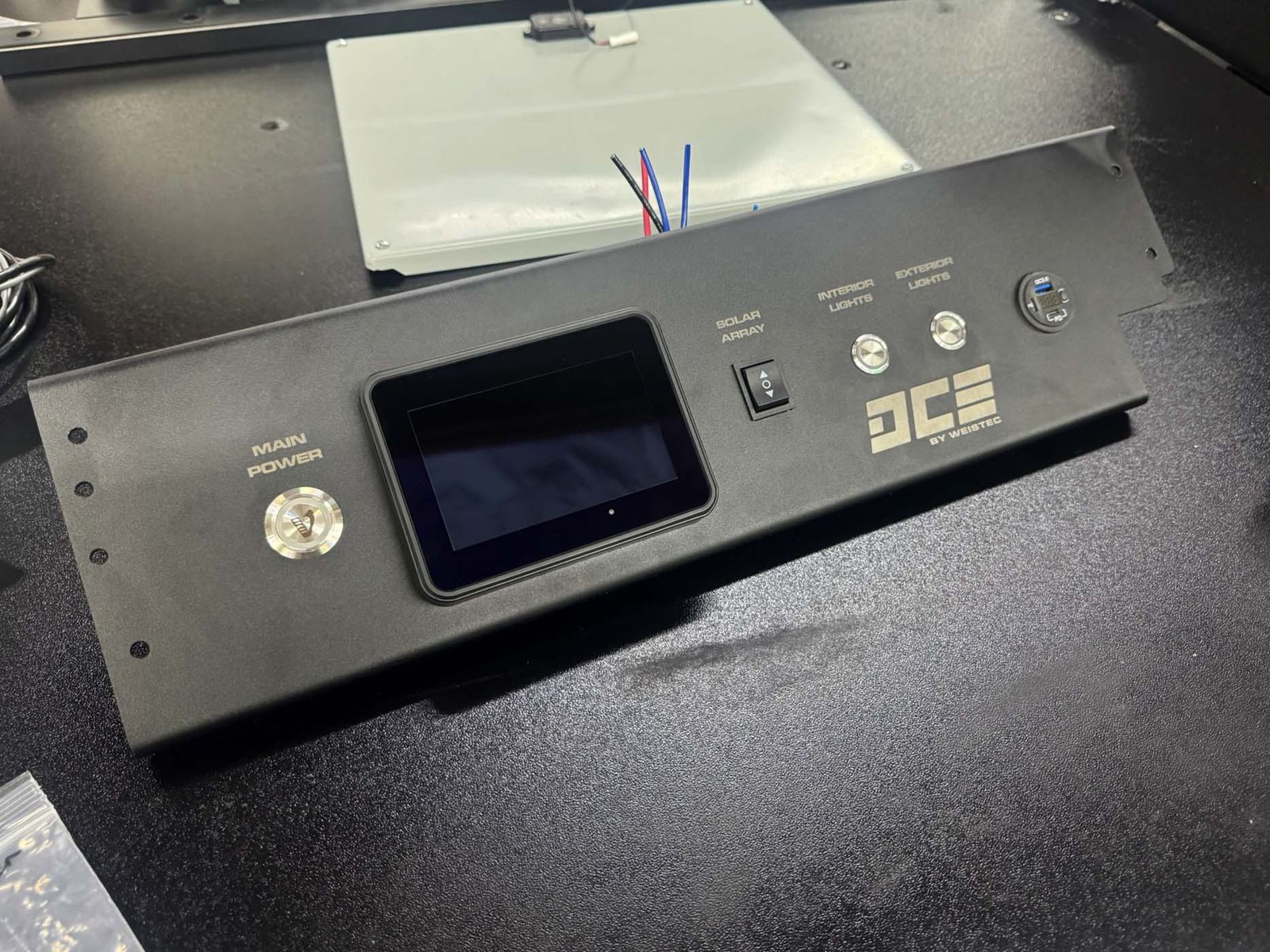
The trailer also includes AC outlets, USB-A and USB-C ports, and integrated lighting.
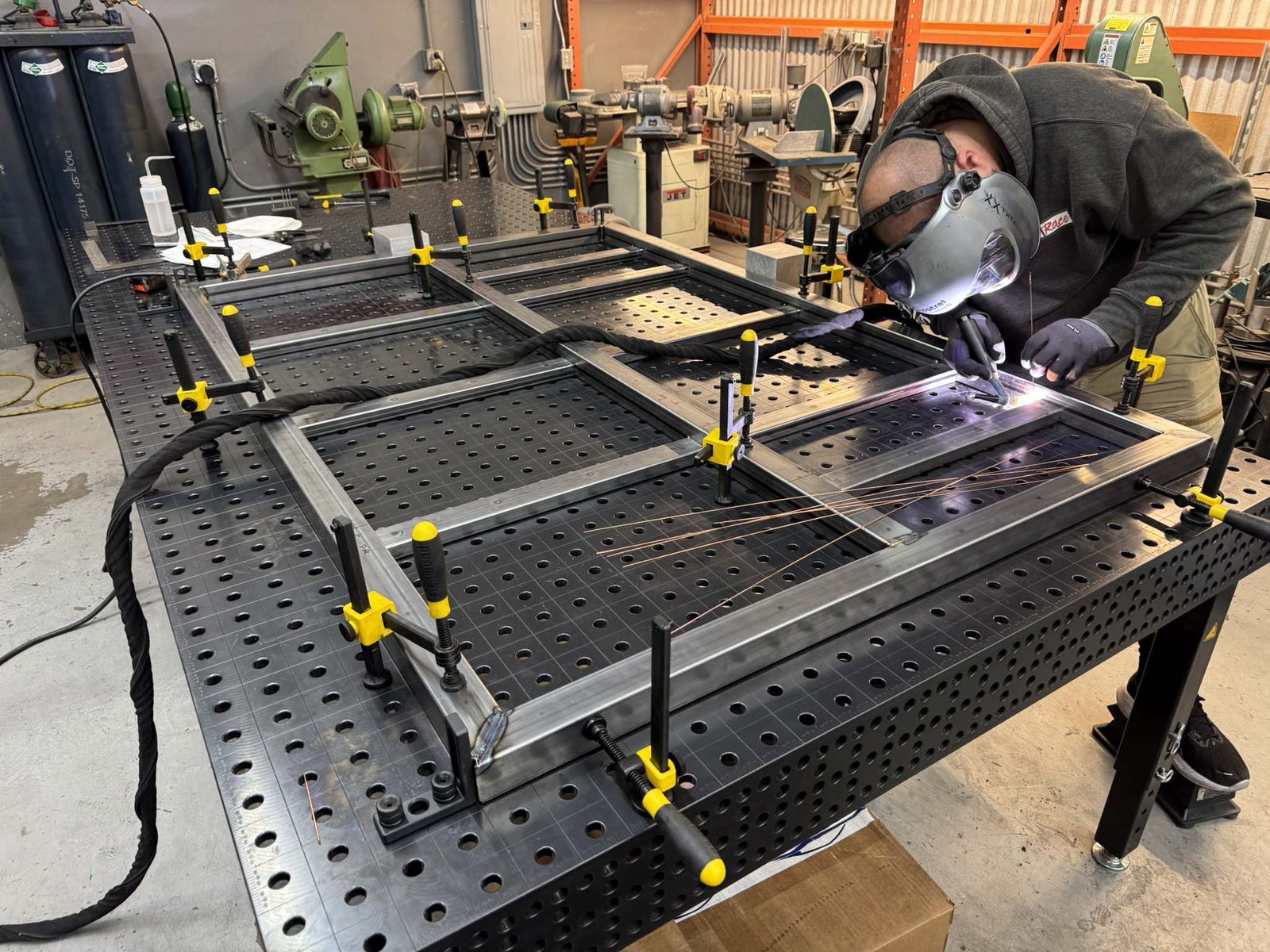
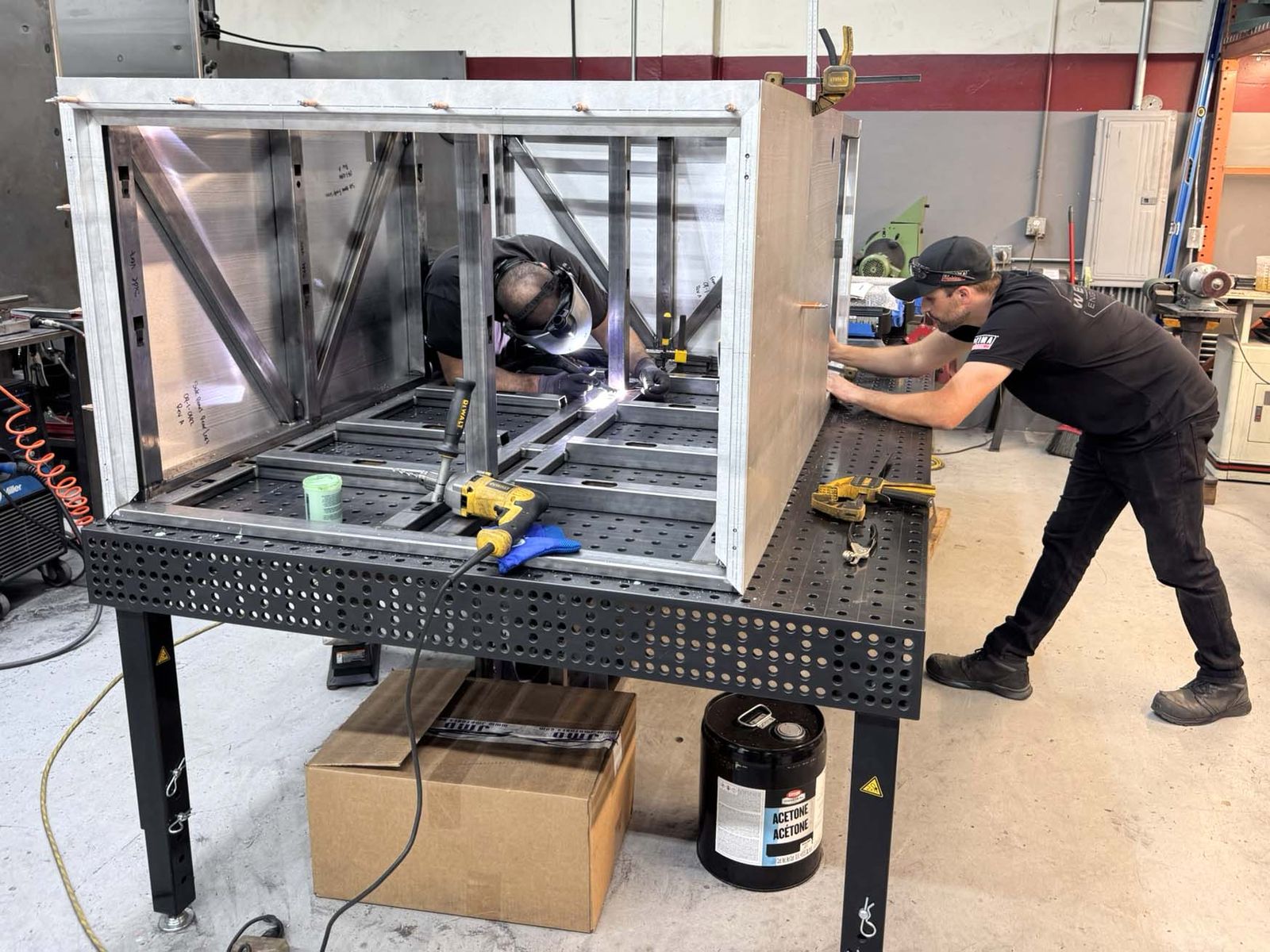
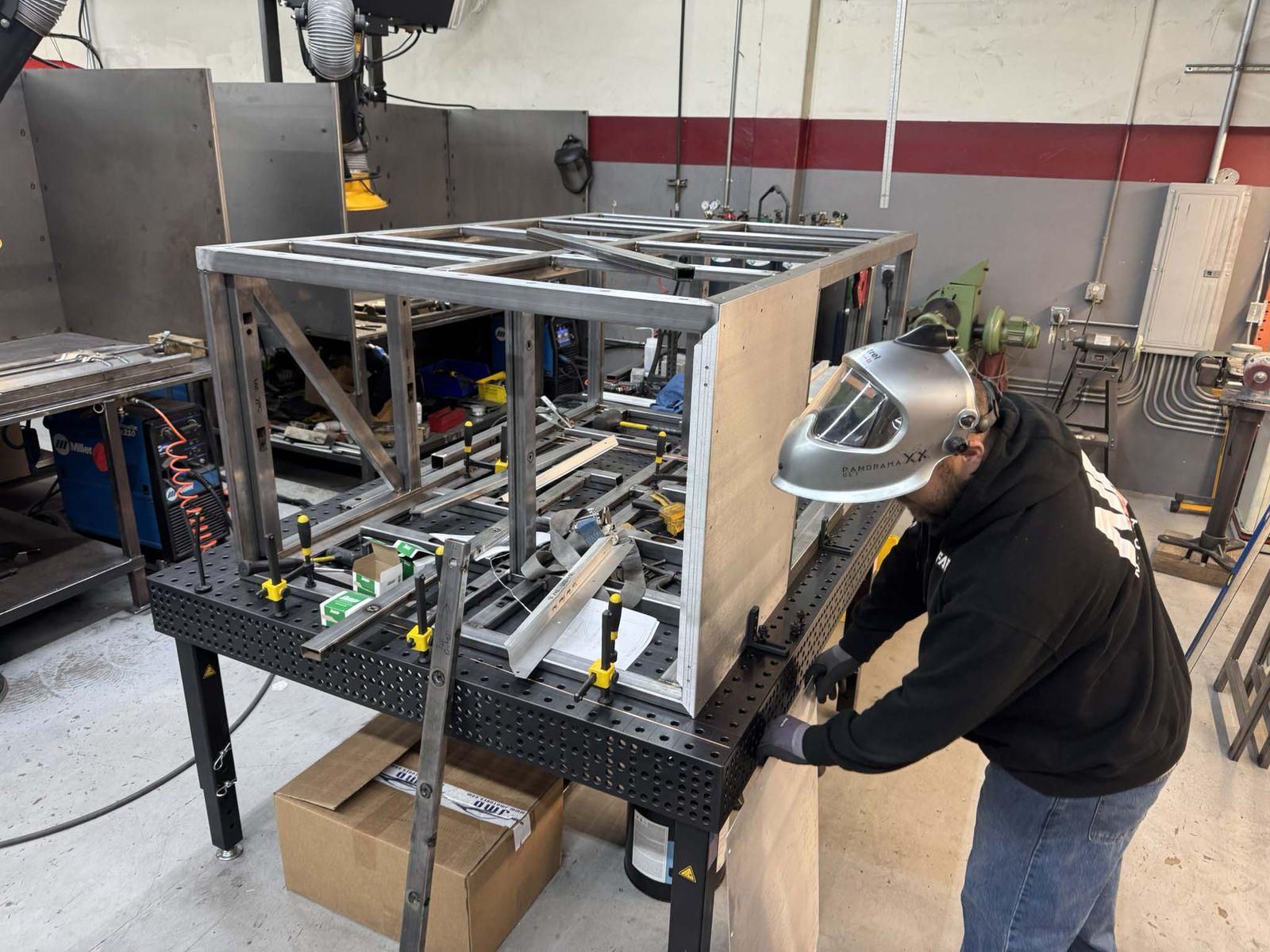
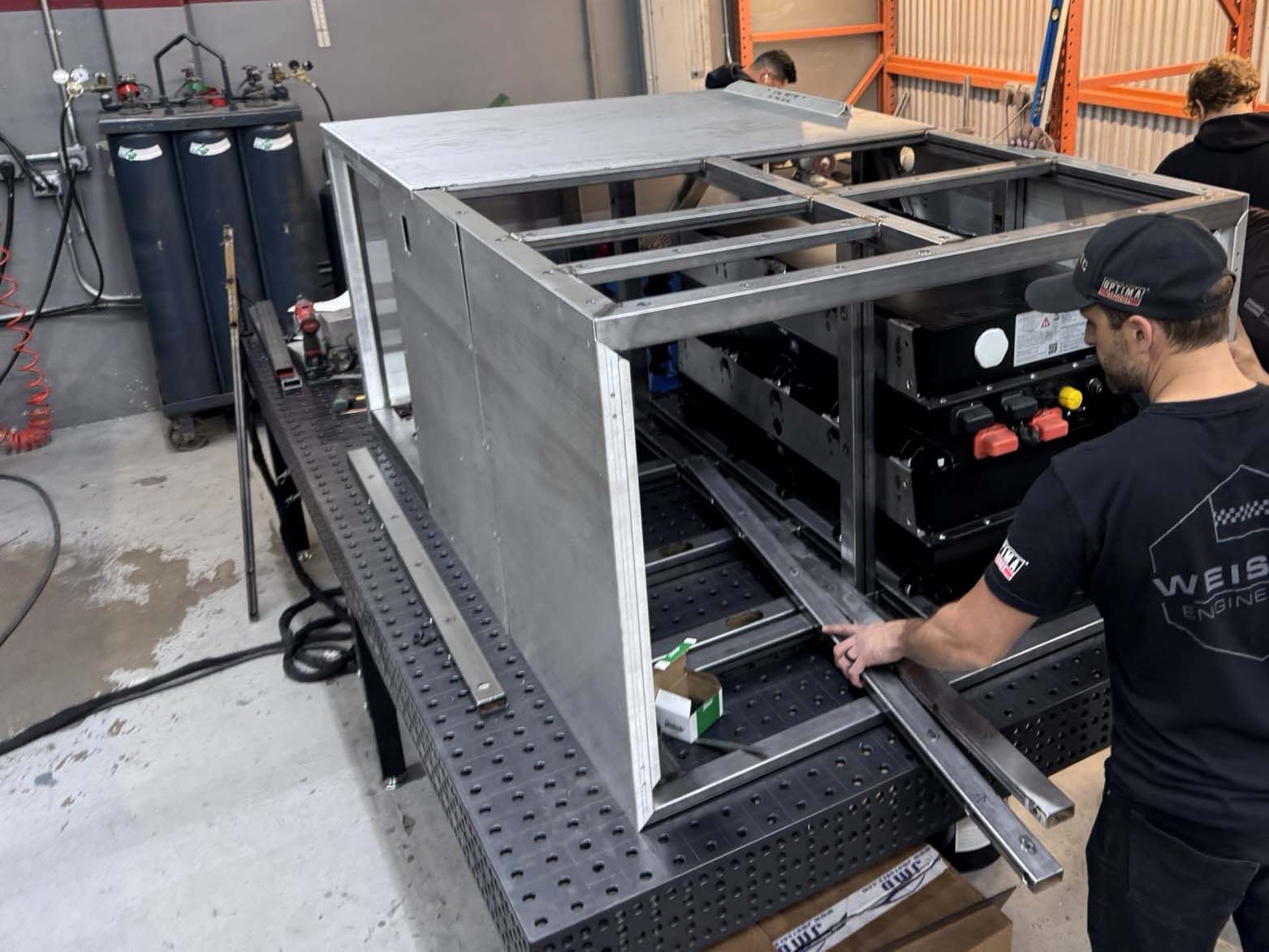
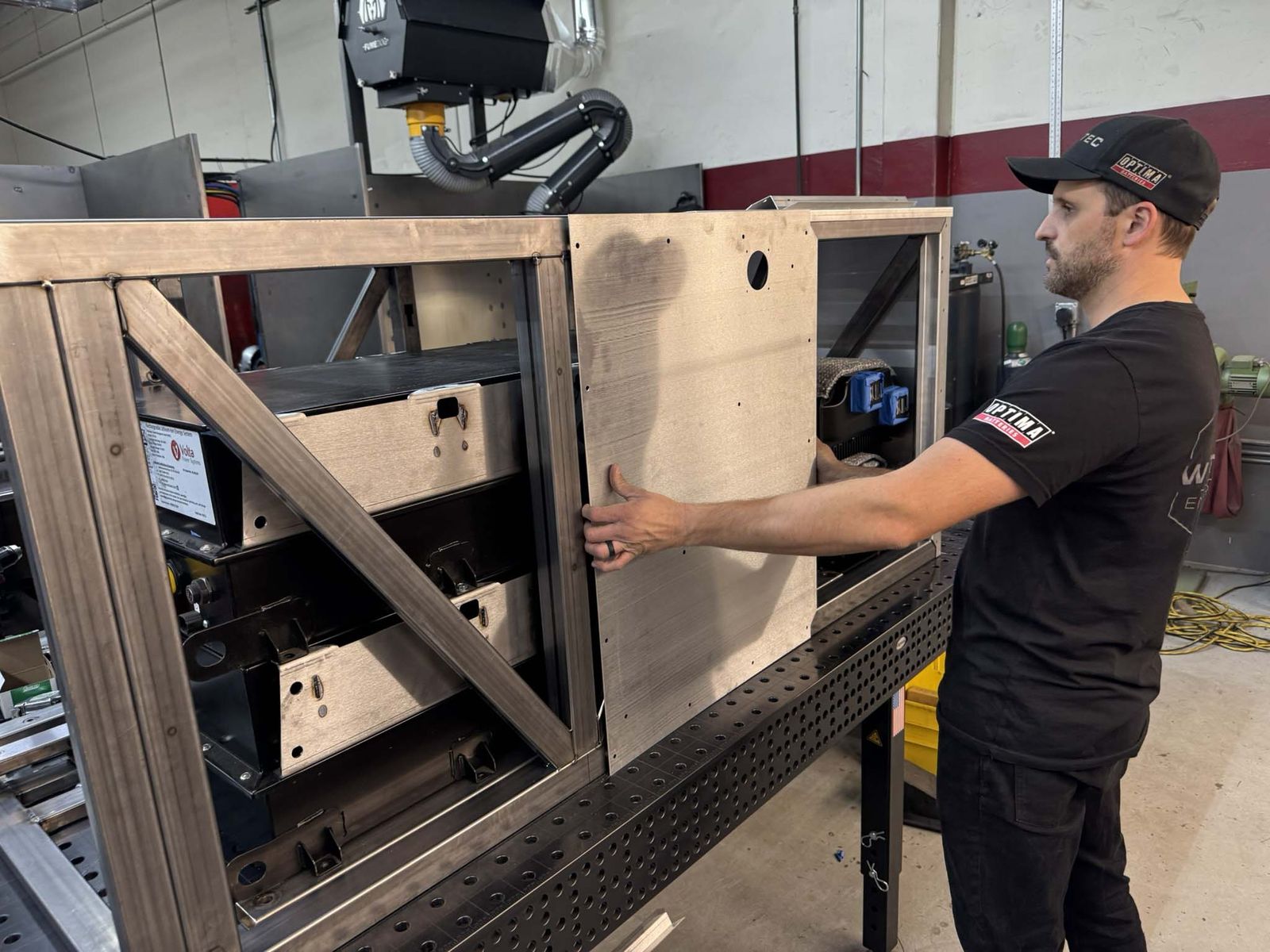
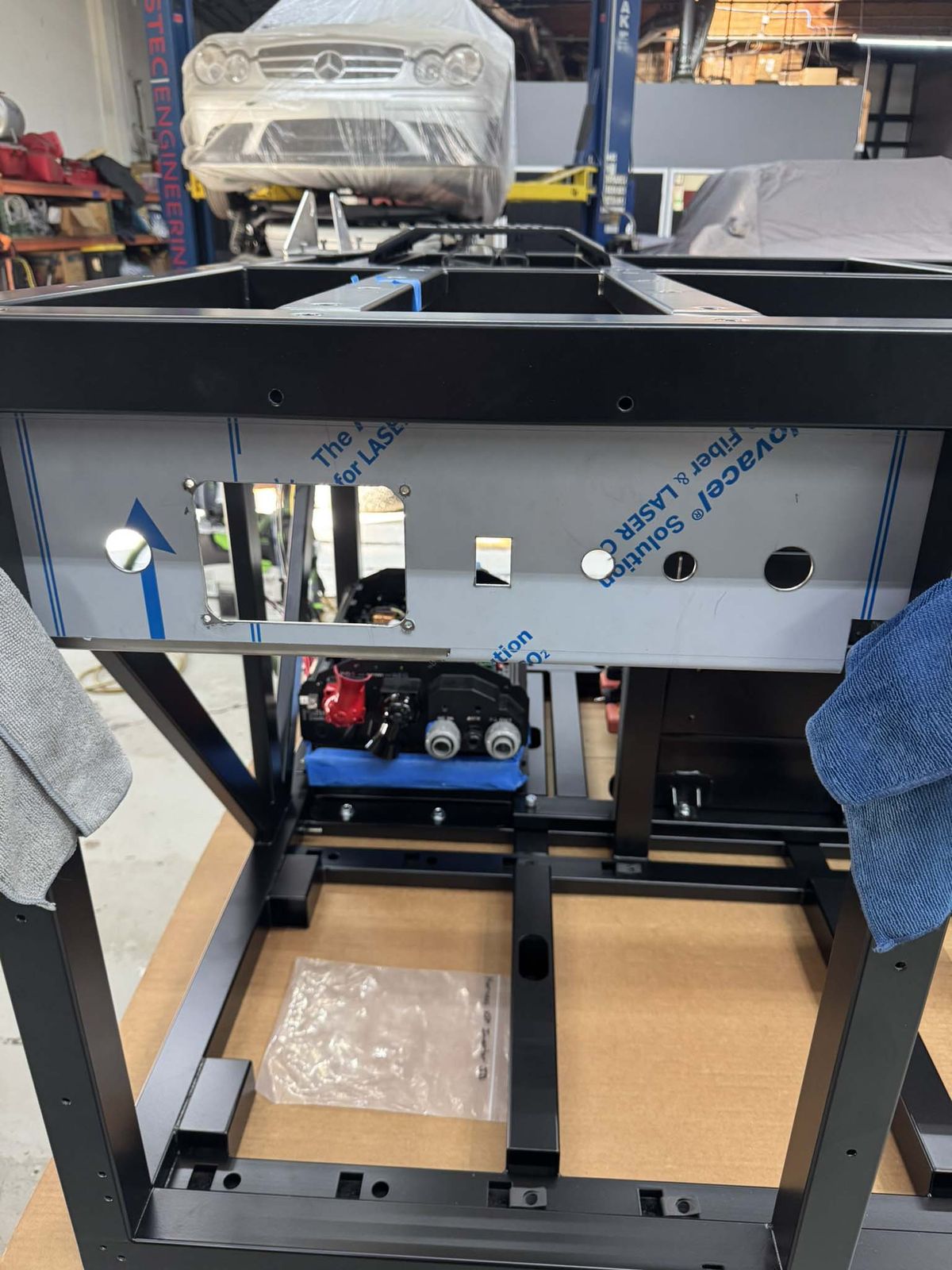
Its battery capacity, charging equipment, enclosure, and chassis had to work within practical towing requirements. We developed the trailer as a complete assembly, with a fabricated steel structure, fitted battery modules, custom control panels, and an aluminum frame for the folding solar array.
Built Around Life on Set
The vehicle’s exterior supports the same practical brief.
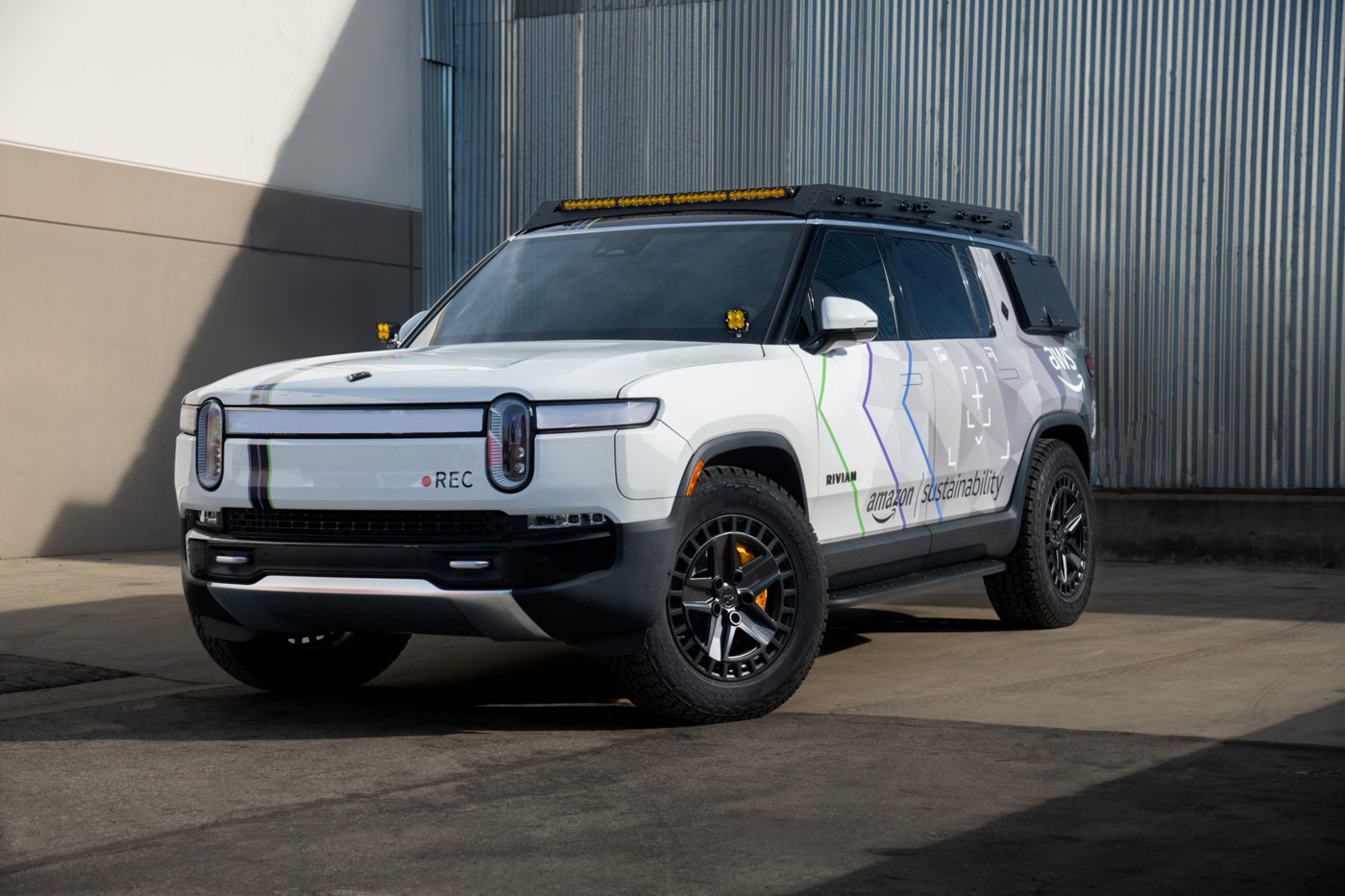
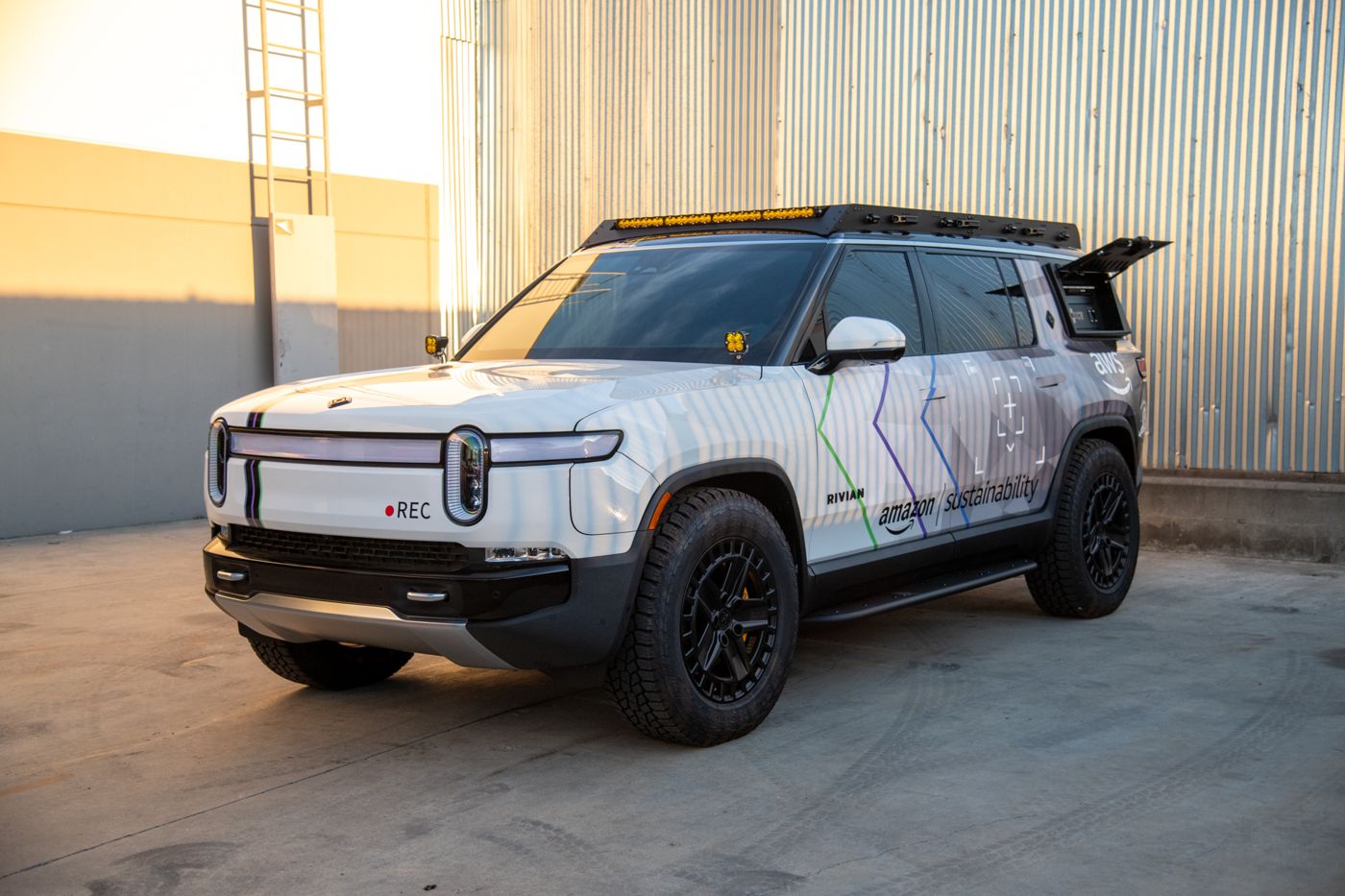
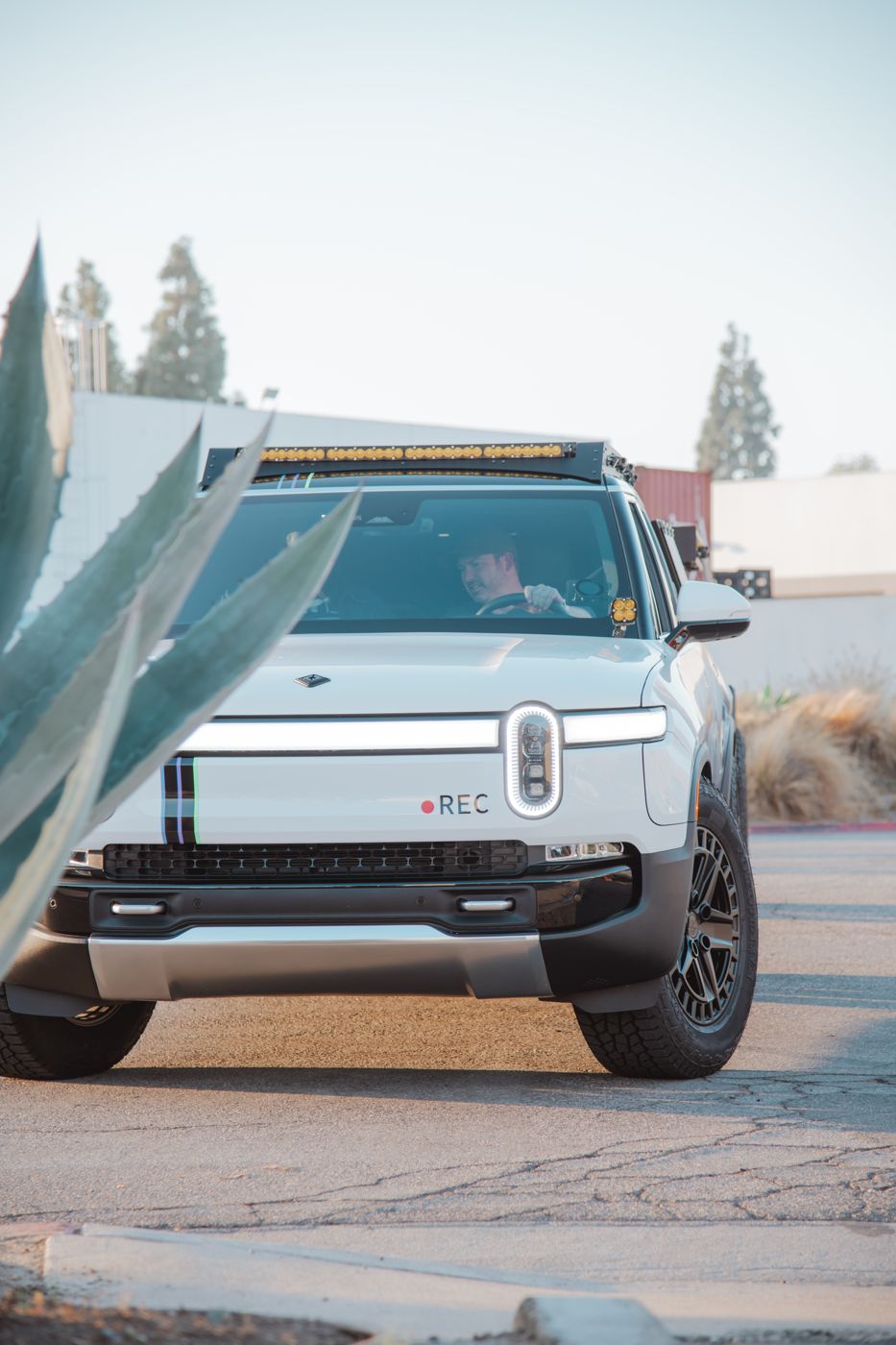
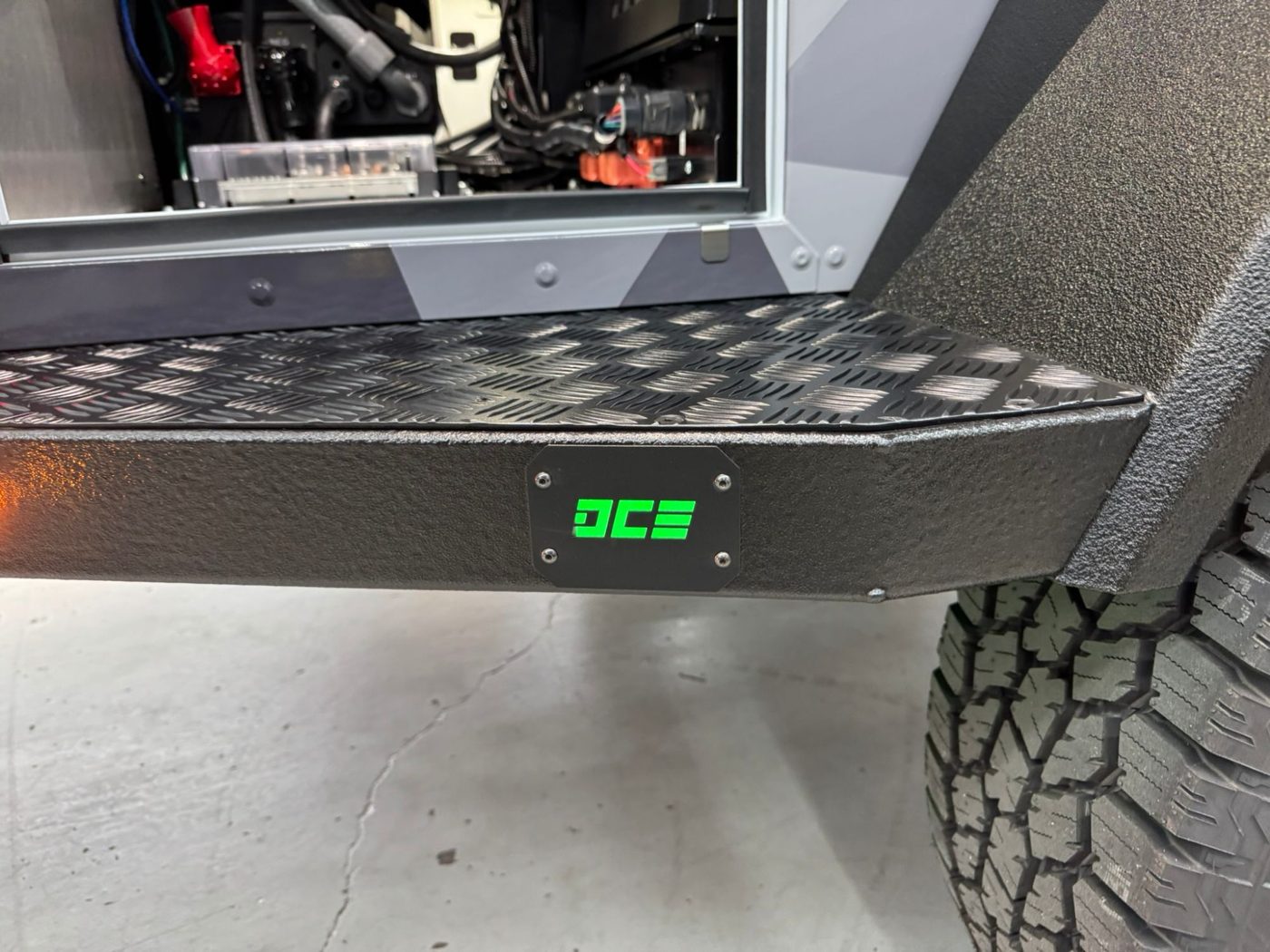
DCE rock sliders, front and rear skid plates, door sill protectors, ditch light brackets, our R1S roof rack system, Black Rhino wheels, and Yokohama tires prepare the platform for access beyond paved roads. Lockable side storage provides additional equipment space with integrated power access, while Baja Designs lighting around the vehicle, managed through a Switch Pros switching system, supports work after dark.
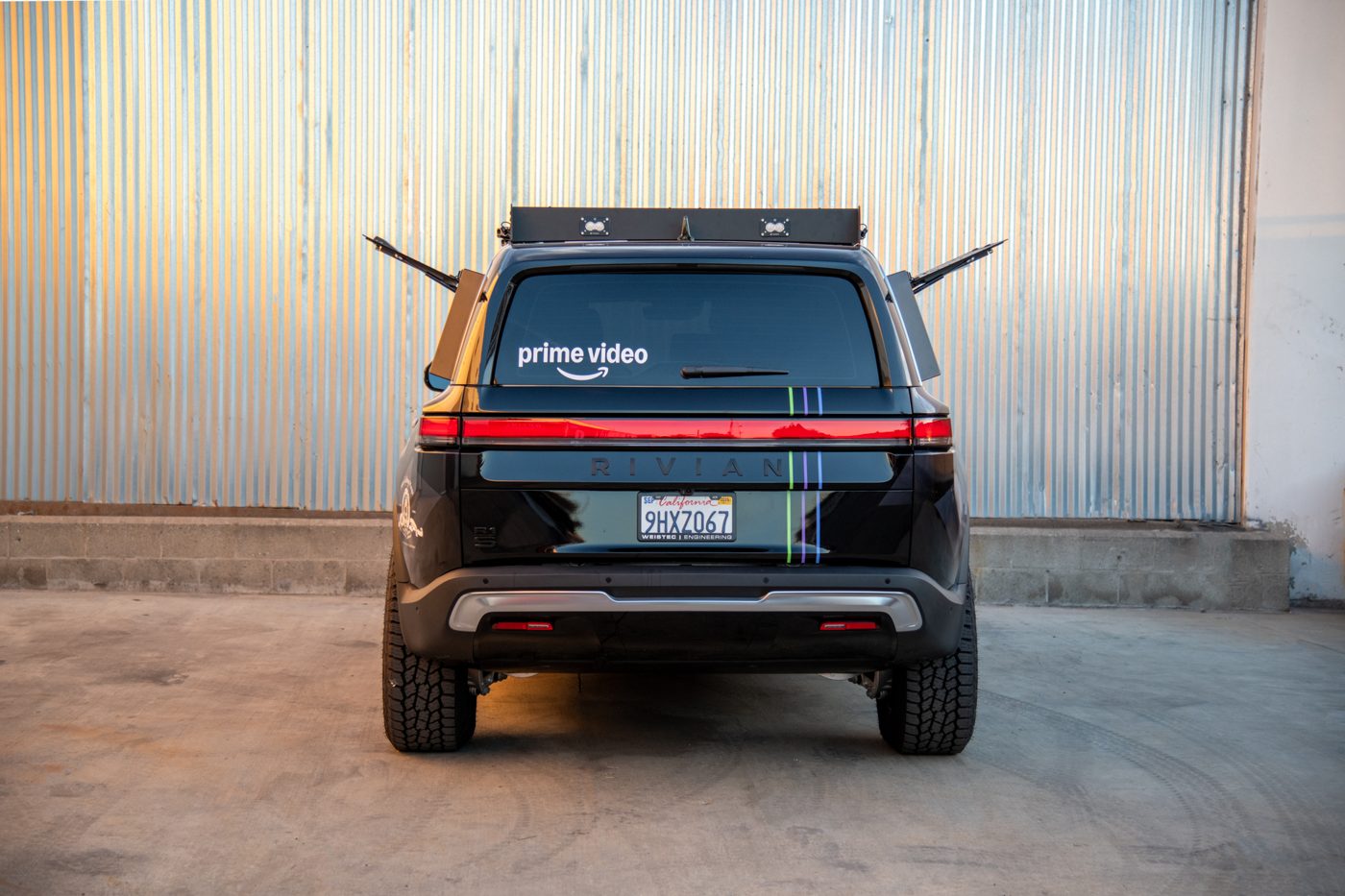
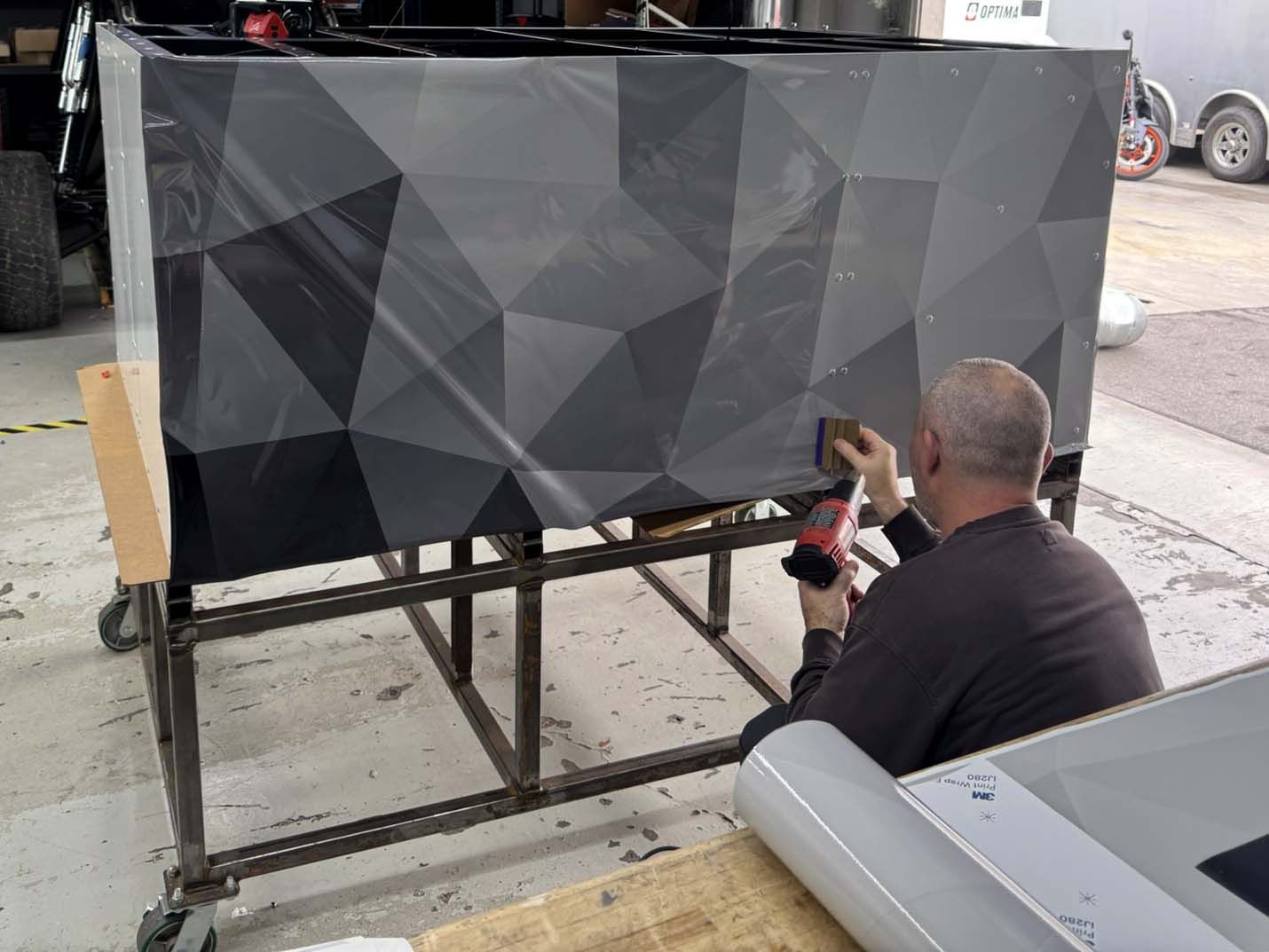
A coordinated wrap brings Amazon MGM Studios, Prime Video, and AWS branding to the R1S and its matching trailer.
From Digital Models to Finished Hardware
The build began with scanning and digitizing the Rivian and supplier components so we could resolve equipment placement, clearances, and mounting details in CAD.
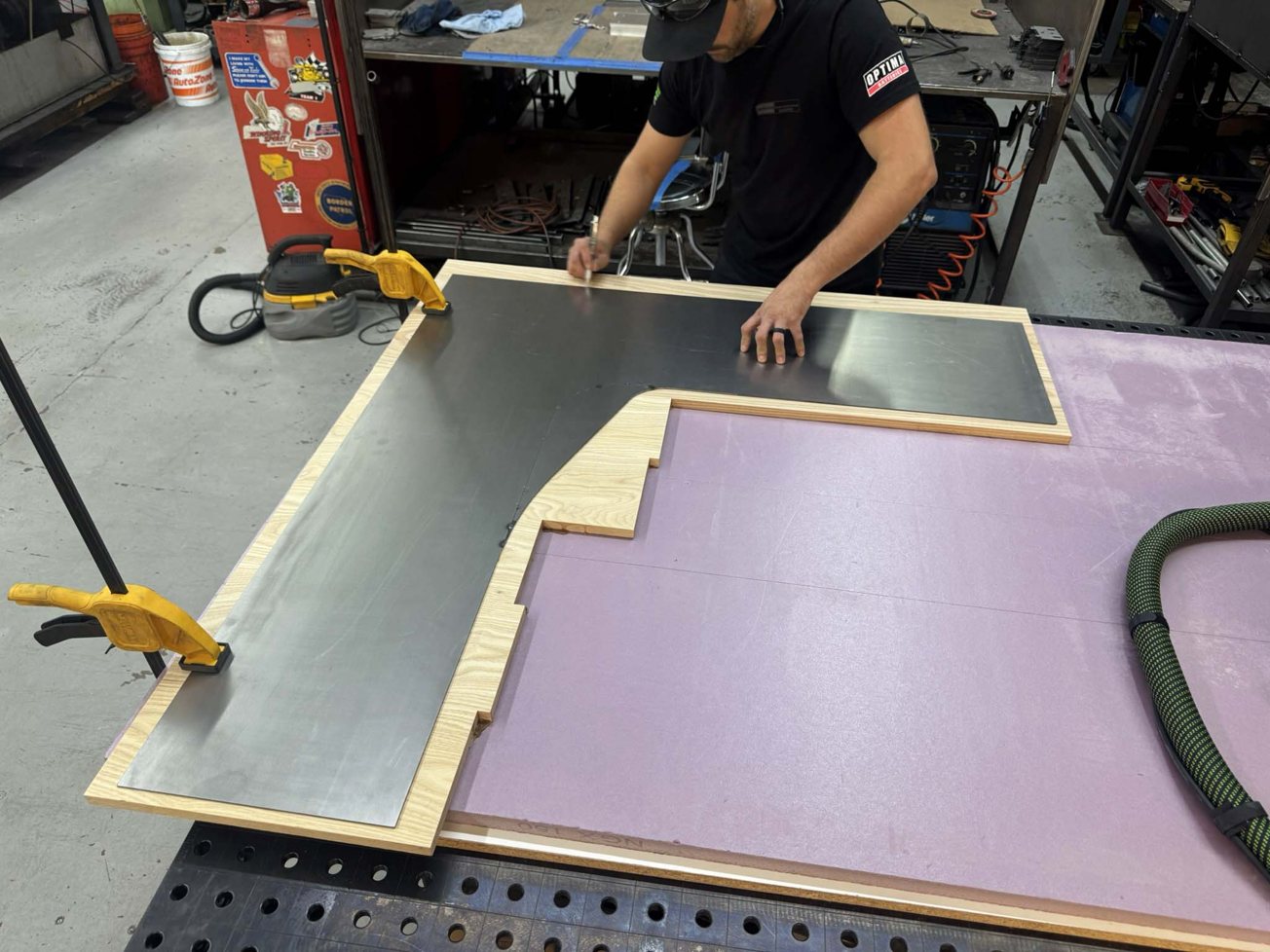
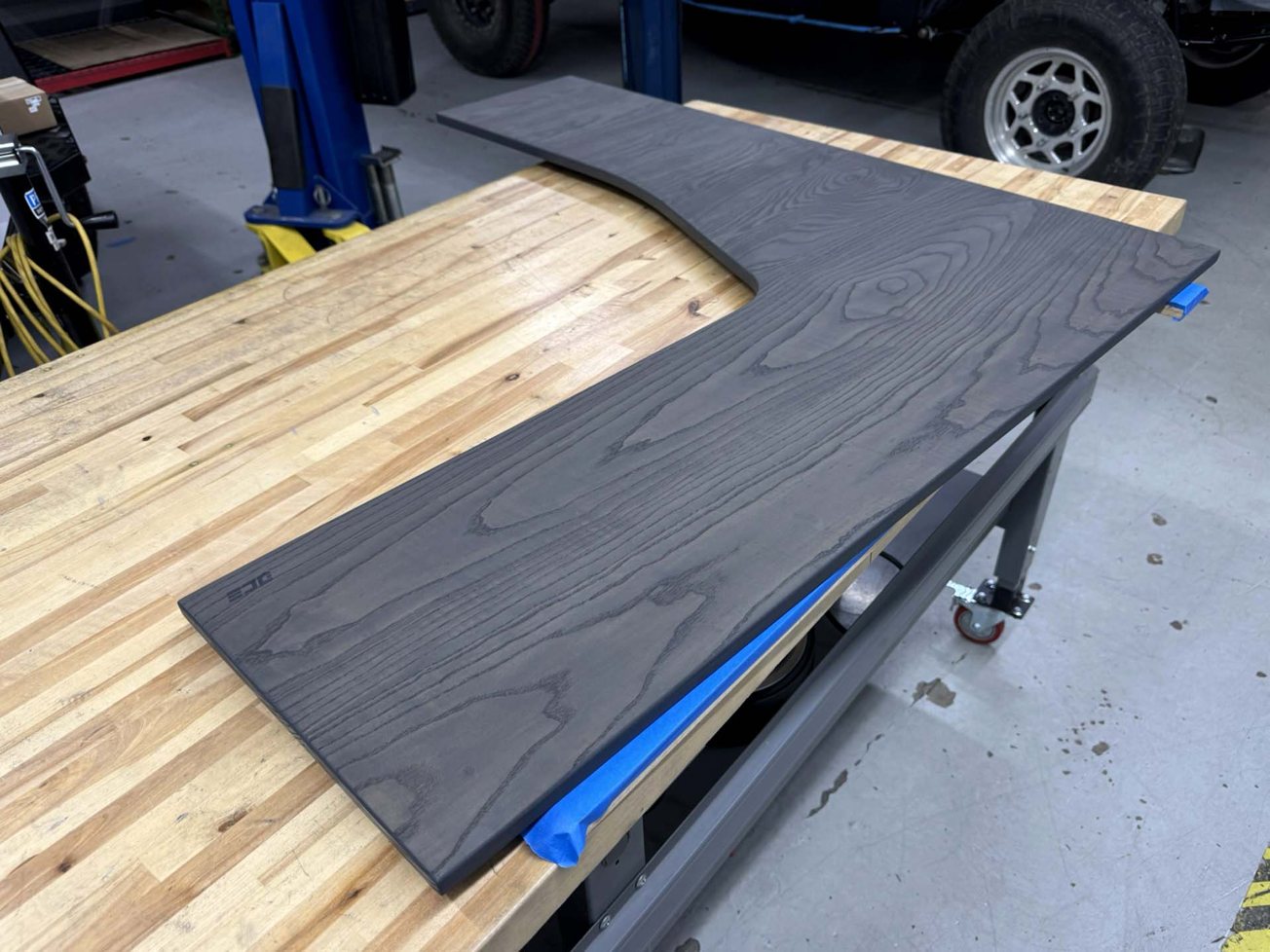
Physical interior mockups helped us evaluate workstation layout and ergonomics. Harness drawings and custom fabrication carried those decisions into the finished system.
Our team built the equipment racking, bulkheads, and trailer battery chassis in-house, then completed assembly, finishing, and functional testing.
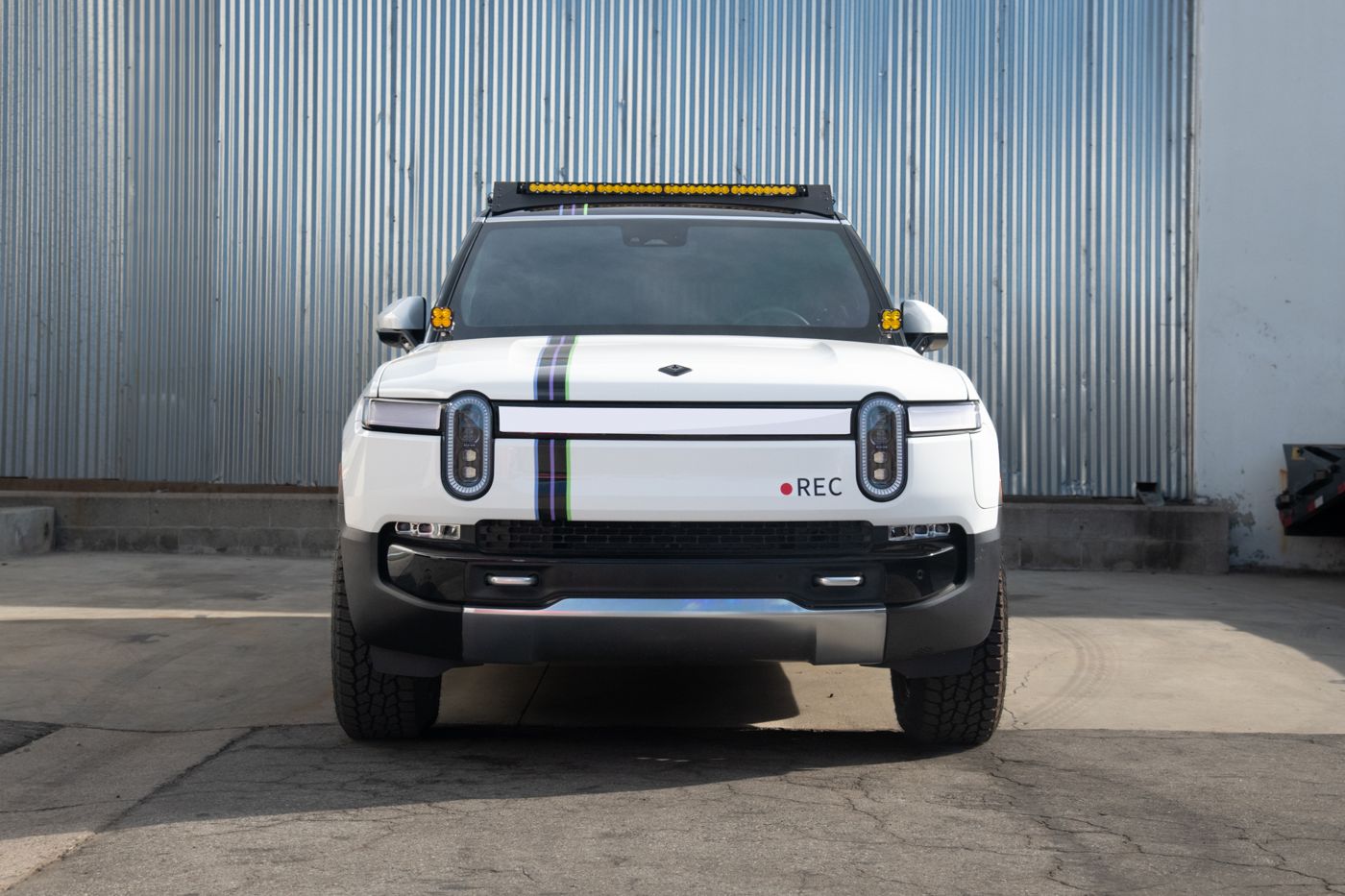
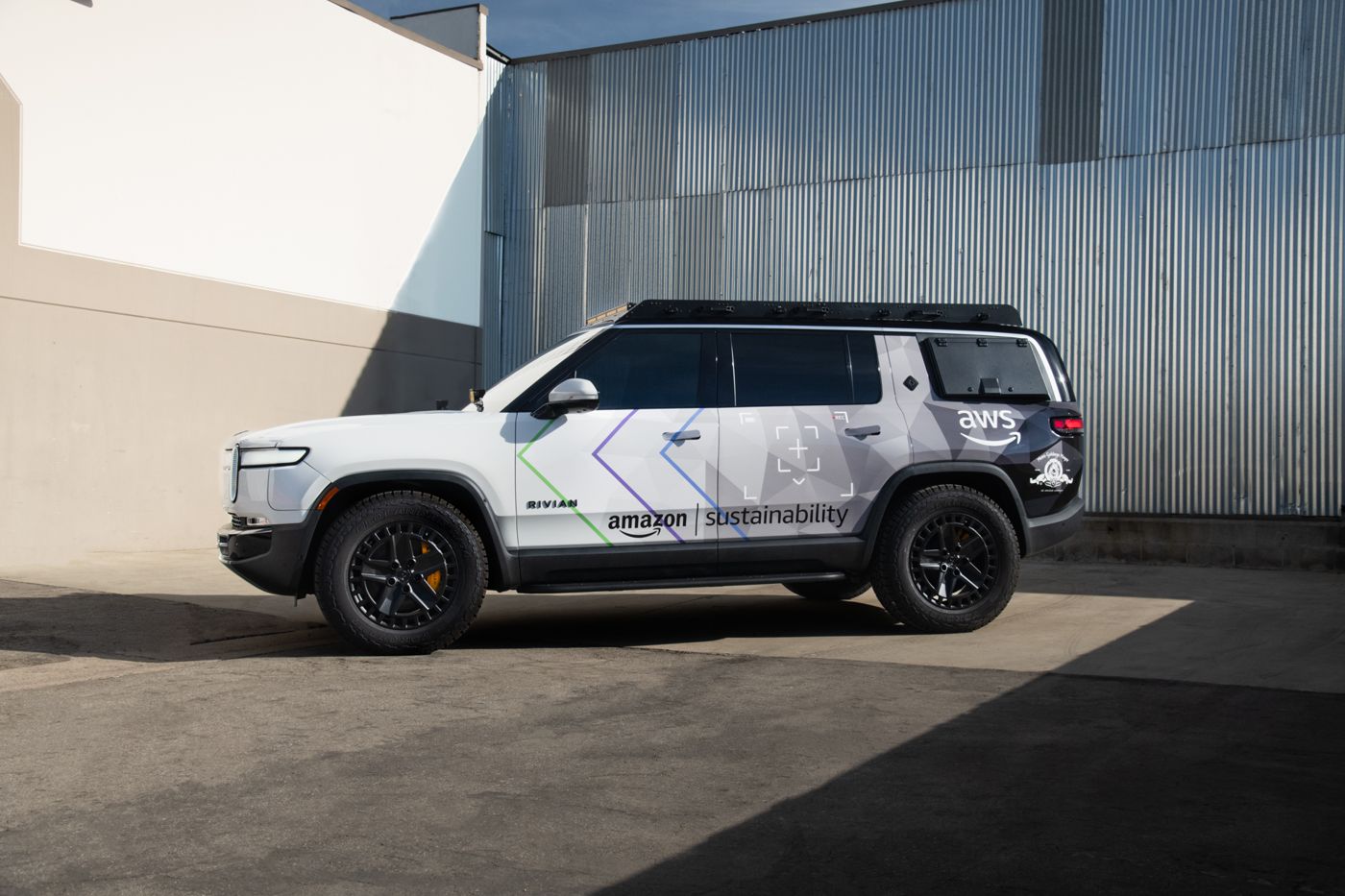
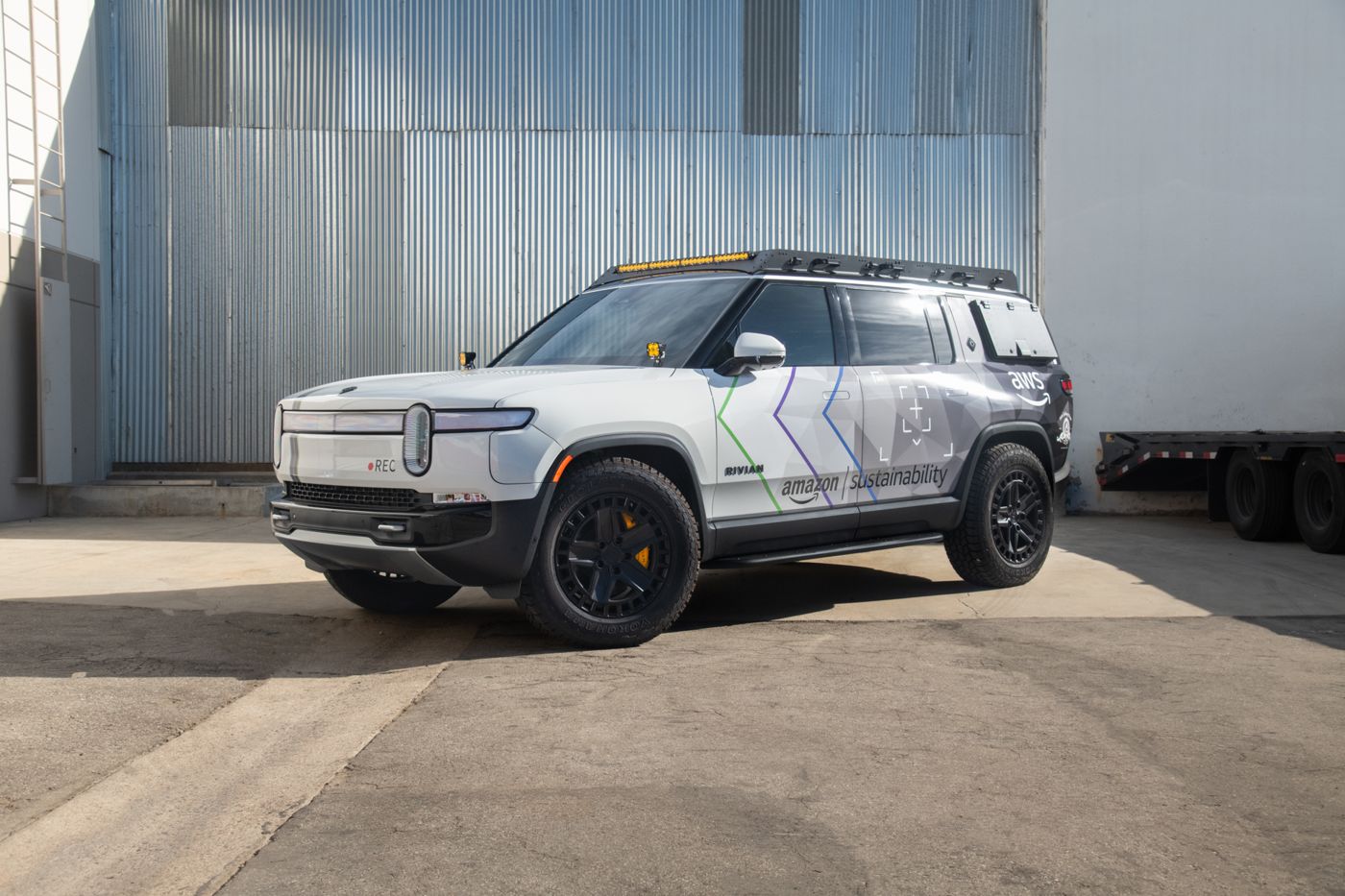
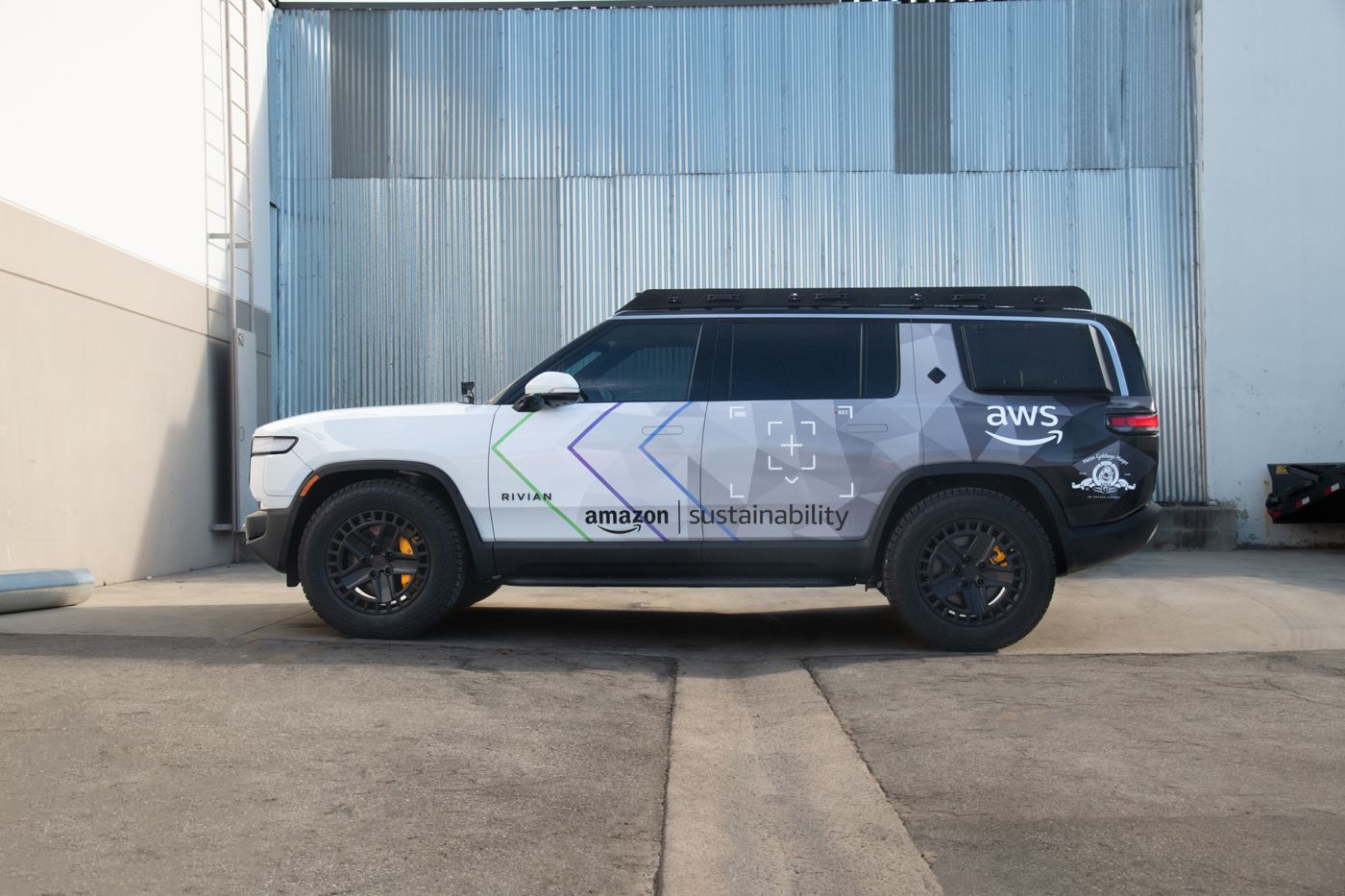
This project brought together the capabilities behind Weistec’s engineering programs: vehicle integration, electrical systems, mechanical design, and manufacturing, all coordinated under one roof.
Delivered to the Studio. Presented at re:Invent.
We delivered the R1S and TAP trailer to Amazon MGM Studios in Culver City in December 2024, deploying the solar array in the campus courtyard and supporting the crew with operational training.
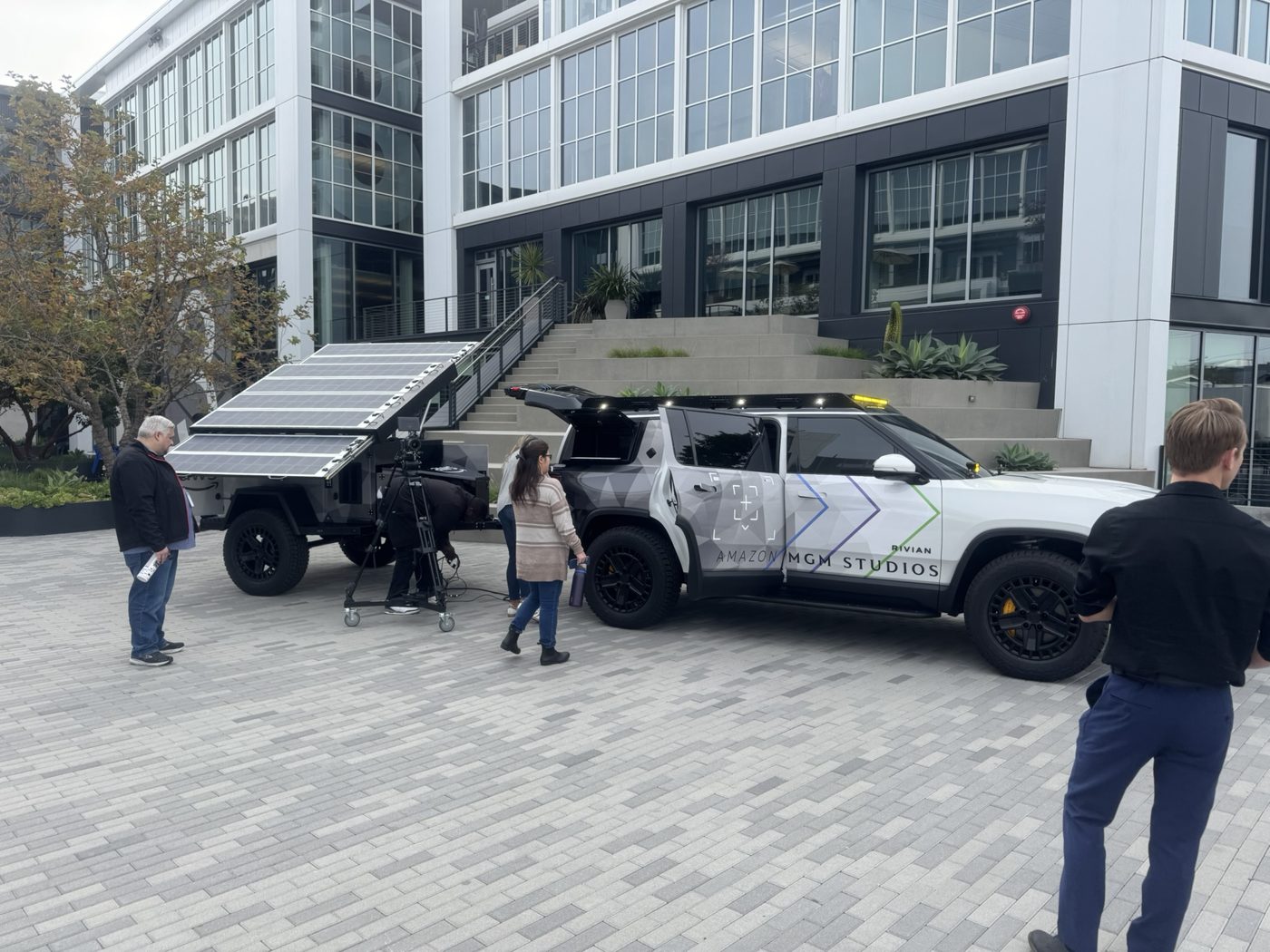
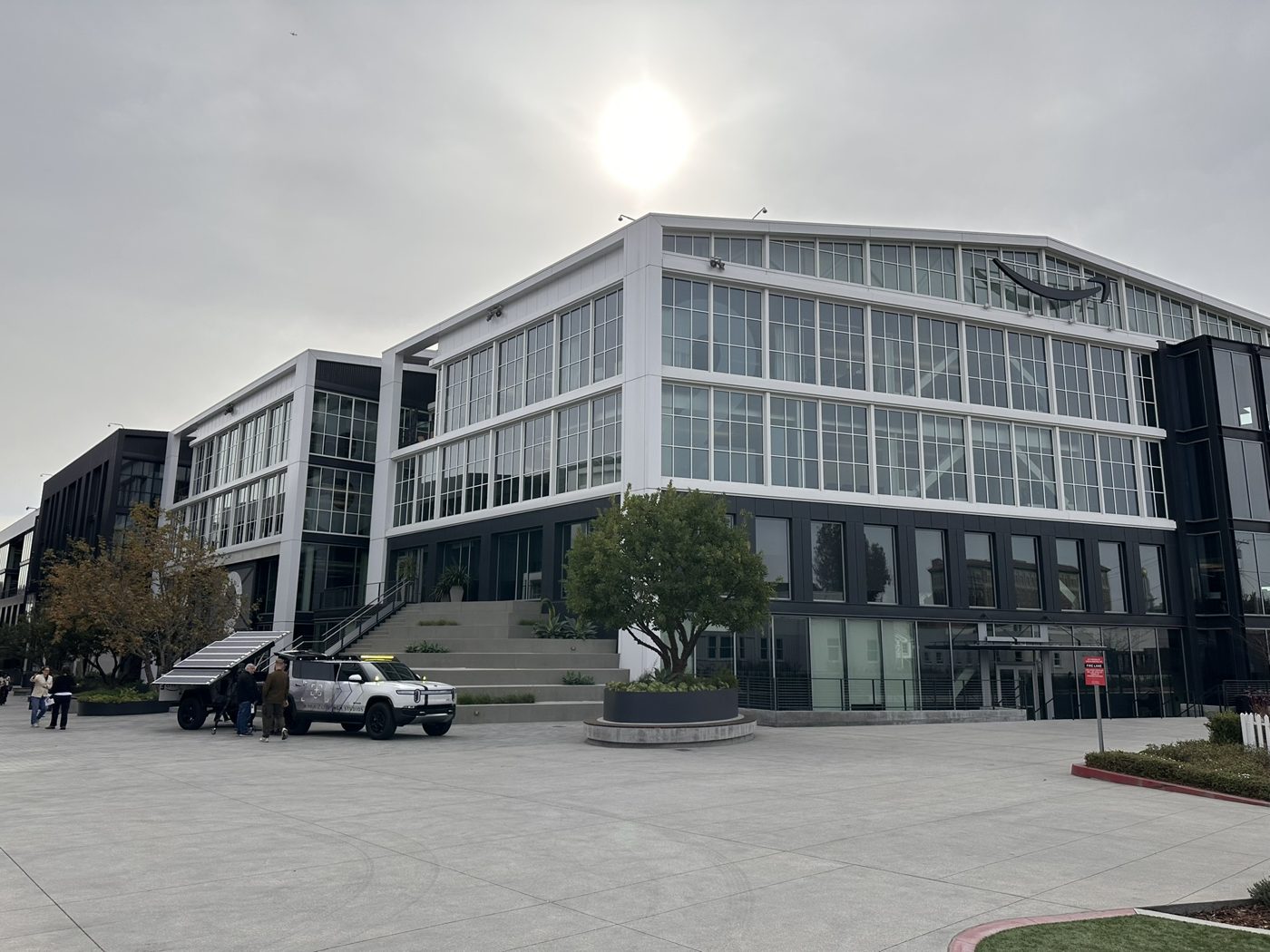
The system later appeared at AWS re:Invent 2025 in Las Vegas as part of Amazon’s “From Camera To Cloud” exhibit, which explored approaches to reducing the carbon footprint of film and television production.
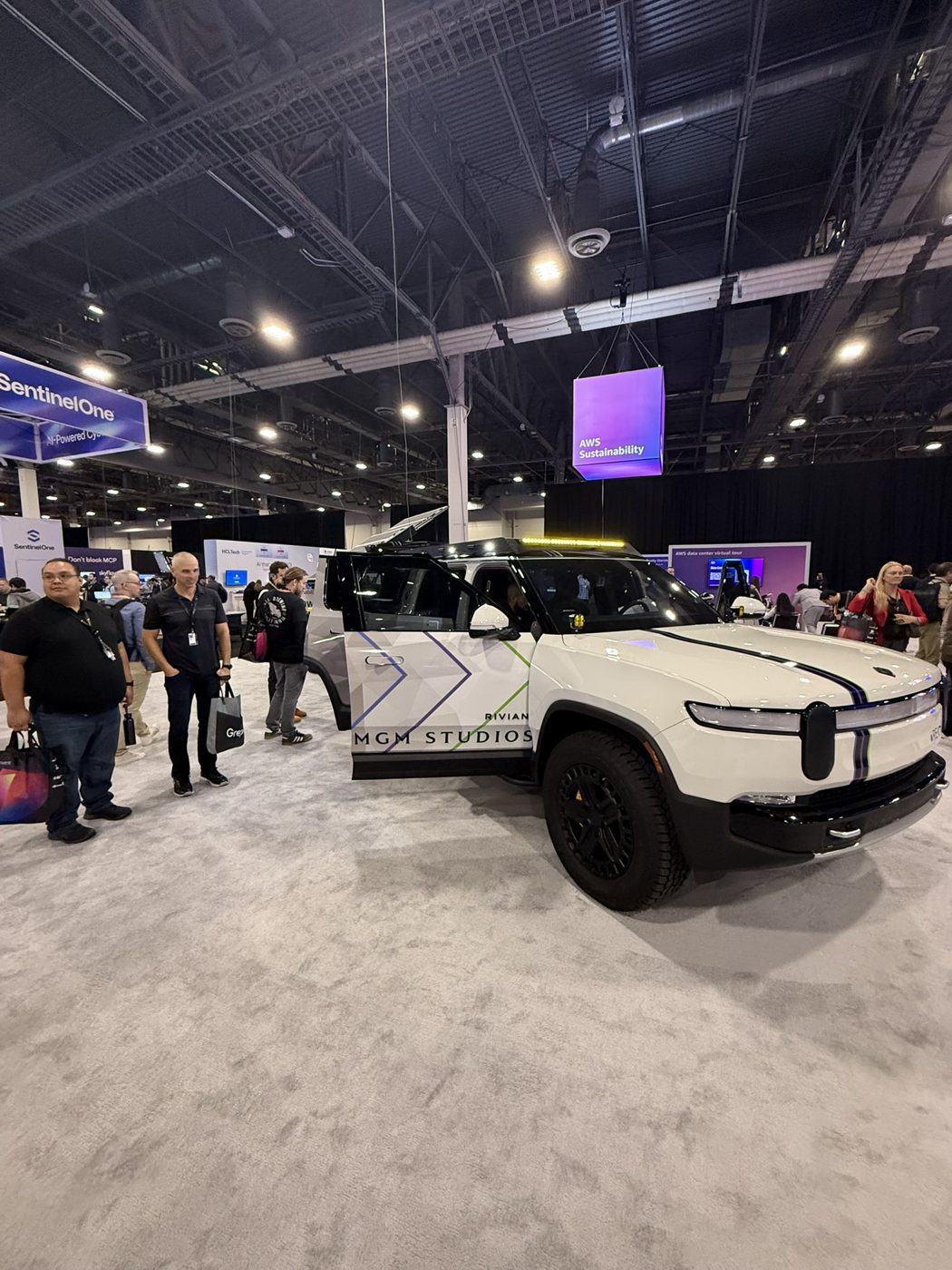
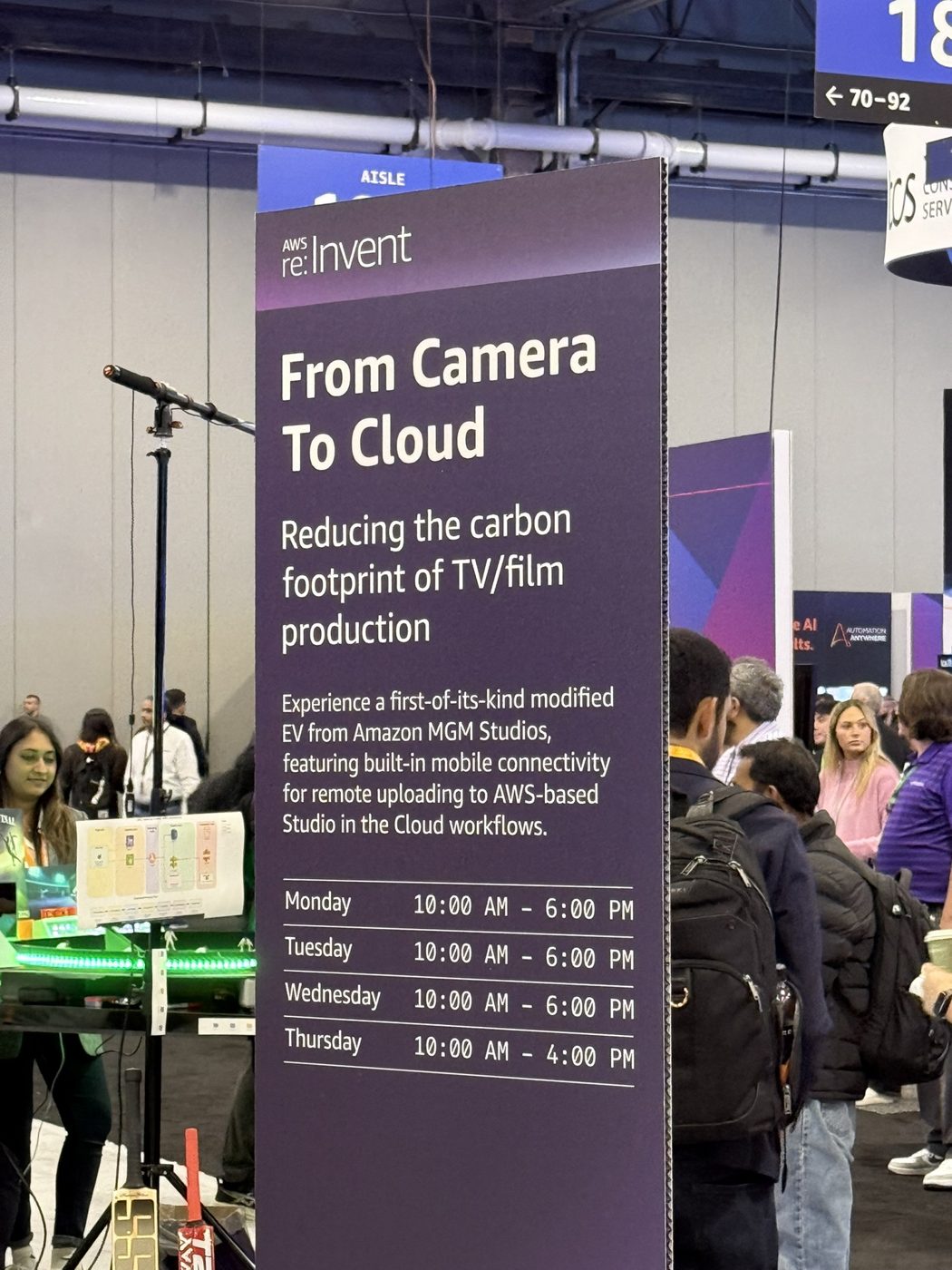
For DCE, the project demonstrates how an electric vehicle can support a specialized workflow. The R1S carries the workspace and connectivity; the TAP trailer supplies additional energy in the field. Together, they bring more of the production process to where filming happens.
Build progress
Have a project that requires custom engineering? Explore Weistec’s engineering and manufacturing services, or contact sales@weistec.com.